- What we know about the 210 Freeway multi vehicle crash in Sylmar
- Community impact and local context in Sylmar and the San Fernando Valley
- First 72 hours after a serious Los Angeles car accident
- Where to get official records and information in Los Angeles County
- California Highway Patrol collision report
- Autopsy and medical examiner records
- Traffic cameras, roadway conditions, and closures
- Insurance and DMV accident reporting
- How multi vehicle crash investigations work on California freeways
- Potential civil liability after a freeway fatality in California
- Insurance concerns in a multi vehicle Los Angeles car accident
- Grief, support, and practical help for families
- Preserving evidence and protecting legal rights
- Timelines that matter in California wrongful death and injury claims
- How a seasoned personal injury lawyer evaluates a 210 Freeway crash
- Commentary from Gosuits Sylmar, California Personal Injury Attorney
- Action steps to consider now
What we know about the 210 Freeway multi vehicle crash in Sylmar
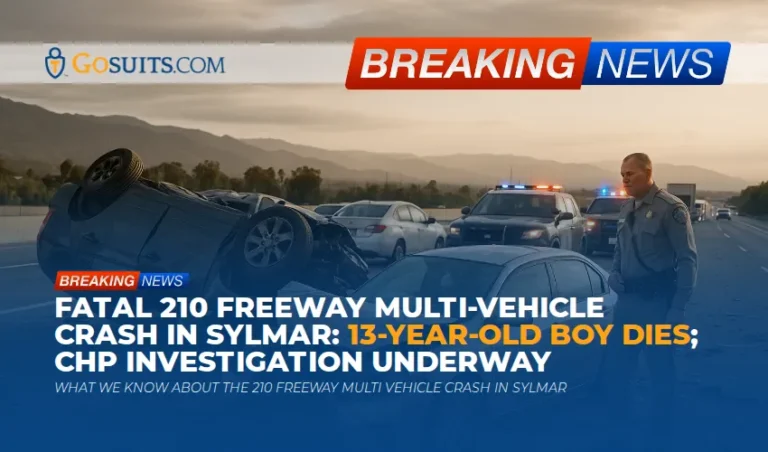
Over the weekend, a devastating multi vehicle crash on the 210 Freeway in Sylmar shut down lanes for hours and left a family mourning a 13 year old boy who was out Christmas shopping with his mother. The collision seriously injured his mother, who is now recovering, and injured several others. Public reporting reflects a grieving stepfather remembering a bright, athletic teen who loved sports and brought energy to his home. A community fundraiser has been organized to help with funeral costs and family support. At this time, it remains unclear what exactly led to the crash. Early descriptions circulated publicly mention a reckless driver, but that claim has not been officially confirmed.
On busy stretches of the 210 through Sylmar and Sunland, the California Highway Patrol typically leads on scene response and investigation for freeway collisions. That usually includes traffic control, evidence documentation, and coordination with the Los Angeles County Department of Medical Examiner. In many freeway fatalities, specialized collision investigators gather vehicle data, measure skid or yaw marks, and interview witnesses to determine causes and contributing factors.
Families and neighbors across Sylmar, from the foothill neighborhoods near Olive View UCLA Medical Center to the streets around Hubbard, Roxford, Bledsoe, and Polk, are feeling this loss. A child’s death on a familiar freeway touches everyone who drives that corridor for school, work, or holiday errands.
Community impact and local context in Sylmar and the San Fernando Valley
Anyone who commutes along the 210 in the northern San Fernando Valley knows the rhythm of that roadway. Mornings can be slick with dew, afternoons packed with holiday traffic, and evenings lit by a steady sweep of headlights flowing past the foothills. Around Sylmar, the 210 connects families to weekend sports at El Cariso Park, long shifts at local warehouses, or appointments at Olive View. A serious Sylmar wrongful death crash does not occur in a vacuum. It disrupts routines for neighbors who saw the lane closures on their morning apps, it pulls on the hearts of school communities, and it raises hard questions about what can be done to reduce future harm.
State and federal safety agencies have long emphasized the dangers of speed in serious crashes. Even modest increases in speed can reduce a driver’s ability to react and significantly increase the severity of injuries. For general background on how speed affects crash outcomes, see the National Highway Traffic Safety Administration’s overview on speeding risks at NHTSA Speeding. While the specific causes of this 210 Freeway crash have not been confirmed, it is common for investigators to examine speed, distraction, impairment, unsafe lane changes, and following distance in multi vehicle crashes.
During winter months and the holiday period, the 210 often sees heavier volumes, more out of town drivers, and a mix of wet weather days and clear skies that can create glare over the foothills. Caltrans QuickMap provides real time closure and incident information that can situate the timing and location of major collisions regionally at Caltrans QuickMap.
First 72 hours after a serious Los Angeles car accident
The first few days after a fatal or severe injury crash are chaotic. It helps to follow a short, focused list and to pace every step with care.
- Prioritize medical care and emotional safety. Accept all recommended follow up care for anyone injured. Keep a private log of symptoms, medications, and appointments.
- Identify the investigating agency and incident number. On freeways, the investigating agency is usually the California Highway Patrol. If friends or relatives were on scene, they may have a card or incident number from a CHP officer. If not, this can be obtained later through the CHP collision report process.
- Preserve evidence without posting publicly. Save photos, dashcam video, phone location data, and contact information for witnesses. Avoid social media posts about fault, injuries, or the progress of any claims.
- Secure the vehicles if possible. If a family vehicle was towed, note the tow yard and instruct that it not be destroyed or released for salvage until legal guidance is obtained. Vehicle event data recorders and physical damage patterns can be crucial evidence.
- Request a copy of the collision report when available. CHP collision reports are not immediate. It can take days or weeks. Do not worry if it is not ready right away. The process is discussed below, with a state link to the request form.
- Consider early legal guidance before any insurance calls. Insurance adjusters can and do record calls. Statements made now can be used later. It is wise to consult with a Los Angeles personal injury lawyer to understand rights and the best sequence of steps before calling any insurer.
Where to get official records and information in Los Angeles County
After a freeway fatality in Los Angeles County, several agencies hold records that can clarify what happened. Some records will not be immediately available, and each agency follows specific rules.

California Highway Patrol collision report
For freeway crashes in Sylmar, the primary investigating agency is typically CHP. Families can request a CHP collision report using the official request form. The CHP provides the process and request packet here: CHP collision report request. The report often includes a narrative, diagram, party and witness statements, and any citations noted at the scene.
In complex or fatal freeway collisions, CHP may assign or consult with a Multidisciplinary Accident Investigation Team. These specialized teams perform in depth analysis of severe collisions. More about these teams is available at CHP MAIT investigations. MAIT reports can take months, and release is governed by agency rules and state law.
Autopsy and medical examiner records
In fatal cases, the Los Angeles County Department of Medical Examiner manages the decedent’s examination, identification, and cause and manner of death determinations. Next of kin can request records, including autopsy and examination reports, following the department’s records process. See the county page here: LA County Medical Examiner records. Some records will be held until investigations are complete. The Medical Examiner can also advise families about the timeline for death certificates.
Traffic cameras, roadway conditions, and closures
Caltrans maintains roadway infrastructure and posts current closures and alerts. For general situational awareness, the QuickMap resource can show when a closure occurred and when lanes reopened. Visit Caltrans QuickMap. For longer term roadway data or maintenance records, Caltrans District 7 may route requests through public records channels.
Insurance and DMV accident reporting
California requires that drivers involved in collisions resulting in injury, death, or property damage over a threshold report the accident to the DMV within a short period. The DMV provides instructions and the SR 1 form here: DMV SR 1 accident reporting. If the injured person cannot file, a representative may be able to do so. Filing the SR 1 is separate from any police or CHP report. If insurance is contacted, do so only after speaking with an attorney, since statements can affect coverage decisions.

How multi vehicle crash investigations work on California freeways
Multi vehicle collisions on high speed corridors like the 210 often involve a chain of events that takes time to reconstruct. Here is what investigators typically evaluate.
- Scene documentation. Officers map final rest positions of vehicles, measure tire marks, and collect debris. Photographs and total station measurements help calculate speeds and angles.
- Vehicle inspections. Damage patterns can suggest pre impact speeds and directions of force. Event data recorders in many modern vehicles store short windows of pre crash data, including speed, throttle, braking, and seat belt use.
- Human factors. Investigators review driver statements, impairment screenings when applicable, and potential distraction sources such as phones. They also note visibility, lighting, and weather conditions.
- Third party data. Dashcams, nearby business cameras, and freeway service patrol observations can fill gaps in witness memories. Caltrans cameras generally provide live feeds for traffic management and may or may not be archived.
- Medical examiner findings. Cause of death statements can correlate injuries with collision dynamics and help clarify load paths in multi impact events. See the county records link above for the process to obtain those reports.
Because the cause of this Sylmar crash has not been officially determined, it is important not to speculate. The best path is to gather every available document, preserve vehicles and data, and allow trained evaluators to piece together the sequence.
Potential civil liability after a freeway fatality in California
California law provides two primary civil paths after a fatal crash. Family members may bring a wrongful death claim, and the decedent’s estate may bring a survival claim for certain losses the decedent sustained before passing.
- Wrongful death claim. California’s wrongful death statute identifies who may recover and the categories of recoverable damages. The statute is located at Code of Civil Procedure section 377.60. Qualifying family may seek economic and non economic damages related to the death.
- Survival action. A separate action by the estate allows recovery for certain losses the decedent personally sustained. The statute is at Code of Civil Procedure section 377.30.
- Comparative fault. California follows a comparative fault system in civil cases, which allocates responsibility among all involved parties. Even if multiple drivers contributed, each can be held responsible for their share.
- Public entity claims. If a roadway condition or traffic control device contributed, a claim may be asserted against a public entity. These claims follow the Government Claims Act, which imposes strict deadlines. The claim deadline for many such matters is short, as described in Government Code section 911.2. This does not mean any government entity is at fault here, but families should be aware of the timeline rules in case roadway issues are later identified.
Because multiple vehicles were reportedly involved on the 210 Freeway, potential liability could include one or more private drivers, a commercial vehicle, a rideshare vehicle, or others. Fault can be shared. Evidence from every involved car, including telematics and damage analysis, helps allocate responsibility.
Insurance concerns in a multi vehicle Los Angeles car accident
Insurance can become complicated quickly in a multi vehicle crash. Policy limits, multiple claimants, and conflicting statements often lead to disputes. Here are common issues families confront.
- Multiple policies and limited limits. When several people are injured or a fatality occurs, the at fault driver’s policy limits may be quickly exhausted. There may be additional coverage sources, such as an employer’s policy if a driver was in the course of work, a household policy, or uninsured and underinsured motorist coverage from the family’s own policy.
- Recorded statements. Adjusters often seek statements soon after a crash. What someone says can be used to deny or limit a claim later. In serious cases, it is best to speak with an attorney first to understand the risks and to have guidance before any call with insurance.
- Medical payments coverage. Some policies include medical payments coverage that can help with immediate bills regardless of fault. Coordination with health insurance and potential liens is important to avoid surprises.
- Property damage and total loss. If a vehicle is a total loss, do not authorize destruction of the vehicle until key evidence has been documented. Once a vehicle is crushed, vital data may be gone.
In holiday season collisions, it is also common to encounter out of state drivers and rental agreements, which can add layers to the insurance analysis. A methodical review of all possible coverage sources helps prevent missed opportunities for recovery.
Grief, support, and practical help for families
There is no roadmap for the loss of a child. Families in Sylmar often lean on faith communities, school counselors, and extended family networks. It can also help to understand what county resources exist. The Los Angeles County Department of Mental Health offers hotlines, referrals, and community based services that can support grieving family members of all ages. See available programs at LA County Department of Mental Health.
Schools in the area may coordinate counseling for classmates and teammates. Coaches and school staff often know how to reach district crisis response teams. Checking in with counselors can help coordinate age appropriate support for friends processing the loss.
In parallel with emotional care, families will be asked to make practical decisions about funeral arrangements and memorials. The Medical Examiner can advise on the expected timing for release and certificates, which are often needed for cemetery or cremation arrangements. Their records request and services information is linked above.
Preserving evidence and protecting legal rights
Evidence can disappear quickly after a freeway crash. A careful approach in the first few weeks can make a significant difference later.
- Do not release vehicles prematurely. Notify the tow yard in writing to hold the vehicle pending inspection. Document the vehicle identification number, the tow yard name and address, and the date of the hold request.
- Collect independent photos and video. If any family member or friend visits the scene after lanes reopen, photograph tire marks, gouge marks, damaged guardrails, and any roadway features. Time stamp the images.
- Identify and contact witnesses. If bystanders provided help or gave statements at the scene, try to obtain names and contact details. CHP reports often list witnesses, but independent confirmation is useful.
- Preserve digital data. Save phone location history, rideshare trip receipts, and any telematics from vehicles or apps that track driving. If a vehicle had a subscription service, request preservation of crash data as soon as possible.
- Consult with counsel before any insurer communications. A brief legal consultation can set the right sequence of steps and protect against inadvertent statements that might be taken out of context.
Timelines that matter in California wrongful death and injury claims
California imposes strict time limits on civil claims. Missing a deadline can bar recovery.
- General civil limitation. Most wrongful death and personal injury claims must be filed within two years of the incident. The statute is found at Code of Civil Procedure section 335.1.
- Government entity claims. If a claim might involve a public entity, a government claim often must be filed within six months. See Government Code section 911.2.
- Insurance notification. Insurers often require prompt notice of a potential claim. Notice alone is not the same as a recorded statement. Consider legal guidance first, then provide notice in a way that preserves rights and avoids unnecessary admissions.
There are exceptions, nuances, and tolling rules in some situations. The safest approach is to calendar the earliest possible deadline and work backward to gather records well in advance.
How a seasoned personal injury lawyer evaluates a 210 Freeway crash
From a civil injury perspective, a multi vehicle 210 Freeway crash in Sylmar raises several analytic questions.
- Sequence of impacts. Was this a single initial collision with secondary impacts, or a chain reaction? Which vehicle initiated the sequence, and did any driver have a chance to avoid the collision after the first impact.
- Speed and following distance. On a high speed corridor, safe following distance and speed relative to conditions are central. Police diagrams, EDR data, and damage profiles help quantify these factors.
- Lane changes and visibility. Sudden merges or late exits can set up conflicts. Sun glare in the foothills and curves near interchanges often feature in visibility assessments.
- Condition of the roadway. Investigators check for standing water after rain, worn lane markings, or debris. If a roadway condition is implicated, a separate set of notice and design questions applies under public entity standards.
- Type of vehicles. Differences in mass and ride height between sedans, SUVs, and commercial vehicles can affect injury severity and crush patterns.
- Post impact movement. In chain reactions, vehicles can be pushed into oncoming lanes or shoulders, complicating responsibility analysis.
None of this assigns blame in this case. It simply outlines the common technical questions that guide an evidence based evaluation when families need answers.

Commentary from Gosuits Sylmar, California Personal Injury Attorney
Our hearts are with the family and friends grieving this 13 year old child. Losing a young member of the community on a familiar stretch of freeway is shocking and deeply painful. This article is meant for education and general information, to help neighbors understand the process and resources that exist in Los Angeles County.
From what has been publicly reported, this was a multi vehicle collision on the 210 Freeway that shut down traffic for hours. The cause has not been confirmed. In our view, the path forward hinges on a careful, methodical investigation by the California Highway Patrol, collection of vehicle data, and review of medical examiner findings when available. Families deserve a clear reconstruction of events and a fair accounting of responsibility wherever the evidence leads.
Insurance companies and large corporations know that the first days after a tragedy are disorienting. Adjusters may ask for quick recorded statements, press for authorizations, or float early offers that do not account for the full scope of loss. They also know how to use partial facts or off hand comments to narrow or deny claims later. That is why many people benefit from a free consultation before engaging with any insurer. It allows a clear plan to be set, evidence to be preserved, and communications to be handled in a way that protects the family’s rights.
Free consultations are important because they give space to ask questions, understand timelines, and consider options without pressure. People can learn how wrongful death claims interact with survival claims, what insurance coverages may apply, and what steps should happen in what order. That knowledge reduces the risk of mistakes and allows families to focus on healing while the necessary legal and insurance work proceeds in the background.
Action steps to consider now
The following steps are presented to help community members understand why prompt action matters after a freeway fatality or serious injury, especially during a busy holiday season on the 210.
- Secure the official reports. Begin the process to obtain the CHP collision report using the state form at CHP collision report request. Request medical examiner records through the county portal at LA County Medical Examiner records. Getting in line early matters because complex crash files can take weeks or months to finalize.
- Preserve vehicles and digital data. Ask that tow yards hold vehicles for inspection. Save phone data, dashcam files, and app trip records. Many data sources are overwritten quickly. Acting now improves the chances of a complete reconstruction.
- Coordinate medical care and documentation. Keep appointment summaries, discharge instructions, and billing statements in a single folder. Accurate records help with both health insurance and any civil claim that may follow.
- Use official channels for roadway facts. For closure times and conditions, rely on resources like Caltrans QuickMap. This helps anchor timelines when you later compare witness accounts and photographs.
- Consult before speaking to insurers. A brief legal consultation before any insurance call can prevent missteps. Insurers may record calls, and what is said can affect coverage. Understanding rights first is the safest course.
- Calendar the earliest deadlines. Civil claims in California carry strict limits, including a two year filing deadline for most wrongful death and injury claims under CCP 335.1, and much shorter timelines if any public entity notice may be required under Gov Code 911.2. Tracking the earliest possible date keeps options open.
These steps are not about rushing decisions. They are about protecting evidence, anchoring timelines, and using reliable sources so that when the time comes for decisions, those choices are grounded in the strongest possible record.
Start the CHP report request process Preserve vehicle and digital evidence Review California claim timelines