- What we know about the Los Angeles County crash
- Official records to request in Los Angeles County and who to contact
- Civil legal pathways after a fatal California crash
- Evidence families can preserve quickly in LA County
- How insurance coverage typically works after a fatal collision
- Public safety context on Los Angeles roads
- Practical support steps loved ones can take
- Why timing matters under California law
- A careful approach to insurers and recorded statements
- Why timely action matters after a fatal traffic collision
- Commentary from Gosuits Los Angeles, California Personal Injury Attorney
What we know about the Los Angeles County crash
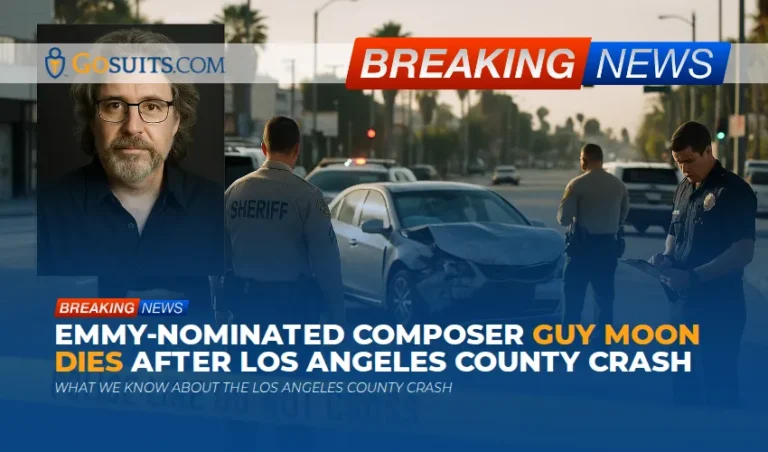
Los Angeles woke up to heartbreaking news. Emmy-nominated composer Guy Moon, widely known for music on Nickelodeon shows many Angelenos and their kids grew up with, died following a traffic collision in Los Angeles County. According to the Los Angeles County Medical Examiner, the death followed an accidental traffic collision and the cause was traumatic injuries [1]. The Medical Examiner’s case listing confirms jurisdiction and provides a formal public record of the manner of death.
Details about the precise roadway, intersection, involved vehicles, or collision configuration have not been made public by law enforcement at the time of writing. In the Los Angeles region, fatal collisions are typically investigated by the agency with jurisdiction where the crash occurred, which could be CHP on state freeways, the Los Angeles Police Department within city limits, or a local municipal police department elsewhere in the county. The Medical Examiner’s office then completes its investigation into cause and manner of death and issues an official report [1].
There is no way to soften a loss like this. People across the city who commute the 101 through Hollywood, climb the Sepulveda Pass on the 405, or cross the San Fernando Valley on the 118 know how quickly a normal morning can change. For family, friends, and the broader creative community who admired Moon’s work, the road forward is about answers, support, and preserving rights. Below, we outline concrete steps for securing official records, understanding California’s civil process after a fatal crash, and navigating insurance and procedural timelines.
Official records to request in Los Angeles County and who to contact
After any fatal collision in Los Angeles County, several official records can help families understand what happened and support potential civil claims. Each record has a different custodian and request process. Gathering them early prevents delays later.
Los Angeles County Medical Examiner documents
The Medical Examiner maintains the decedent’s case file, including the autopsy protocol if an autopsy was performed, cause and manner of death statements, toxicology, and investigator’s notes. The public case listing confirms jurisdiction and basic facts [1]. Families and next of kin can request certified copies of records through the Medical Examiner’s records request process [2]. Some materials may take time while testing and review are completed.
Death certificate
Certified copies of the death certificate are issued by the Los Angeles County Registrar-Recorder/County Clerk. These are often needed for insurance, estate matters, and other legal steps. Requests can be made by authorized individuals through the county’s process [5].
Traffic Collision Report
– Which agency investigated: If the crash occurred on a state freeway like the 5, 10, 110, 405, or 101, the California Highway Patrol generally investigates. Within the City of Los Angeles, LAPD traffic divisions handle surface streets; in unincorporated areas, the Sheriff’s Department may respond. If you are unsure, the Medical Examiner’s investigator notes or case listing sometimes indicate the agency, and dispatch logs can confirm it.
– How to request a CHP report: If CHP investigated, families can request the report using CHP’s “Application for Release of Information” (Form CHP 190) through the local Area office that handled the scene [4]. You will need identifying details such as date, location, and parties involved. Next of kin typically qualify for access.
– Accident reporting to DMV: Although law enforcement completes its own report, California law separately requires involved drivers to submit an SR-1 report to DMV within 10 days for collisions involving injury or death, regardless of fault [3]. Families handling affairs for a deceased person should be aware this administrative report may be filed by insurers, but confirming whether it was submitted is prudent.

Dispatch audio, CAD logs, and 911 recordings
Emergency calls, radio traffic, and Computer Aided Dispatch logs can offer timeline details. These may be requested from the responding agency under the California Public Records Act, subject to statutory exemptions and retention policies. The Attorney General’s office provides guidance on public records rights and processes [6].
Medical records
If the decedent received care at a hospital such as LAC+USC Medical Center or a nearby trauma unit, medical records can be requested by a personal representative or authorized family member. Federal law recognizes a right of access to health records for patients and their personal representatives under HIPAA [12]. Hospitals will specify their forms and proof-of-authority requirements.
Civil legal pathways after a fatal California crash
California provides two distinct civil causes of action after a traffic death, each with different parties and damages. Families commonly ask about these at the outset, along with how they may interact with insurance. A clear understanding helps shape early decisions on evidence and timing.
Wrongful death claim
A wrongful death claim belongs to eligible heirs and seeks compensation for their losses resulting from the death. California Code of Civil Procedure section 377.60 identifies who may bring the claim, typically a surviving spouse or domestic partner, children, and in some cases other dependents or heirs [7]. Recovery focuses on losses to the family, which may include the value of financial support and household services the decedent would have provided, as well as loss of companionship and guidance.
Survival action
A survival action is brought by the decedent’s personal representative on behalf of the estate. It addresses damages the decedent could have pursued had they lived, such as medical bills or property damage between the time of injury and death, and in some cases punitive damages if justified by the evidence. This claim is authorized by Code of Civil Procedure section 377.30 [8].
Time limits
California’s statute of limitations for wrongful death is generally two years from the date of death [9]. Survival claims have their own timing considerations. If a public entity may be involved, California’s Government Claims Act typically requires a written claim within six months of the incident before a lawsuit can be filed, with specific procedures and exceptions outlined in Government Code section 911.2 [10]. Because these deadlines run independently of grief and funeral timelines, addressing them early avoids losing rights.
For a deeper walk-through of what the civil process looks like after a fatal crash, this resource may help: what happens if someone is killed in a car accident.
Families often consult wrongful death lawyers to understand which claims apply, how to coordinate among relatives, and how insurance coverage layers may respond. This early conversation is also where evidence preservation plans begin.
Evidence families can preserve quickly in LA County
Los Angeles is saturated with potential sources of evidence, but many are overwritten in days or weeks. A prompt, organized approach makes all the difference. Consider these steps, keeping in mind that it is wise to have an attorney handle requests so the chain of custody and admissibility are protected.
- Identify investigating agencies and request reports. Confirm whether CHP, LAPD, or another department has the Traffic Collision Report. If CHP handled it, use Form CHP 190 and ask whether photos, diagrams, or supplemental reports exist [4].
- Secure Medical Examiner records. Request the case file and note when toxicology or final reporting is expected. Keep copies of all correspondence for your records [2].
- Locate roadway and business cameras. City-operated traffic cameras are typically live feeds and not stored for public release. However, gas stations, storefronts, and apartment buildings near the scene often retain footage for short periods. Approach them quickly and respectfully with a preservation letter.
- Obtain vehicle “black box” data. Many vehicles store Event Data Recorder information such as speed, throttle, and braking. NHTSA provides background on EDRs, and recovery should be done by qualified technicians so data remains intact for potential litigation [13].
- Request 911 and dispatch logs. Ask for CAD logs and, where available, 911 audio. These can help establish response times and witness identities under the public records framework [6].
- Track down witnesses. The Medical Examiner’s investigative notes or the collision report often list witnesses. Follow up promptly while memories are fresh.
- Document the scene. If safe, photograph roadway conditions, signage, skid marks, and lighting. LA’s microclimates can affect visibility, especially with morning glare across the Valley or fog rolling in from the coast.
How insurance coverage typically works after a fatal collision
After a fatal Los Angeles car crash, insurance recovery often involves multiple layers of coverage. Which policies respond first depends on liability, the vehicles involved, and the decedent’s own coverages. Understanding this landscape early helps families avoid missteps and low offers.
- At-fault driver’s liability coverage. California requires minimum auto liability insurance. Bodily injury limits can be inadequate in a death case, but they are the first line of recovery for a proven at-fault party [11].
- Employer or commercial policies. If a driver was working at the time, an employer’s commercial auto or umbrella policy may be implicated. Determining scope of employment requires evidence and legal analysis.
- Uninsured and underinsured motorist coverage. The decedent’s own UM/UIM policy can step in if the at-fault driver lacks sufficient insurance. Timely notice to the carrier and strict policy conditions typically apply.
- Stacking and umbrellas. Many households carry umbrella policies. Some claims involve multiple policies and complex coordination to avoid waiving rights when signing releases.
Insurance carriers may quickly seek recorded statements, authorizations, or broad releases. That can put families at a disadvantage. Speak with counsel first. What you say in early calls can later be used to minimize or deny claims. If you ultimately decide to open a claim, do so with guidance and a plan.
Public safety context on Los Angeles roads
Los Angeles County’s traffic volumes and complex freeway network contribute to a high number of severe collisions each year. State and federal data help frame the broader picture. The California Office of Traffic Safety publishes annual crash rankings and county-level trends that consistently place Los Angeles County among the highest in total collisions due to sheer population and vehicle miles traveled [14]. Nationally, older adult drivers and passengers face specific risks related to crash forces and fragility, which can increase the likelihood that a collision results in serious or fatal injury even at city speeds [15].
These are not abstract numbers to the people who live here. Anyone who merges from Laurel Canyon into Hollywood traffic or navigates the cloverleafs near the 605 and 5 understands how quickly conditions can change. Early morning glare, lane drops during construction, and aggressive weaving are all real-world hazards on our roads. That context underscores why timely documentation matters after a crash and why families benefit from clear, grounded information.
Practical support steps loved ones can take
In the first days and weeks, families often find themselves balancing grief with administrative tasks. Here is a practical, non-exhaustive checklist grounded in Los Angeles County processes and California law.
- Designate a point person. Choose a trusted family member to coordinate records requests and communications. Keep a centralized log of contacts, dates, and reference numbers.
- Request Medical Examiner records. Start with the case listing confirmation, then submit the request for the full file when permitted. Note any estimated completion dates for toxicology and final reporting [2].
- Order certified death certificates. Obtain multiple certified copies for insurance, estate, and benefits administration through the Registrar-Recorder’s office [5].
- Identify the investigating agency and request the Traffic Collision Report. If CHP investigated, use the CHP 190 form and include proof of relationship when needed [4].
- Preserve vehicle evidence. Ask the tow yard not to release or crush the vehicle. Coordinate EDR data preservation with qualified professionals [13].
- Notify insurers strategically. Before calling any insurer, consult an attorney to understand what to say and what not to say. Insurers record calls and can use statements to limit recovery.
- Map deadlines. Note the two-year wrongful death statute and any six-month Government Claims Act trigger if a public entity could be involved [9] [10].
Why timing matters under California law
Time rules in California are strict. Missing a deadline can end a case before it begins. Most families focus first on funeral arrangements and personal affairs, which is entirely understandable. But a parallel track for legal deadlines avoids unintended forfeiture of rights.
- Wrongful death statute. Generally two years from the date of death [9].
- Survival action timing. Governed by separate rules and accrual concepts under section 377.30 [8].
- Government entity claims. Usually six months to present a claim before suing a public entity such as a city, county, or state department, with specific procedures in Government Code section 911.2 [10].
- Evidence retention. Businesses may overwrite video within days or weeks, and vehicles can be destroyed by insurers if no one places a hold. Act quickly to preserve.
A careful approach to insurers and recorded statements
Insurers often reach out fast after a fatal crash, sometimes before families are ready. They may ask for recorded statements, broad medical authorizations, or early settlement. It is normal to want to cooperate, but there are risks.
- Recorded statements can be used against you later. Without full facts or reports, it is easy to make an assumption that becomes hard to correct. Have counsel present for any statement.
- Authorizations should be limited. Broad medical authorizations can open the door to unrelated records. Keep authorizations narrow in time and scope.
- Releases are final. Do not sign any release until you fully understand coverage layers, policy limits, liens, and whether all liable parties are at the table.
If a claim with an insurance company will be pursued, contact an attorney first for a free consultation so you understand your rights and obligations. The order of who pays, when, and how is not always intuitive, especially with multiple vehicles, commercial policies, or UM/UIM components.
Public safety context and data for Los Angeles County
Reliable data helps communities push for safer roads and gives families perspective on the scale of the problem. The California Office of Traffic Safety’s crash rankings make clear that Los Angeles County’s sheer size and traffic volumes correlate with high totals of severe and fatal collisions each year [14]. Nationwide, injury epidemiology data from the CDC illustrates how motor vehicle traffic remains a leading cause of unintentional injury death, with increased vulnerability among older adults due to frailty and medical comorbidities [15].
In Los Angeles, that reality shows up along long arterial corridors like Ventura Boulevard, Wilshire, and Sunset, and at freeway merge points like the 101 to 110 transition. During winter mornings, the low sun can produce intense glare across the Valley. In summer, heat can degrade tires and increase blowout risks on desert-facing corridors. These local conditions do not determine fault, but they do affect evidence, visibility, and reaction times.
Practical support and local agencies that can help
Here are public offices and processes that commonly assist families after a fatal collision in Los Angeles County. Phone numbers and specific office addresses can vary, so check each agency’s website or call ahead.
- Los Angeles County Medical Examiner. For the public case listing, autopsy and toxicology records, and decedent case information. Start with the case listing and follow the records request instructions [1] [2].
- California Highway Patrol, local Area office. For freeway collisions or CHP investigations, submit CHP 190 for the Traffic Collision Report and ask about photos and supplements [4].
- Los Angeles County Registrar-Recorder. For certified death certificates needed for estate and benefits matters [5].
- California DMV. To confirm or file an SR-1 report where required and to obtain administrative information associated with the collision report [3].
- Public Records Act portals. For dispatch logs, 911 audio where available, and certain police records, the California Attorney General provides guidance on requests and your rights [6].
Why timely action matters after a fatal traffic collision
– What to do: Organize official records requests, place preservation holds on vehicles and potential video, identify the investigating agency and obtain the collision report, and map all legal deadlines. Before opening any claim with an insurance carrier, consult an attorney first for a free consultation to understand rights and risks.
– Why act now: Deadlines run quickly in California. Government entity claims can be as short as six months. Private businesses often overwrite video within days. Tow yards can dispose of vehicles if no hold is placed. Early steps preserve the proof needed to answer how the crash happened and who may be responsible.
– What it achieves: A timely, orderly approach preserves crucial evidence, reduces the chance of avoidable disputes with insurers later, and keeps options open while the Medical Examiner completes the case file and toxicology. Acting now does not require making final decisions about litigation. It simply protects the ability to choose among options later.
Commentary from Gosuits Los Angeles, California Personal Injury Attorney
First and foremost, our hearts go out to everyone grieving the loss of Guy Moon. Many of us in Los Angeles have personal memories tied to the shows his music made special. This note is for general information and education during a difficult time.
From what is publicly available through the Los Angeles County Medical Examiner, this was a tragic traffic collision that led to fatal traumatic injuries [1]. In cases like this, the core questions are usually the same: what sequence of events occurred on the roadway, what factors contributed, and what layers of insurance coverage are implicated. That analysis depends on the collision report, Medical Examiner documentation, witness statements, and in some cases vehicle data.
In our experience, insurance companies and large corporations move quickly after a fatal crash. They may request recorded statements before all facts are known, push broad medical authorizations, or present early offers that do not account for all coverage or future needs. Those tactics exploit grief and information gaps. A single inaccurate phrase in a recorded statement can be used later to reduce or deny claims.
That is why obtaining a free consultation matters. Understanding the difference between a wrongful death claim and a survival action, identifying all potentially liable parties, and mapping deadlines like the two-year statute and any Government Claims Act requirements sets the stage for fair treatment. Families deserve room to grieve while a skilled team preserves evidence and manages the process.
References
- Los Angeles County Medical Examiner Case Detail – County of Los Angeles
- Copies of Records and Reports – Los Angeles County Medical Examiner
- SR-1 Report of Traffic Accident – California DMV
- Collision Report Requests and SR-1 Information – California Highway Patrol
- Death Certificates – Los Angeles County Registrar-Recorder/County Clerk
- Open Government and Public Records – California Attorney General
- Code of Civil Procedure 377.60 Wrongful Death – California Legislature
- Code of Civil Procedure 377.30 Survival Actions – California Legislature
- Code of Civil Procedure 335.1 Statute of Limitations for Personal Injury and Wrongful Death – California Legislature
- Government Code 911.2 Presentation of Claims – California Legislature
- Insurance Requirements for Vehicles – California DMV
- Individuals’ Right under HIPAA to Access Health Information – U.S. Department of Health and Human Services
- Event Data Recorders: Background Information – National Highway Traffic Safety Administration
- California Crash Rankings and Statistics – Office of Traffic Safety
- Injury Data Overview – Centers for Disease Control and Prevention