- What we know about the Wilmer train and SUV fatal crash
- Where it happened and local context near Wilmer and Ferris
- Railroad crossing safety realities in Dallas County
- What investigators will likely examine
- Potential civil liability and rights under Texas law
- First days after a fatal crash: practical steps for families
- How to get key records in Texas: police report, death certificate, and rail information
- Insurance and claim considerations after a grade crossing loss
- Community care, grief, and local support considerations
- Safety tips for drivers near Wilmer, Ferris, and the I-45 corridor
- Next steps the community can take now
- Commentary from Gosuits Wilmer, Texas Personal Injury Attorney
- References or Resources
What we know about the Wilmer train and SUV fatal crash
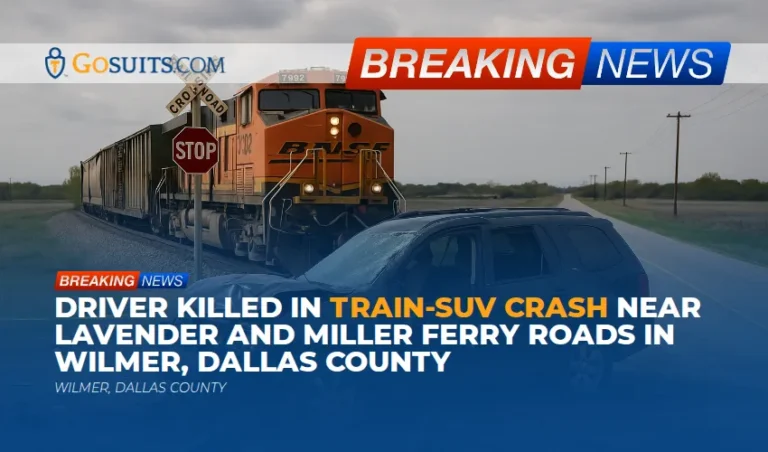
Authorities report that around 12:39 p.m., on a Friday afternoon, an SUV and a train collided near Lavender Road and Miller Ferry Road in Wilmer, just north of Ferris in Dallas County. According to the Dallas County Sheriff’s Office, the SUV was struck by the train, the driver was ejected from the vehicle, and was pronounced deceased at the scene. Officials noted there was no derailment. The driver’s identity had not been released at the time of reporting, and the investigation remains ongoing.
Those facts are difficult to read, and even harder for neighbors and loved ones who live and work near that rail corridor. Trains move through this area regularly in the early afternoon, and many residents drive those farm-to-market style roads to and from lunch, shifts at the industrial parks off I-45, or school pick-ups in nearby communities.
Where it happened and local context near Wilmer and Ferris
The location described by law enforcement, near Lavender Road and Miller Ferry Road, sits in a stretch of southeast Dallas County where rail lines run alongside rural roads and growing logistics hubs. Wilmer and Ferris anchor a busy portion of the I-45 corridor. Freight trains serving large distribution centers and intermodal facilities travel these tracks at all hours. If you know the area, you can picture the long, straight rail lines cutting across two-lane roads and pastureland before you reach the highway frontage.
Grade crossings in this part of the county can be a mix of active warnings (gates and flashing lights) and passive warnings (crossbucks and signs). Weather, long trains, sun glare in certain seasons, or blocked sightlines from vegetation or stacked freight cars can all make visibility and timing a challenge. None of those conditions by themselves determine fault in any individual crash, but they are the realities families and investigators consider when trying to understand what happened.
Railroad crossing safety realities in Dallas County
Across the United States, highway-rail grade crossings are a recognized safety focus for federal and state transportation agencies. The Federal Railroad Administration (FRA) and the Federal Highway Administration (FHWA) oversee programs and engineering countermeasures intended to reduce collisions at crossings, such as improving signal timing, installing gates, enhancing sight distance, and upgrading signage and pavement markings. You can learn more about how these crossings are evaluated and funded through the national Railway-Highway Crossings Program, often referred to as Section 130, which supports state projects to improve safety at public crossings [1] [2].
One fundamental reality guides every investigation: trains cannot stop quickly. Even when an engineer applies emergency braking, a heavy freight train can require a long distance to come to a full stop. That physics-driven constraint is a key reason transportation agencies emphasize layered protections at crossings and why investigators analyze whether active warnings functioned properly, how sightlines and approach speeds interacted, and whether any unusual hazards existed at the time of the crash [1].
Passenger ejection, which officials noted here, is also a known factor associated with high fatality risk in roadway crashes. National Highway Traffic Safety Administration research and safety communications underscore that ejection is strongly correlated with severe or fatal outcomes, which is why restraint use and crash dynamics are closely evaluated in any fatal motor vehicle investigation [3].
What investigators will likely examine
In a highway-rail crossing fatality, multiple entities typically contribute to the fact-finding process. Local law enforcement leads the immediate crash scene response. Depending on the crossing type and ownership, railroad personnel, signaling technicians, and claims representatives may document equipment and warning system status.
While the Sheriff’s Office continues its work, investigators commonly look at:
- Warning system function including whether gates, lights, bells, and circuitry operated as designed at the time of the event. Data logs and maintenance records may be reviewed.
- Crossing design and visibility such as sight distance, roadway grade, signage, and any temporary obstructions.
- Driver and vehicle factors including approach speed, distraction or impairment indicators, and whether the occupant restraint system functioned. Vehicle data modules, if present and intact, may be downloaded.
- Train operations including horn use, train speed, emergency braking, and event recorder data.
- Environmental context like weather, sun angle, and traffic conditions on the specific approach at 12:39 p.m.
The goal is to reconstruct the sequence of events, identify any contributing factors, and determine whether improvements or remedial actions are warranted.

Potential civil liability and rights under Texas law
Even before the official report is released, families often ask what civil rights may exist after a fatal grade crossing crash. In Texas, wrongful death and survival laws provide pathways for certain family members and the decedent’s estate to bring civil claims when a death is caused by a party’s wrongful act, neglect, carelessness, unskillfulness, or default. These rights are codified in Chapter 71 of the Texas Civil Practice and Remedies Code [4].
Depending on the facts, potential defendants in a crossing collision claim can include one or more parties, for example a driver, a vehicle owner, a railroad company, a signaling contractor, or a governmental entity if a roadway design or maintenance issue is implicated. Each potential defendant and theory must be grounded in evidence and Texas law; speculation helps no one, and premature conclusions can harm a family’s path to answers.
A seasoned attorney will generally evaluate:
- Crossing warnings and whether active devices and passive signage met applicable standards and functioned as intended.
- Maintenance and inspection records for the crossing and signal equipment.
- Train handling including horn use, speed relative to authorized limits, and event recorder data.
- Roadway approach conditions such as sight distance and vegetation management.
- Vehicle and occupant protection issues where relevant under Texas negligence and product liability frameworks.
Families do not have to navigate these questions alone. While every case is different, fatal accident lawyers can help secure time-sensitive evidence, protect legal rights, and interface with railroad and insurer investigators in a professional way.
First days after a fatal crash: practical steps for families
There is no single right way to move through the first week after a sudden loss. That said, a few practical actions can make a difference later, especially where evidence and official records are concerned. Consider the following:
- Preserve what you can. Keep any texts, photos, dashcam footage, or location-sharing logs that show your loved one’s route or timing that day. Save the vehicle, keys, and any onboard devices without repairs or alterations until an attorney advises next steps.
- Identify the crossing. Write down the exact location, including the nearest street names, milepost if visible, and any identifying numbers on the crossbuck post or signal cabinet.
- Note potential witnesses. Neighbors, nearby workers, or drivers queued at the crossing may have important observations. Collect names and contact details if you can do so gently and safely.
- Hold off on detailed statements to insurers. Insurers often call quickly. Before giving a recorded statement, contact a qualified attorney. What someone says early on can be used against the family later.
- Request official records methodically. Texas agencies maintain specific procedures for crash reports and death certificates. Following those steps preserves accuracy and privacy.
For a structured checklist tailored to paperwork tasks in North Texas, see our internal guide, Dallas wrongful death checklist families.
How to get key records in Texas: police report, death certificate, and rail information
Official documentation helps families understand what happened and, later, supports any civil claims. Here is where to start in Texas:
Police crash report
Most Texas crash reports are processed through the Texas Department of Transportation’s Crash Records Information System. Eligible parties can purchase reports after they are submitted and processed. TxDOT provides guidance on crash reports and records on its website [5]. If the Dallas County Sheriff’s Office took the lead, the report will typically be uploaded to the state system after the investigation milestones are met.

Death certificate and medical findings
Texas death certificates are managed by the Texas Department of State Health Services Vital Statistics Section. Immediate family members and other authorized requestors can obtain certified copies. The state outlines eligibility and application methods, including in-person, mail, and online options [6].
In Dallas County, the medical examiner function is administered at the county level. While county web pages often provide case status and next-of-kin guidance, they may not utilize a .gov domain. When in doubt about county site authenticity, verify by cross-referencing contact details through the State of Texas directory or by calling the main county switchboard.
Railroad and crossing information
Public information about highway-rail crossings is maintained through federal databases. The FRA provides crossing inventory data and safety program information nationally. Families and their counsel often consult these resources to confirm crossing characteristics and historical project work at a specific location [1].
If an attorney is retained, they can also request signal maintainer records, event recorder data, and other technical materials directly from the railroad or through formal legal processes.
Insurance and claim considerations after a grade crossing loss
After a fatal crash, multiple insurers may be involved, including auto insurers, potential railroad risk managers, and sometimes roadway contractors’ carriers. Each has its own interests. Many families are surprised by how quickly adjusters call and how detailed the questions can be. Before returning those calls, it is prudent to consult with an attorney. Insurers may record statements, and even small inconsistencies can be used to reduce or deny claims later.
Topics that often arise include:
- Liability coverage and defenses. Insurers may argue comparative fault or assert that warning devices were adequate. Evidence at the crossing often holds the key.
- Wrongful death beneficiaries and damages. Texas law limits who may bring claims and what categories of damages may be recoverable, making it important to organize beneficiary information early [4].
- Uninsured or underinsured motorist (UM/UIM). If another driver was implicated in any way, families may need to evaluate UM/UIM coverage on the decedent’s policy.
- Preservation letters. Counsel can send formal notices requiring entities to preserve relevant evidence at the crossing and on the train.
It is common to feel overwhelmed by these issues in the midst of grief. Reaching out to fatal accident lawyers can help ensure preservation steps are taken and communications with carriers are handled thoughtfully.
Community care, grief, and local support considerations
Wilmer and Ferris are tight-knit communities. Word of a fatal crash travels fast along church groups, school families, and warehouse and yard crews who share shifts. Every family grieves differently. Some prefer privacy. Others welcome a neighbor dropping off a casserole or offering rides for a few weeks.
If organizing community support, consider:
- Respect for privacy. Confirm with the family about any public posts or fundraisers to avoid accidental disclosure before officials release a name.
- Practical help. Meal trains, childcare coordination, and errands can take real burdens off loved ones.
- Scheduling around services. Local houses of worship in southeast Dallas County often help coordinate prayer services or memorials. Schedulers should plan around work shifts common in the nearby logistics hubs.
Grief counseling resources are available through school districts, county health programs, and regional nonprofits. If you prefer public-sector materials, the state health department maintains directories for mental and behavioral health services that can guide you to local providers [6].
Safety tips for drivers near Wilmer, Ferris, and the I-45 corridor
Crossings in our area vary. Some are protected by gates and lights. Others rely on signs alone. No matter the configuration, a few reminders can help reduce risk:
- Approach slowly and look both ways. Especially on rural roads, trees, brush, or equipment can block sightlines until you are close to the tracks.
- Never go around a lowered gate. A second train may be approaching, and signals are timed for train speeds, not vehicle impatience.
- Do not stop on the tracks. In traffic, wait until there is room to fully clear the crossing on the other side.
- If your vehicle stalls on the tracks, get everyone out immediately and move away from the tracks at a 45 degree angle in the direction of the oncoming train. Call 911. If an Emergency Notification System (ENS) blue sign is posted at the crossing, use the number to alert the railroad directly. The FRA explains ENS signs and crossing protocols in its public materials [1].
- Use seat belts every trip. Ejection greatly increases the risk of severe injury or death in a collision. NHTSA’s occupant protection guidance explains why restraint use matters so much [3].
Next steps the community can take now
Here are concrete steps people in our community can take to support safety and readiness, and to protect families’ rights after a tragedy:
- Document crossing concerns promptly. If you or your neighbors notice issues at a local crossing, such as obstructed sightlines or malfunctioning lights, write down the date, time, and details. Report the concern through official channels described by the FRA and TxDOT. Doing this quickly helps agencies prioritize hazards [1] [5].
- Preserve evidence after an incident. Photos of the crossing approach, skid marks, signal status, and surroundings taken as soon as it is safe can be important. Save originals with timestamps and avoid altering metadata.
- Request official records through the right portals. Using TxDOT’s crash records process and the state vital records system ensures accuracy and reduces delays [5] [6].
- Consult counsel before speaking with insurers. Insurers will often ask for recorded statements quickly. People benefit when they first understand their rights and obligations. Early statements can be used against them, even when given in good faith.
- Understand the timeline. Texas statutes set time limits for bringing claims. While there is room to grieve, certain notices and preservation steps are time-sensitive. Acting sooner helps protect options later [4].
For some families, organizing paperwork is the first manageable task. Others need time before they take any administrative steps. Either approach is understandable; what matters is ensuring key deadlines and preservation actions are not missed. That is why many choose to speak with fatal accident lawyers early, even if they are not ready to make any decisions yet.
In addition to statewide guidance, our internal resource on the Dallas wrongful death checklist families can help keep tasks and deadlines in one place.

Commentary from Gosuits Wilmer, Texas Personal Injury Attorney
Our hearts go out to the loved ones of the driver who died in this collision near Lavender Road and Miller Ferry Road. Articles like this are offered for educational purposes and general information. We hope the details above help community members understand what investigators examine and where families can find official records in Texas.
Based on what authorities have shared, this was a tragic highway-rail grade crossing crash with no derailment and a driver ejected from the SUV. When a loss happens at a crossing, the civil questions often center on warning system function, sight distance, train handling, and roadway approach conditions. Those issues are technical and depend on evidence gathered quickly.
In our experience, insurance companies and large corporations move fast to frame the narrative. They may request recorded statements, seek access to a vehicle, or share selective snippets of data. People unfamiliar with these processes understandably try to cooperate, but that cooperation can be misused. Claims professionals are trained to minimize payouts; families are navigating grief and do not know what to preserve or how to interpret a signal maintenance record. That imbalance can affect outcomes.
It is important to get a free consultation with a qualified attorney before giving detailed statements to any insurer or railroad representative. An initial conversation helps people understand their rights, preservation steps, and the kinds of documents that matter. It also sets expectations for timelines under Texas law. Even if no decisions are made, early guidance helps ensure that time-sensitive evidence and records are protected.
References or Resources
- Highway-Rail Crossings Program Overview – Federal Railroad Administration
- Railway-Highway Crossings (Section 130) Program – Federal Highway Administration
- Seat Belts: Occupant Protection and Ejection Risk – National Highway Traffic Safety Administration
- Texas Civil Practice and Remedies Code, Chapter 71: Wrongful Death – Texas Legislature Online
- Crash Records and Reports Information – Texas Department of Transportation
- Death Records and Certificates – Texas Department of State Health Services