- What the World Cup and other big DFW events mean for everyday safety
- Quick summary of the community updates and why safety planning matters
- Traffic, rideshare, and pedestrian risk hotspots near DFW venues
- Common injury scenarios during big events and who may be civilly liable
- Immediate steps if someone is hurt near a stadium, fan zone, or event
- Where to request official records in DFW after an incident
- Medical care and documentation in North Texas
- Insurance and claims: why early guidance matters
- Data and safety context for North Texas roads and big gatherings
- Community-focused tips for safer match days and large gatherings
- Why acting quickly matters after an incident
- Commentary from Gosuits Dallas, Texas Personal Injury Attorney
- References
What the World Cup and other big DFW events mean for everyday safety
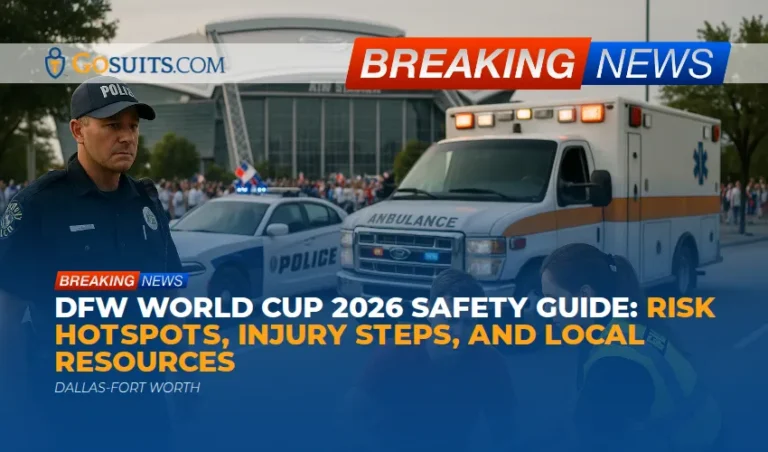
Dallas-Fort Worth is gearing up for a remarkable stretch: the 2026 World Cup draws closer with match days planned at AT&T Stadium in Arlington, FC Dallas continues to build energy in Frisco, new filming projects bring street closures, and even local food spots like the Hurst scene are pulling in crowds. That is great for our community. It also means unusual traffic patterns, compressed pedestrian flows, and busy rideshare pickup zones from Downtown Dallas and Victory Park to The Star in Frisco and entertainment districts like Deep Ellum and Bishop Arts. When that many people converge at once, crash and injury risk often rises, especially around peak arrival and departure times. We wrote this guide to help neighbors navigate those days safely and to explain what to do if an injury happens near a venue or fan area.
Quick summary of the community updates and why safety planning matters
Recent local headlines highlight the momentum. FC Dallas and MLS are anticipating a lift from the World Cup buzz in North Texas, a high-profile series is filming around Frisco, and Hurst is drawing crowds with splashy food features. None of these stories report injuries, but they point to something practical: more people moving around concentrated locations, at once. Think of the Dallas North Tollway surging north of LBJ into Plano and Frisco on match nights, or I-30 and Collins in Arlington before and after international fixtures. Add construction detours or lane closures, scooters and bikes weaving through post-game crowds, and late-night rideshare zones near bars. Planning ahead can genuinely reduce risk. And if an accident does occur, knowing how to preserve evidence and obtain official reports can protect a future claim.
Traffic, rideshare, and pedestrian risk hotspots near DFW venues
Match and concert corridors
On game days, expect slowdowns and unpredictable behavior along these corridors:
- Dallas North Tollway and Sam Rayburn Tollway (SH 121): Feeds Toyota Stadium, The Star, and Legacy West. Congestion can spill onto Main Street in Frisco and Preston Road.
- I-30, SH 360, and Collins Street in Arlington: Primary approach to AT&T Stadium. Pedestrian crossings around tailgate lots and foot-traffic to rideshare zones can be dense.
- I-35E into Downtown Dallas, Victory Park, and Uptown: Before and after watch parties, AAC events, or large fan zones in Klyde Warren Park and AT&T Discovery District.
- US 75 through Cityplace, Knox, and SMU areas: Pre and post-event dining and bar traffic causes frequent lane changes and sudden braking.
For families planning to walk, especially with older adults or kids, try to route to signalized crosswalks and avoid mid-block crossings even if the crowd is moving that way. If you are driving, expect pedestrians to enter crosswalks late in the cycle. The safest approach is patience and eye contact with walkers at corners.
Rideshare and pickup zones
Rideshare hubs near stadiums and entertainment districts create short-notice hazards: double parking, quick U-turns, and doors flung into bike lanes. NHTSA highlights that impaired driving and distraction often spike around major sporting events, so designate a sober driver or use rideshare and taxi zones that attendants control, and avoid hopping into a vehicle in a live lane [1]. When walking, give car doors a buffer and watch for drivers creeping curbside with eyes on their phones rather than on the road.
Scooters, bikes, and dense foot traffic
Where scooters and bikes share space with crowds, falls and collisions rise. Deep Ellum, Lower Greenville, and areas around Uptown, Victory Park, and the Katy Trail see clusters of riders and pedestrians on weekends. In these spots, plan extra time, dismount where the crowd compresses, and avoid weaving through groups near street corners.
Common injury scenarios during big events and who may be civilly liable
Big gatherings change the risk picture. From a personal injury perspective, we often see patterns like these:
- Vehicle collisions in traffic waves: Rear-end, sideswipe, and intersection crashes spike when drivers make quick lane changes to reach exits or rideshare zones. Potentially liable parties may include a speeding or distracted driver, or in some cases a commercial operator with inadequate training and supervision.
- Pedestrian knockdowns: Crosswalk strikes when turning traffic fails to yield, or parking lot collisions where lighting and traffic direction signage are inadequate. Liability often centers on the driver, but venue operators or lot managers may share responsibility if pedestrian routes or lighting are unreasonably unsafe.
- Rideshare pickup hazards: Doorings into cyclists, sudden pulls from the curb, or pickups in prohibited locations. The at-fault driver or, in some situations, a commercial entity that set hazardous pickup design may be examined under a negligence theory.
- Trip and fall around venues: Cables, temporary mats, or uneven surfaces near fan zones can cause falls. Property managers and contractors may be responsible if they failed to correct a known hazard or warn in a reasonable way.
Liability is fact-specific. Venue and event plans sometimes include detailed traffic control diagrams, lighting, and pedestrian routing. Those records, together with eyewitness videos and official incident reports, can become central evidence if someone is hurt.
Immediate steps if someone is hurt near a stadium, fan zone, or event
In the first moments and hours, focus on safety, health, and preserving facts:
- Call 911 and accept medical evaluation: On-scene medics can detect symptoms that are easy to miss. Follow-up care should be prompt, even if injuries seem minor. Some injuries present delayed symptoms.
- Photograph the scene: Capture vehicle positions, skid marks, signage, lighting, surface conditions, and any crowd-control equipment. Include wide shots for context and close-ups of damage or hazards.
- Collect witness information: Ask bystanders to share names and contact details. If they filmed, politely request copies.
- Note venue details: Take photos of lot identifiers, gate numbers, and posted rules near the area. These small details help reconstruct responsibility for lighting, routing, and warnings.
- Preserve clothing and gear: Shoes or helmets can show impact points, debris, or residue. Keep them as-is in a bag.
Resource hubs often publish practical checklists, but a direct conversation with seasoned car accident lawyers early on can help you avoid missteps that weaken a claim. Statements given at the scene or online can be misinterpreted later, so be careful with public posts until facts are documented.
Where to request official records in DFW after an incident

Police crash reports and incident numbers
If Dallas Police or a suburban department responded, your formal crash report is typically filed with the Texas Department of Transportation’s Crash Records unit. You can learn about how Texas crash reports are compiled and accessed through TxDOT’s Crash Records resources [2]. For city-specific records and open records requests:
- Frisco Police Records: The City of Frisco provides police records and open records request instructions on its government website [3].
- Arlington Police Records: The City of Arlington details public records processes for crash or incident documentation [4].
- Fort Worth Police Records: The City of Fort Worth publishes guidance for obtaining police reports and other records [5].
Texas public agencies handle many incident records under the Texas Public Information Act. The Texas Attorney General’s website explains your rights to request public information and the general timelines agencies follow [6].
Autopsy reports and the medical examiner
In the event of a fatality, the county medical examiner’s office where the death occurred is the right point of contact. In the DFW area, Tarrant County and Collin County maintain public-facing pages for next-of-kin requests and records questions. You can find official contact information and request guidance through the Tarrant County Medical Examiner [7] and the Collin County Medical Examiner [8]. If the incident occurred in Dallas County, families can contact the Dallas County Medical Examiner by searching for the county’s official page and following its instructions for next-of-kin. When in doubt, ask the investigating officer which county medical examiner has jurisdiction.
Medical care and documentation in North Texas
Documenting evaluation and treatment is as important as seeking care quickly. Keep copies of discharge paperwork, visit summaries, imaging on disc, prescriptions, and all receipts for out-of-pocket costs. In North Texas, Level I trauma centers provide comprehensive care for serious injuries. The Texas Department of State Health Services maintains statewide information about trauma facility designations and how trauma systems are organized [9]. If EMS transports to a regional trauma facility, note the receiving hospital, unit, and treating team if possible.
When symptoms evolve, update your medical team. Record functional limitations like missed work, difficulty driving, or inability to care for children. A simple daily journal can help recall details months later.
Insurance and claims: why early guidance matters
After big events, insurers are flooded with claims: parking lot fender benders, rideshare incidents, sidewalks falls, and pedestrian injuries. It is common to get an early call from an adjuster asking for a recorded statement. Consider speaking with a lawyer first, because what people say to an insurer can be used against them later. Many Dallas car accident lawyers will explain your options and outline next steps in an initial consultation at no cost, so you can decide how to proceed without pressure.
Evidence preservation letters, requests for venue plans, and obtaining surveillance footage are time-sensitive. Retailers, vendors, and venues may overwrite video in days. Written requests should go out promptly to preserve camera footage and incident logs. Coordinating benefits is another early priority, especially if there are medical payments provisions, health plan liens, or rideshare commercial policies that may apply. If an insurance claim is ultimately necessary, make sure it is informed by all available evidence and the correct policy layers.
Unfortunately, hit and run events do occur around large gatherings. To help people avoid common mistakes after such crashes in Dallas, see this practical guide: hit and run claim steps dallas.
Data and safety context for North Texas roads and big gatherings
Transportation and safety agencies provide research that helps explain why risk rises around major events and how to reduce it.
- Event and congestion dynamics: The Federal Highway Administration publishes guidance on managing special event traffic, noting that unusual travel patterns, compressed arrival and departure times, and unfamiliar drivers converge to increase conflicts and delays [10].
- Impaired and distracted driving around big games: NHTSA’s Super Bowl campaign materials spotlight the recurring spike in impaired driving and urge communities to coordinate enforcement and designated driver programs on event days [1].
- Pedestrian safety: NHTSA’s pedestrian safety resources emphasize the importance of visible crosswalks, lighting, and driver yielding behavior near event zones with heavy foot traffic [11].
- Texas roadway risk: TxDOT’s crash resources and public safety campaigns underscore persistent challenges on Texas roads and provide avenues for obtaining official crash documentation [2].
- Public gathering security: The Cybersecurity and Infrastructure Security Agency offers readiness tools for securing public gatherings, including crowd flow, access management, and emergency coordination frameworks that event planners and venues can adopt [12].
For families, the practical takeaway is simple. Expect variability. Leave early, park farther if it reduces conflict, and set a family meeting spot in case phones die or the crowd surges. These small steps reduce risk and help everyone regroup safely.
Community-focused tips for safer match days and large gatherings
- Plan your route: Use familiar approaches to Toyota Stadium, Victory Park, or AT&T Stadium and avoid last-second lane changes. If a block is closed for filming or an event, accept the detour rather than forcing a merge.
- Set a safe pickup point: Choose a rideshare zone staffed by attendants. If crowds are heavy in West End or Deep Ellum, walk a block or two to a calmer corner and confirm the license plate before entering.
- Be visible at night: Wear or carry something reflective. In parking lots, assume drivers cannot see you between tall SUVs or tailgates.
- Cross at signals: Even if the crowd flows mid-block near restaurants in Uptown or Hurst’s popular strips, aim for the crosswalk and wait a full light cycle if needed.
- Mind door zones: Cyclists heading to watch parties on Henderson or through the Design District should ride outside the door zone, especially near rideshare queues.
- Document hazards: If you notice lighting out, missing cones, or a tripping hazard near a fan zone, snap a photo and report it to the venue or city service portal when you get home.
Many community members ask how to protect their rights if something still goes wrong. That is a fair question. The core is evidence and timing. Secure medical care, then secure the records that prove what happened.
Why acting quickly matters after an incident
What is the exact step people should take? Start a simple evidence plan within 24 to 48 hours. That means requesting your police report number, preserving photos and videos from your phone in a safe folder, writing down a timeline while it is fresh, and asking nearby businesses if camera footage is available. If a claim seems possible, consult an attorney before calling any insurance carrier. Early statements can be misconstrued. A quick legal consult helps clarify coverage, identify all responsible parties, and prioritize which records to request that week.
What benefit comes from acting now? Two major ones. First, key evidence often disappears fast. Venue and retailer videos are overwritten. Construction or event signage gets removed. Second, the sooner injuries are documented, the harder it is for an insurer to argue they came from somewhere else. Acting this week, not next month, preserves facts that move a claim forward rather than backward.
When does timing matter most? After large gatherings and high-profile games, evidence is particularly perishable. If an injury occurred on a match night in Frisco or Arlington, assume video retention windows are measured in days, not weeks. Make your preservation requests immediately. Many community members find it helpful to speak with Dallas car accident lawyers about quick, specific next steps meant for these tight timelines.

Commentary from Gosuits Dallas, Texas Personal Injury Attorney
Our hearts are with everyone enjoying a rare and exciting season in North Texas. This article is for educational purposes and general information, not a substitute for guidance on a particular situation. The World Cup, major matches, and big filming days are milestones for the community. They also test our roads, sidewalks, and shared spaces. In our view, the biggest risks are predictable: rushed drivers in unfamiliar traffic patterns, dark parking lots with compressed pedestrian flows, and improvised pickup spots. These are issues that can be mitigated by planning and reasonable safety measures.
From the claims side, insurance companies and large entities understand that people in the aftermath are tired, shaken, and often unsure which records matter. Adjusters move quickly to collect statements and frame the incident in narrow terms. Some corporations know that video gets overwritten fast and incident logs are controlled internally. That information imbalance can shape outcomes. Leveling the field usually begins with a short conversation about preserving evidence, identifying every potentially responsible party, and coordinating medical documentation so injuries are captured accurately.
One thing we emphasize is the importance of a free consultation. People should understand their rights and the timelines for action before they talk to any insurer. A brief discussion can be the difference between missing a critical video request window and having the footage that shows exactly what happened. If you are navigating a difficult week after a major event, do not go it alone. Get informed first, then decide how to proceed.
References
- Super Bowl Drunk Driving Prevention – NHTSA Traffic Safety Marketing
- Crash Records and Reports – Texas Department of Transportation
- Police Records – City of Frisco
- Public Information Requests – City of Arlington Police
- Police Records – City of Fort Worth
- Overview of the Public Information Act – Texas Attorney General
- Medical Examiner – Tarrant County
- Medical Examiner – Collin County
- Trauma Facilities Designation – Texas Department of State Health Services
- Managing Travel for Planned Special Events – Federal Highway Administration
- Pedestrian Safety – NHTSA
- Securing Public Gatherings – CISA