- What we know about the LBJ TEXpress crash in Dallas
- Local context about the LBJ TEXpress, nighttime traffic, and visibility
- Key questions families ask after a Dallas motorcycle accident
- How liability may be evaluated in a multi-motorcycle and vehicle collision
- Immediate steps to preserve evidence in Dallas
- Where to get official records in Dallas and statewide
- Insurance considerations after a Dallas car accident involving motorcycles
- Common injuries in high speed interstate motorcycle crashes
- Important Texas timelines and legal deadlines
- Community safety takeaways for North Dallas riders and drivers
- Call to action for community members
- Sources and references
- Commentary from Gosuits Dallas, Texas Personal Injury Attorney
What we know about the LBJ TEXpress crash in Dallas
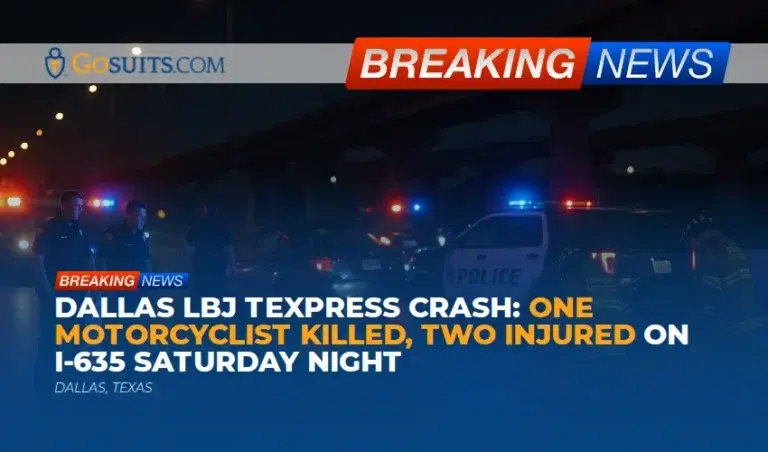
Dallas Police reported that one motorcyclist died and two others were injured after a crash involving three motorcycles and one vehicle on the LBJ TEXpress eastbound lanes. Officers were dispatched to the 3800 block of the LBJ TEXpress E. at approximately 9:25 p.m. on a Saturday night. One rider was pronounced dead at the scene, and two riders were transported to a hospital with conditions not yet released. Dallas Fire-Rescue responded alongside police. The investigation is ongoing and no further official details have been shared publicly at this time.
For neighbors in North Dallas who know this stretch of I-635, the LBJ TEXpress is a busy managed lane corridor that runs near landmarks like Galleria Dallas, the Midway Road and Marsh Lane area, and key interchanges toward US 75 and I-35E. Night traffic can be fast-moving, even on weekends, and sudden lane changes or speed differentials in managed lanes can create risk when multiple motorcycles and a passenger vehicle converge. This was a tragic Dallas motorcycle accident that will leave families and friends with difficult questions, especially so close to the holidays.
Local context about the LBJ TEXpress, nighttime traffic, and visibility
The LBJ TEXpress is a set of tolled managed lanes within the LBJ Freeway corridor. Drivers use variable-priced lanes to maintain steadier traffic flow. Even so, nighttime driving introduces unique hazards. Headlight glare, reduced contrast with road surfaces, and quick merges into or out of managed lanes can limit reaction time. Riders traveling in small groups may be particularly vulnerable when one bike brakes suddenly and a nearby vehicle moves between lanes at a different speed.
Federal highway guidance recognizes that managed lanes create dynamic operating conditions, with entry and exit points that require decisive signaling and speed discipline from all road users. The Federal Highway Administration provides overviews of managed lane operations that underscore how lane access, variable speeds, and traffic mixing can affect safety and driver expectations. See the FHWA managed lanes overview for broader context about how these facilities function statewide and nationwide. You can read more here: FHWA Managed Lanes Overview.
For local residents traveling this corridor at night, especially near retail hubs like Village on the Parkway and Galleria Dallas, remember how quickly speeds can change as drivers attempt to enter or leave TEXpress lanes. Riders on a bike or motorbike should build in a larger following distance than they might during the day and assume that drivers in adjacent lanes may not anticipate the presence of two or three motorcycles traveling together.
Key questions families ask after a Dallas motorcycle accident
When a fatal crash occurs, families are often left trying to find reliable answers. Common questions include:
- How can we get an official crash report? In Texas, the Texas Peace Officer’s Crash Report is maintained through the Texas Department of Transportation’s system. Information on requesting reports is in the section below.
- Who investigates a fatal collision on the interstate? City police typically lead the crash investigation within city limits. Dallas Police Department’s crash investigation division works these scenes, often with Dallas Fire-Rescue support. If a commercial motor vehicle is involved, state or federal agencies may be notified depending on circumstances.
- What determines fault in a multi-vehicle and multi-motorcycle collision? Investigators focus on statements, physical evidence, camera footage, skid or yaw marks, vehicle damage profiles, and data from onboard recorders when available. Texas’ proportionate responsibility rules can allocate fault among several parties.
- What is the difference between a wrongful death claim and a survival claim? In Texas, certain surviving family members may bring a wrongful death claim related to the loss of a loved one. The decedent’s estate may also assert a survival claim for damages the person could have pursued had they lived. Statutory structures for both are in the Civil Practice and Remedies Code.
- Should we speak to an insurance company right away? It is wise to consult an attorney first. What someone says to an insurer can be recorded and used later against their interests. A free consultation can help explain rights and options before any statements are made.
These are natural concerns. The sections below offer general information to help our Dallas community understand the process without speculating about this specific ongoing investigation.
How liability may be evaluated in a multi-motorcycle and vehicle collision
Determining responsibility in a Dallas car accident involving several motorcycles and a passenger vehicle typically requires a detailed reconstruction. Here are common considerations investigators and insurers look at:
Evidence that shapes fault decisions
- Scene documentation. Measurements, lane diagrams, debris fields, and vehicle rest positions can indicate pre-impact paths and speeds.
- Skid and gouge marks. These help estimate speed, braking, and impact angles.
- Vehicle and motorcycle damage profiles. Crush depth, scrape patterns, and transfer paint can show who contacted whom and where.
- Onboard data. Passenger vehicles often store event data recorder information such as speed, throttle, braking, and seatbelt usage for seconds before a collision. Some riders use helmet cams or handlebar cameras, which can be crucial.
- Third-party camera footage. TEXpress lanes and nearby businesses sometimes have cameras facing ramps or frontage roads. Dashcam footage from other drivers is increasingly common.
- Witness statements. Consistency, vantage point, lighting conditions, and memory reliability all matter when weighing statements.

Texas proportionate responsibility
Texas uses proportionate responsibility, which can apportion fault among multiple parties. A claimant who is found more than 50 percent responsible is generally barred from recovery, and any recovery is reduced by their percentage of responsibility if it is 50 percent or less. The statutory framework is in Chapter 33 of the Texas Civil Practice and Remedies Code. See the text here: Texas CPRC Chapter 33.
When a company vehicle is involved
If the other vehicle is a company car, potential theories can include negligent entrustment, negligent hiring or supervision, or vicarious responsibility if the driver was acting in the course and scope of employment. Records such as driver qualification files, trip logs, and phone use policies can become relevant. These issues are fact specific and depend on what the evidence shows.
Group riding dynamics
Riders traveling together experience concertina effects as small speed changes ripple through the group. If one motorbike adjusts speed for an entrance or exit, those behind may brake more sharply. In a mixed flow with cars and light trucks, this can produce secondary impacts. Investigators will study distances and sequence of impacts to understand whether a vehicle’s unsafe maneuver triggered a chain reaction, whether a rider’s sudden change in speed contributed, or both. This is why a careful reconstruction is particularly important in a Dallas motorcycle accident on a fast corridor like I-635.
Immediate steps to preserve evidence in Dallas
Time matters. Evidence can be lost if quick action is not taken. Community members often ask what can be done right away while being respectful and following lawful processes:
- Consult an attorney before speaking with insurers. A free consultation can clarify rights and responsibilities. Statements to insurance adjusters may be recorded. What is said early can be used later.
- Request preservation of evidence. Spoliation letters can be sent to involved parties asking them to preserve dashcam footage, event data recorder information, vehicle telematics, and cell phone data that might reflect texting or app usage at the time of the crash.
- Identify potential cameras. Note the ramps, overhead gantries, and nearby retail areas on the LBJ corridor. Third-party cameras, rideshare dashcams, and private fleet telematics can be vital.
- Document the scene context. If safe, record lighting conditions, signage, lane markings, and visibility of TEXpress access points. Nighttime visibility can change minute by minute.
- Secure motorcycle gear and parts. Helmets, jackets, pegs, and fairings can show impact points. Keep items in their post-crash condition.
- Collect medical records promptly. Hospital emergency and trauma records help connect injuries to the event. Diagnostic imaging and operative notes are particularly important for long-term care planning and any personal injury claim.
- Track expenses and time away from work. Maintain a record of medical bills, prescriptions, transportation costs, and work absences. This helps quantify losses.
Where to get official records in Dallas and statewide
Texas Peace Officer’s Crash Report
Texas crash reports are available through the Texas Department of Transportation’s system after the investigating agency submits them. Requesting parties typically include those involved in the crash, their representatives, or insurers. Learn how to request reports through TxDOT here: TxDOT Crash Reports.

Public information requests
For certain records such as 911 audio, dispatch logs, or body-worn camera metadata, requests are generally made under the Texas Public Information Act. The Texas Attorney General provides guidance on the process, timelines, and exemptions. Overview here: Texas Attorney General Open Government.
Dallas Fire-Rescue incident information
Dallas Fire-Rescue responds to crashes like the one reported on the LBJ TEXpress. Incident numbers and certain response records may be available through the city’s public information channels, subject to applicable exemptions. Reference the Public Information Act guidance linked above and be prepared to provide the date, approximate time, location, and any known incident identifiers.
Medical examiner and inquest records
In Texas, inquests and autopsies are governed by the Code of Criminal Procedure Chapter 49. Depending on the county’s policies and state law, certain records may be available to next of kin or their authorized representatives. Statutory framework here: Texas Code of Criminal Procedure Chapter 49. Families may also obtain death certificates through county vital records offices. Availability and redactions vary by statute.
Hospital records
Hospitals that treat crash victims, such as Level I trauma centers serving the Dallas area, provide records to patients or authorized representatives under HIPAA. Be ready with photo ID and proper authorization documents, such as a healthcare power of attorney for incapacitated patients or letters of administration for an estate when applicable.
Insurance considerations after a Dallas car accident involving motorcycles
Insurance issues can become complicated when three motorcycles and a passenger vehicle are involved. Here are common coverage types and concerns:
- Liability coverage. The at-fault driver’s liability insurance is the primary source for bodily injury and property damage claims. In a multi-party collision, several liability policies may be in play.
- Uninsured and underinsured motorist coverage. UM and UIM can apply if the at-fault party lacks adequate limits. Riders often carry UM or UIM on their motorcycle policy. Some households have UM or UIM stacked across multiple autos, subject to policy language and Texas law.
- PIP and MedPay. Personal Injury Protection may cover medical costs and a portion of lost income regardless of fault, depending on the policy. MedPay can assist with medical bills but typically does not cover wage loss.
- Property claims. Motorcycles often incur frame, fork, and wheel damage that requires thorough evaluation. High-end gear and custom parts should be itemized with receipts and photos where possible.
- Recorded statements. Insurers often request quick statements. Speaking first with an attorney is wise. What is said to an insurer can be used against the speaker later.
- Total loss and diminished value. Severe damage to a bike can trigger total loss evaluations. Where a motorcycle is repaired, diminished value claims may be possible depending on facts and policy terms.
When a crash results in a fatality, surviving family members may have a path to a wrongful death claim under Texas law. The framework for wrongful death is in the Civil Practice and Remedies Code. Read more here: Texas CPRC Chapter 71. A survival claim may also exist through the estate, which preserves certain claims the decedent would have been able to bring.
Common injuries in high speed interstate motorcycle crashes
Even with gear, riders are exposed to direct forces that occupants in a car are shielded from. National data highlights unique risks:
- Head and brain trauma. Helmets reduce the risk of head injuries and are strongly associated with lower fatality risk. The Centers for Disease Control and Prevention provides overviews on the impact of helmets and rider safety. See: CDC Motorcycle Safety.
- Torso and extremity injuries. Rib fractures, pulmonary contusions, pelvic injuries, and long bone fractures are common in high energy impacts.
- Road rash and degloving injuries. Abrasion injuries can lead to infection and may require grafting. Protective jackets, pants, and gloves can mitigate severity.
- Spinal injuries. Cervical and thoracolumbar injuries can occur in secondary impacts with road surfaces or barriers.
NHTSA’s motorcycle safety research shows a significant difference in survival rates for helmeted riders compared with unhelmeted riders. Riders can review national insights here: NHTSA Motorcycles.
Texas helmet requirements are set out in Transportation Code Chapter 661. Adults over 21 may ride without a helmet if specific conditions are met, such as completing an approved safety course or carrying adequate insurance. The statute is here: Texas Transportation Code Chapter 661. Helmet use is a personal choice within the law for many adults, yet it remains a vital safety measure.
Important Texas timelines and legal deadlines
Texas sets deadlines that affect personal injury and wrongful death cases:
- General statute of limitations. Most personal injury claims must be filed within two years of the date of injury. See Texas Civil Practice and Remedies Code section 16.003 here: Texas CPRC 16.003.
- Wrongful death. Wrongful death actions are generally subject to a two-year limitation, though there are limited exceptions in certain circumstances. Framework here: Texas CPRC Chapter 71.
Deadlines can be nuanced depending on facts, parties involved, and whether any governmental entity is implicated. If a government unit is involved, notice requirements can be shorter. Because timing affects rights, it is prudent to promptly seek a free consultation with a seasoned attorney to understand options before speaking with any insurer.
Community safety takeaways for North Dallas riders and drivers
Crashes along the LBJ corridor affect everyone who lives, works, or shops near the Galleria area. Whether you ride a bike for weekend group rides or commute by car, shared steps can reduce risk in managed lanes and on the general-purpose lanes nearby:
- For drivers
- Signal early and check mirrors twice before changing lanes near TEXpress entry or exit points. Motorcycles are small and can be masked by pillars or glare.
- Maintain a steady speed through managed lane transitions. Sudden braking or darting across multiple lanes raises collision risk.
- Look for two or three motorcycles traveling together. Passing between riders can force abrupt adjustments.
- For riders
- Increase following distance at night to allow for the speed differentials between managed and general lanes.
- Use reflective elements on jackets and luggage and consider auxiliary lighting within Texas law.
- Stagger formation where appropriate and tighten spacing only when you have clear visibility and adequate escape paths.
- Review access points to the LBJ TEXpress before a ride. Know where merges and diverges occur so the group can prepare early.
- For everyone
- Expect quick changes in speed near toll gantries and ramps. Prepare for vehicles entering and exiting the managed lanes.
- Avoid distractions. Even a brief glance at a phone can erase the reaction time needed to prevent a crash.
Safety reminders will not undo what happened, but they can help reduce the chance of another Dallas motorcycle accident on this corridor.

Call to action for community members
Here are focused steps that can protect information, clarify rights, and support safety improvements after a serious collision on the LBJ TEXpress:
- Document while details are fresh. Write down what you saw or heard, the time, weather, and traffic flow. Early notes are more reliable than memory months later.
- Preserve digital evidence. Save dashcam or helmet-cam files and back them up to more than one location. Do not overwrite memory cards.
- Request the official TxDOT crash report. The Texas Peace Officer’s Crash Report anchors insurance and civil claims. Follow the TxDOT process when the report becomes available.
- Consult an attorney before calling insurers. A free consultation can help explain what to say and what not to say. Statements to an adjuster may be recorded and can affect outcomes later.
- Gather medical and employment records. Treatment plans, imaging, work schedules, and pay stubs help demonstrate the impact of the crash on health and income.
- Report roadway concerns. If you observed a damaged barrier, confusing signage, or lighting issues, note the location and consider reporting through appropriate city or state channels.
Acting promptly helps ensure evidence is not lost, deadlines are not missed, and families have a clearer understanding of next steps. Timing matters because some data, like surveillance footage, is routinely deleted in days or weeks.
Sources and references
- Texas Department of Transportation Crash Reports
- Texas Attorney General Open Government and Public Information Act
- Texas Civil Practice and Remedies Code Chapter 33, Proportionate Responsibility
- Texas Civil Practice and Remedies Code Section 16.003, Limitations
- Texas Civil Practice and Remedies Code Chapter 71, Wrongful Death
- Texas Transportation Code Chapter 661, Protective Headgear for Motorcyclists
- Texas Code of Criminal Procedure Chapter 49, Inquests
- NHTSA Motorcycles Safety Overview
- CDC Motorcycle Safety
- FHWA Managed Lanes Overview
Commentary from Gosuits Dallas, Texas Personal Injury Attorney
Our hearts are with the families and friends affected by this crash on the LBJ TEXpress. The loss of a rider and the injuries to others are pain no community wants to see, especially during a season when many gather with loved ones. What follows is for educational purposes and general information, intended to help North Dallas residents understand how these cases unfold and what options may exist under Texas law.
Based on what has been publicly reported so far, this was a multi-motorcycle and vehicle collision at night on a busy managed lane corridor. That environment magnifies the importance of careful lane changes, speed management, and visibility. In similar incidents, a thorough investigation focuses on sequencing. Who initiated the first unsafe movement, how did following distances and speed differentials play a role, and did the design of an entry or exit point contribute to confusion. Because three motorcycles were involved, it is essential to obtain every piece of objective evidence available, from event data recorder downloads in the vehicle to any helmet-cam footage from riders or dashcams from nearby drivers. These items often clarify responsibility far better than memory alone.
Insurers and corporations know the first hours and days after a crash can shape the entire claim. They may move quickly to obtain recorded statements, set early narratives, or request broad medical authorizations. Many people do not realize they are not required to give a recorded statement to another driver’s insurer, and what they say can be used to limit or deny claims later. Policy provisions, such as exclusions or coordination clauses, can be cited to reduce payouts. In multi-party crashes, competing insurers may point fingers at different riders to dilute responsibility. This is where having a knowledgeable advocate makes a difference. It helps level the field so that evidence drives outcomes rather than pressure or confusion.
Obtaining a free consultation before speaking with any insurance company is important. It gives individuals a chance to understand rights, the role of Texas proportionate responsibility, the availability of coverages like UM or UIM, and what evidence should be preserved. It also helps families understand the difference between wrongful death and survival claims and the timelines that can affect both. Most importantly, it gives space to ask questions in a calm setting where the goal is clarity, not closing a claim quickly.