- What we know about the I-35E fatal wheel-off incident in Dallas
- When and where it happened
- Agencies responding and early confirmations
- Why wheel separations happen
- Safety and legal implications under Texas and federal law
- How families can obtain official records in Dallas County
- Evidence preservation steps after a wheel-off crash
- Insurance and coverage considerations after a wheel-off crash
- Wrongful death and survival claims in Texas
- Local context: I-35E traffic and Dallas crash trends
- What to do before speaking with any insurance company
- A practical checklist for families in the first days
- Call-to-action: Taking timely steps matters
- Commentary from Gosuits Dallas, Texas Personal Injury Attorney
What we know about the I-35E fatal wheel-off incident in Dallas
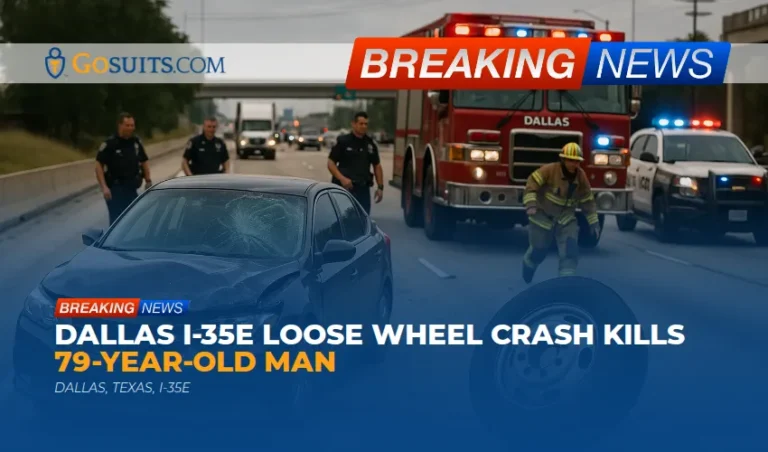
A 79-year-old man was identified as the person who died after a loose wheel struck a car on I-35E in Dallas. Early reporting indicates this occurred on a busy interstate corridor that runs through central Dallas and into Dallas County. A loose or separated wheel striking a vehicle is a rare but catastrophic roadway event. It often raises immediate questions about where the wheel came from, whether it detached from a passenger vehicle or a commercial truck, and what maintenance or equipment issues may have contributed. In incidents like this one, it is common for local law enforcement and first responders to secure the scene, for crash investigators to document debris patterns, and for the Dallas County Medical Examiner to confirm the manner and cause of death. As of now, no further public details are included here beyond what has been reported: a fatality linked to a loose wheel on I-35E within Dallas.
When and where it happened
The reporting date associated with this incident is March 22, 2026. The location is I-35E in Dallas, a heavily traveled stretch used daily by commuters moving between Downtown Dallas, Oak Lawn, the Design District, and points north toward Farmers Branch and Denton. If you drive this corridor, you know it sees steady traffic, frequent construction zones, and heavy commercial vehicle volumes at nearly all hours. Those conditions can complicate emergency response and post-crash cleanup, especially when debris or a detached wheel crosses multiple lanes.
Agencies responding and early confirmations
On I-35E inside city limits, the primary investigating agency is typically the Dallas Police Department, often supported by Dallas Fire-Rescue for medical response and scene safety. When fatalities occur, the Dallas County Medical Examiner’s Office is responsible for determining cause and manner of death and for next-of-kin notifications under Texas law [5]. Crash reports for Texas motor vehicle incidents are managed statewide by the Texas Department of Transportation’s Crash Records team. Families and involved motorists generally obtain official crash reports through TxDOT’s crash records system rather than directly from the police records desk [1].
Why wheel separations happen
Loose wheel events are typically mechanical failures or maintenance issues. Investigations often center on: – Improper torque or installation of lug nuts after service, leading to progressive loosening. – Fatigue cracking in wheel rims or hubs. – Worn, damaged, or missing wheel fasteners. – Bearing or axle component failure that allows the wheel assembly to separate. – Overloading or heat cycles that degrade critical wheel components. Federal motor carrier safety regulations prohibit operating commercial vehicles with cracked or broken wheels or loose or missing wheel fasteners [2]. If a commercial truck is implicated in a wheel-off crash, investigators look closely at maintenance records, pre-trip inspection compliance, and whether the carrier had sufficient safety and inspection programs. Vehicle manufacturers and parts suppliers also issue recalls when wheel components or assemblies are found to have safety-related defects. It can be prudent to run a Vehicle Identification Number through the federal recall lookup to rule out a known defect that should have been addressed [3].
Safety and legal implications under Texas and federal law
When a wheel detaches and causes a fatal crash, several layers of safety and legal duties may be involved. Below are general considerations that commonly arise in Texas civil cases. This is educational information, not case-specific guidance.

Equipment safety obligations
– Texas law prohibits operating vehicles in unsafe condition or without equipment required by law. That includes ensuring wheels and their fasteners are in safe operating condition [4]. – Federal safety rules for commercial carriers bar operation with defective or missing wheel components and require regular inspection, repair, and maintenance programs [2].
Cargo or debris versus integral equipment
Some Texas statutes address unsecured loads or loose materials on roadways. While a wheel is part of a vehicle’s equipment rather than cargo, courts still examine whether a negligent act or omission allowed the wheel to become a road hazard or projectile. If a maintenance shop failed to properly install or torque wheel lugs, or if a fleet failed to maintain equipment, that can be significant in a civil negligence analysis.
Potentially responsible parties
Depending on the facts uncovered by investigators and independent experts, potential civil defendants can include: – The owner or operator of the vehicle that lost the wheel. – A maintenance facility that last removed or installed the wheel or tire. – A trucking company or contractor responsible for inspection and maintenance. – A manufacturer or supplier if a defect in a wheel, hub, bearing, or fastener is implicated. In situations where multiple parties share responsibility, Texas proportionate responsibility rules can apply, allocating fault among those involved. Skilled evaluation and early preservation of the detached wheel and hub components are often critical to understanding exactly why the separation occurred.
How families can obtain official records in Dallas County
Families and involved motorists can start pulling together documents that clarify what happened and who investigated. Here is how that typically works in Texas:
Texas crash report from TxDOT
– Where to request: TxDOT Crash Records processes official Texas motor vehicle crash reports. Requests are made through TxDOT’s crash records portal [1]. – Who can request: Under state rules, certain parties such as those involved in the crash or their authorized representatives may obtain the complete report. – What to have ready: Date of crash, location details, vehicle information, and if available, the TxDOT crash identification number.
Dallas County Medical Examiner records
– Role of the ME: The county Medical Examiner determines cause and manner of death and maintains autopsy and investigative records under Texas law [5]. – Requesting records: Autopsy reports are generally public records with certain statutory exceptions under Texas’ Public Information Act framework. Requests for governmental records are governed by state law and guidance from the Texas Attorney General [6]. Families commonly submit a written public information request to the county office, specifying the decedent’s name, date of death, and any available case number. – Next-of-kin communications: The ME’s office typically communicates directly with next of kin about release of remains and official documentation timelines.

Public information requests for ancillary records
Families sometimes seek 911 audio, CAD logs, or certain investigative materials to better understand timeline and response. While some items may be withheld or redacted, Texas law provides a process for requesting public records from governmental bodies [6].
Evidence preservation steps after a wheel-off crash
In a wheel separation case, physical evidence can be decisive. Consider the following steps to avoid unintentional loss of key materials: – Secure the impacted vehicle and detached wheel: Arrange storage of the vehicle, detached wheel, and any hub or fastener fragments in a secure facility. Avoid repairs or disposal until an independent inspection can occur. Chain-of-custody matters. – Collect scene photos and debris field documentation: If safe and permissible, preserve images showing roadway gouge marks, impact points, and where the wheel came to rest. First responders’ photographs, if available, can also be important. – Request that involved companies preserve maintenance logs: Promptly ask the vehicle owner or carrier to preserve pre- and post-trip inspections, torque records, repair invoices, and driver logs. In many cases, sending a spoliation preservation notice quickly is important to protect evidence. – Check for recalls and service bulletins: Run the VIN through the federal NHTSA recall tool to determine if a known defect was subject to a safety campaign [3]. – Identify potential video: Roadside traffic cameras and nearby businesses sometimes capture critical moments. Public records laws govern access to government-held video; requesting promptly can be important due to short retention windows [6].
Insurance and coverage considerations after a wheel-off crash
Insurance can be complex in wheel-off cases because the striking object is not another vehicle but a detached part. Common issues include: – Liability insurance of the vehicle that lost the wheel: If investigators identify the source vehicle, that owner’s or operator’s liability policy is the primary target for bodily injury or wrongful death claims. Commercial auto policies may apply when a fleet vehicle is involved. – Unidentified or phantom vehicle scenario: If the source vehicle is never identified, Uninsured Motorist Bodily Injury coverage may apply, subject to policy terms and Texas law. Policyholders often face heightened scrutiny in phantom-object claims. – PIP and MedPay: Texas policies may include Personal Injury Protection or Medical Payments coverage to address immediate medical bills or certain expenses, regardless of fault. – Property damage and total loss valuation: Struck vehicles may be declared total losses, and gap insurance can matter if a loan balance exceeds actual cash value. If a claim is contemplated, it is generally wise to speak with an attorney before calling any insurer about the facts. What is said to an insurance adjuster can be recorded and used to challenge liability or damages later.
Wrongful death and survival claims in Texas
Texas law provides two civil paths following a fatal crash: the wrongful death claim and the survival claim. These are separate but related. – Wrongful death claim: Brought by the statutory beneficiaries, typically the surviving spouse, children, and parents of the decedent. It seeks damages such as loss of companionship and mental anguish, among others. See Texas Civil Practice and Remedies Code Chapter 71 [7]. – Survival claim: Brought by the decedent’s estate to recover damages the decedent could have claimed if they had survived, such as conscious pain and suffering before death. See CPRC 71.021 [7]. – Statute of limitations: In many Texas wrongful death and survival matters, a two-year statute of limitations applies under CPRC 16.003, subject to limited exceptions [8]. Timely action matters because critical evidence can be lost and legal deadlines are strict. Families navigating these issues in Dallas often encounter unfamiliar terminology and layered insurance questions. Consulting with seasoned counsel early helps clarify who can file, what damages may be available, and how investigations and expert inspections are coordinated.
Local context: I-35E traffic and Dallas crash trends
I-35E is a major north-south artery for Dallas commuters and freight traffic, connecting Downtown Dallas to the I-30 Canyon, the Design District, and the Medical District near Parkland and UT Southwestern. High volumes of heavy trucks move daily between the Stemmons Corridor and distribution hubs farther north. That mix of speed, congestion, and frequent work zones can amplify the danger when debris or a detached wheel enters the travel lanes. Statewide, Texas traffic fatalities have remained a persistent safety concern. TxDOT crash records and annual safety reporting provide the official baseline for crash counts, serious injuries, and fatality trends across urban counties like Dallas [1]. While individual wheel-off crashes are comparatively rare, their consequences are often devastating because a free-rolling wheel can cross medians or rebound unpredictably into oncoming lanes at highway speeds.
What to do before speaking with any insurance company
After a catastrophic highway crash, insurers often move quickly. Adjusters may call to take recorded statements or to discuss vehicle valuations and medical information. It is prudent to talk with an attorney first, especially in a wheel separation case where identifying the source vehicle or proving mechanical negligence may require a more careful approach. Early statements can unintentionally limit options later. Many families choose to consult with wrongful death car accident lawyers so they better understand rights before any insurer contact. When litigation or a claim is possible, counsel can help coordinate expert inspections, protect evidence, and communicate with insurers so nothing important is overlooked or waived. This step is particularly important if the wheel source is unknown or if a fleet and its maintenance vendors are involved.
A practical checklist for families in the first days
The first days are overwhelming. The list below reflects common-sense steps that often help families in Dallas-area fatal crash cases: – Designate one point of contact: Have a trusted family member or representative coordinate communication with authorities and any potential legal counsel. – Request official documents methodically: Submit a TxDOT crash report request once the report is available [1]. Prepare to request autopsy records from the Dallas County Medical Examiner consistent with Texas law [5][6]. – Preserve vehicle and wheel evidence: Ask the tow yard not to dispose of or alter the vehicle, the detached wheel, and any related parts until an independent inspection can occur. – Keep a centralized file: Store billing records, funeral expenses, employer documents, and any out-of-pocket costs in one place. These often become part of a damages evaluation. – Note witnesses and media: Save names and numbers of witnesses. If local news captured the aftermath, archive those links for the record. – Discuss next steps with counsel: Before speaking to any insurer, consider a free consultation so you understand rights, potential claims, and the importance of timely preservation of evidence. What is shared with an adjuster can be used later to dispute liability or damages. For a deeper, paperwork-focused walkthrough tailored to local families, see our resource: Dallas wrongful death checklist families.
Call-to-action: Taking timely steps matters
– Identify and preserve critical evidence now: Wheel separation cases turn on parts, fasteners, and maintenance histories. Once a vehicle is scrapped or a wheel is misplaced, it may be impossible to reconstruct what failed. Preserving components early increases the chances that independent experts can pinpoint the cause. – Organize official records as they are released: Crash reports, autopsy findings, and any supplemental law-enforcement documents frame the narrative of what happened. Keeping these organized makes subsequent decisions more informed and less stressful. – Clarify insurance coverage before making statements: Determining which policies may apply and how to document losses is easier when statements to adjusters have not already narrowed the claim. A clear plan reduces the risk of avoidable claim disputes. – Track deadlines from day one: Texas deadlines are strict. Missing a statutory deadline or evidence retention window can foreclose important rights. Starting early provides breathing room for careful, informed decisions.

Commentary from Gosuits Dallas, Texas Personal Injury Attorney
Our hearts go out to the loved ones affected by this tragic I-35E incident. Losing a family member in a sudden highway event like a wheel separation is a profound shock. This discussion is offered for educational purposes and general information to help the community understand common issues that arise in cases like this. Based on what is publicly known, a detached wheel struck a vehicle on a busy Dallas interstate and caused a fatality. In our civil practice, we often see that the root cause in wheel-off crashes tends to be mechanical or maintenance related, sometimes made worse by congested, high-speed traffic patterns on corridors like I-35E. Causation analysis is technical and evidence heavy. Preserving the wheel, hub, and related fasteners is critical because that is often where the story is told. Insurance carriers and large companies have teams trained to move quickly. Adjusters may request recorded statements, medical authorizations, or early settlements before the full scope of responsibility and loss is known. They understand that people navigating grief and shock may not yet have the documents, expert inspections, or clarity needed to push back. That information imbalance can disadvantage families at the very moment they most need space and support. In circumstances like this, many people find it helpful to seek a free consultation with a seasoned attorney who can outline options, explain the interplay of wrongful death and survival claims, and help coordinate independent inspections and records requests. Early guidance does not commit anyone to a path. It simply levels the playing field so families understand their rights and the practical steps that protect them.
Additional context on local legal help
Navigating wheel-off claims in Dallas often intersects with wrongful death law and complex insurance questions. Many families choose to speak with Dallas wrongful death car accident lawyers to map out next steps, coordinate evidence preservation, and avoid early missteps with insurers. Within that broader process, wrongful death car accident lawyers can help organize records, consult appropriate engineering experts, and ensure deadlines under Texas law are tracked closely.
References
- Crash Reports and Records – Texas Department of Transportation
- 49 CFR 393.205 Wheels – eCFR
- Vehicle Safety Recalls – NHTSA
- Texas Transportation Code § 547.004 Equipment Offenses – Texas Statutes
- Code of Criminal Procedure Art. 49.25 Medical Examiners – Texas Statutes
- Making a Public Information Request – Texas Attorney General
- Civil Practice and Remedies Code Chapter 71 Wrongful Death and Survival – Texas Statutes
- Civil Practice and Remedies Code § 16.003 Two-Year Limitations – Texas Statutes