- What we know about the reported Dallas fatal crash
- Why a blood alcohol level near triple the legal limit matters under Texas law
- Evidence that often determines civil liability in alcohol related crashes
- Civil claims that may follow a fatal crash in Dallas
- How to obtain police reports, medical examiner records, and other key documents
- How insurance typically responds and common pitfalls to avoid
- Helpful steps many families take in the first two weeks
- Local Dallas context, roads, and impaired driving data
- Action steps that are time sensitive
- Commentary from Gosuits Dallas, Texas Personal Injury Attorney
- References
What we know about the reported Dallas fatal crash
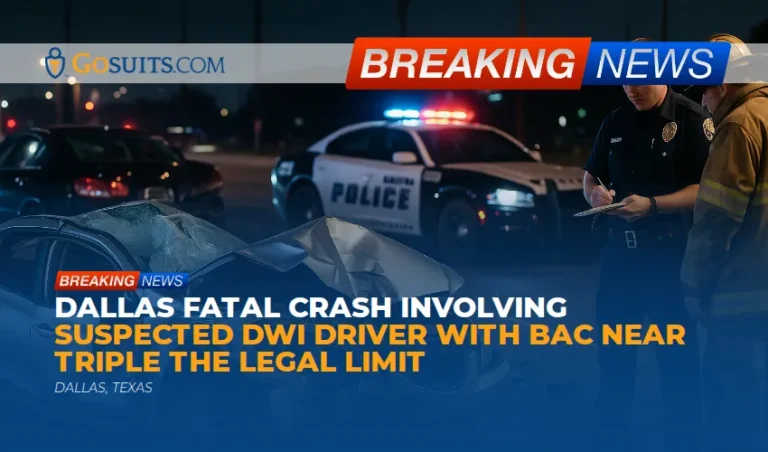
According to the news item referenced above, Dallas police reported a fatal crash in which the suspected driver was accused of having nearly triple the legal blood alcohol concentration. This was publicly discussed on February 5, 2026. While names and exact locations were not included here, the core allegation is that alcohol impairment was a significant factor. In Dallas, allegations like these are taken seriously both for public safety and for the civil consequences that can follow when families lose a loved one in a preventable crash.
Dallas residents know how quickly conditions can turn deadly on fast moving corridors. Even on routine nights, traffic can surge near venues like the American Airlines Center or along stretches of I 35E, US 75, I 30, and surface streets such as Mockingbird Lane or Northwest Highway. When alcohol is involved, the margin for error shrinks, and the risk to everyone sharing the road increases.
Why a blood alcohol level near triple the legal limit matters under Texas law
In Texas, the legal limit for adult drivers is a blood alcohol concentration of 0.08. At or above that threshold, drivers are considered legally impaired for purposes of driving. A reported BAC near triple the legal limit suggests a very high level of impairment that can severely affect reaction time, judgment, and the ability to maintain speed and lane discipline [1] [2] [10]. From a civil law perspective, evidence of such impairment can be important in proving negligence and causation. It can also influence how insurers view liability and how a jury might evaluate whether conduct rose to the level of gross negligence, depending on the facts and the applicable law.
On the safety side, national data consistently show that alcohol impairment is a major contributor to fatal crashes. Agencies like NHTSA and the CDC detail the increased crash risk with elevated BAC levels, especially late at night and on weekends when traffic patterns in urban centers like Dallas can fluctuate quickly [1] [10]. These realities inform both public safety campaigns and civil accountability when tragedy occurs.
Evidence that often determines civil liability in alcohol related crashes
Civil liability for a crash turns on proof. In an alcohol related case, the following categories of evidence often matter most. Families do not need to secure all of this alone. This list simply helps explain what may be gathered and why it matters.
- Police crash report and scene documentation: The primary crash report, diagram, officer narratives, and any supplemental reports can identify contributing factors like speed, lane position, and suspected impairment. In Texas, official crash reports are typically obtained through the TxDOT CRIS system [4].
- Body worn camera or dash camera footage: If available, footage can document field observations, driver appearance, and statements made at the scene.
- Field sobriety and chemical test records: If officers conducted standardized field sobriety tests, breath tests, or blood draws, those records can be central to establishing impairment and timing relative to driving [1] [2].
- Medical examiner findings: In a fatal crash, autopsy and toxicology results can establish cause and manner of death, as well as provide timing information that can be important for civil causation analysis.
- Vehicle and scene forensics: Skid marks or yaw marks, event data recorder information if present, crush profiles, airbag control module data, and headlamp filament analysis can shed light on speed, braking, and point of impact.
- Witness statements: Independent accounts from other motorists, pedestrians, or nearby businesses can corroborate or clarify the sequence of events.
- Prior alcohol service evidence: In specific scenarios, evidence about where a driver obtained alcohol can become relevant. Texas law has a body of rules sometimes applied to establishments that over serve visibly intoxicated patrons. Whether that applies depends entirely on the facts and legal analysis in a given case.
Local insights from Dallas car accident lawyers often focus on preserving time sensitive material promptly. That can include requesting nearby traffic camera retention policies, canvassing for private security video along corridors like Greenville Avenue or in Deep Ellum, and issuing preservation letters to protect potential evidence held by third parties. If there is a possibility that a commercial entity provided alcohol shortly before the crash, timely investigation can matter because video and point of sale records are rarely retained indefinitely.
Civil claims that may follow a fatal crash in Dallas
Texas law provides avenues for certain family members to pursue civil claims when a loved one is killed by another’s wrongful act, neglect, or default. Who may bring a claim, and for what categories of damages, comes from statute and court decisions. Generally, the Texas Wrongful Death Act identifies beneficiaries such as a surviving spouse, children, and parents. There is also a Survival Statute that allows the estate to bring claims the decedent could have pursued had they lived [8] [9].
Common civil theories after an alcohol related fatal crash may include negligence and gross negligence against the driver, and in particular circumstances, claims related to alcohol service depending on the facts and the law that applies. Each potential claim has elements that must be proven, and each available damage category has rules and limits that should be carefully evaluated under Texas law [8].
Where insurance is involved, coverage analysis can include the at fault driver’s liability policy, potential umbrella or excess coverage, and available uninsured or underinsured motorist coverage. The interplay between policies can be complex. Speaking with seasoned counsel early is one way people try to understand which avenues may apply to their situation and which deadlines govern each path.

How to obtain police reports, medical examiner records, and other key documents
Families often ask who to call first and which records to request. In North Texas, there are several agencies that may hold documents that help clarify what happened and why.
Police crash report
In Texas, official crash reports are generally available through the TxDOT Crash Records Information System. Requestors need basic information such as the crash date, location, and involved parties. TxDOT’s CRIS portal provides instructions and a secure purchase process [4]. If a local police department investigated the crash, that agency may also have supplemental records. Those are typically requested under the Texas Public Information Act through the agency’s records unit, subject to applicable exemptions [7].
Autopsy and toxicology
The Dallas County medical examiner’s office, formally the Institute of Forensic Sciences, conducts postmortem examinations in qualifying cases. Autopsy and toxicology records can be requested by authorized persons. The process is shaped by state law and local policy. For privacy and evidentiary reasons, not all materials are available to the public. Understanding who may request which record often requires reference to Texas law and to any ongoing investigation considerations.
Death certificates
Texas death certificates are issued through the Department of State Health Services Vital Statistics Section. Immediate family members can request certified copies, and the agency’s guidance explains the qualifications and documentation required to complete a request [5].

911 audio, CAD logs, and supplemental officer records
When crash calls are routed through 911, there may be dispatch audio and computer aided dispatch logs. These are typically requested from the investigating agency or city records department under the state’s Public Information Act. Some portions may be withheld or redacted under recognized exceptions designed to protect sensitive information and ongoing investigations [7].
Medical records from treating providers
If a loved one received emergency treatment before passing, next of kin or an estate representative may need to request hospital records to fully evaluate the medical timeline. Federal privacy law, including HIPAA, outlines who can access records and how. Providers usually require proof of authority and may have specific forms to complete [6].
Because records requests can overlap with active investigations, it helps to coordinate timing. Requesting certain documents too early may lead to denials or delays. In practice, people often track requests over several weeks as law enforcement finalizes reports and the medical examiner completes toxicology testing.
How insurance typically responds and common pitfalls to avoid
After a fatal crash, insurance adjusters may reach out quickly. It is understandable to want answers, but there are important reasons many people speak with an attorney before providing recorded statements or signing any documents. Statements made to insurers may be used to limit or contest liability or damages later. Texas law also sets specific rules for who can bring certain claims, so conversations about loss and family relationships can have legal meaning.
It is very common for insurers to request broad medical authorizations, social media history, and detailed employment data early in a case. Not all requests are required, appropriate, or timely. Evaluating each request with counsel can help protect privacy while ensuring insurers have the information they actually need to evaluate liability and damages lawfully. For a practical overview, see this plain language resource on how to deal with insurance companies after an accident.
People sometimes ask when to involve car accident lawyers. Early guidance can help preserve evidence, organize records requests, and manage insurer communications in a way that supports a careful liability and damages evaluation. That can reduce avoidable missteps, like unknowingly agreeing to a recorded statement without limits or missing a short deadline for preserving key third party video.
If local knowledge is important, Dallas car accident lawyers are familiar with area agencies, common retention periods for certain kinds of traffic or city footage, and the practical hurdles involved in coordinating with multiple institutions in Dallas County and neighboring jurisdictions.
Helpful steps many families take in the first two weeks
Every situation is different, and there is no single checklist that fits all families. Still, the following steps are often helpful in Dallas area fatal crash cases.
- Designate a single point of contact: Choose one person to keep a running log of calls, emails, and deadlines. This can include claim numbers, adjuster names, and agency request confirmations.
- Request the TxDOT crash report: Use the CRIS portal when available and calendar reminders to check for updates if the report is not yet ready [4].
- Track medical examiner timelines: Toxicology and final reports can take time. Ask about expected timeframes and whether interim documentation is available.
- Gather photos and messages: Save phone photos of the scene, vehicle condition, or memorial items placed roadside. Preserve relevant texts or messages that mention what witnesses saw or heard.
- Identify nearby cameras: Note gas stations, restaurants, or apartments in the area that may have private cameras, and record their addresses quickly. Private systems can overwrite footage in days.
- Locate insurance declarations pages: Find the auto policy declarations for the at fault driver’s vehicle if available and for any policies that might provide UM or UIM coverage on the decedent’s vehicles.
- Respect privacy and pace: Grief is not linear. It is okay to stagger tasks and ask others to help with administrative items when needed.
Local Dallas context, roads, and impaired driving data
Dallas residents recognize hot spots where speeding and late night traffic mix, from the High Five interchange to downtown connectors. Impaired driving risk spikes at times when entertainment districts are busiest and when ride share demand surges. Public data from Texas agencies provide broader context for why officials emphasize impaired driving prevention.
- Texas crash statistics: TxDOT publishes annual statewide crash facts, including figures on alcohol involved fatalities and serious injuries. These datasets help shape safety campaigns and local engineering efforts [3].
- National safety guidance: NHTSA and the CDC both maintain comprehensive impaired driving resources that explain impairment effects at different BAC levels and highlight proven countermeasures like sobriety checkpoints and ignition interlocks [1] [10].
City led safety initiatives often borrow from these findings. While every crash has its own facts, the data behind alcohol related harm are clear enough to justify persistent education and enforcement throughout Dallas County and the broader North Texas region.
Action steps that are time sensitive
Here is what should be done, and why time matters.
- Preserve potential video within days: Many private cameras overwrite in 3 to 14 days. Act quickly to identify businesses and residences near the crash scene and request that owners save relevant footage.
- Submit initial record requests early: Enter a request for the TxDOT crash report and, when appropriate, initiate a request to the Dallas County medical examiner for autopsy and toxicology. Agencies often process in the order received [4].
- Centralize insurer communications: Keep a single log of every contact with any insurer. Before any recorded statement or broad release, consult an attorney so you understand the consequences. What is said to an insurer can be used to limit or challenge a claim later.
- Calendar legal deadlines: Texas law contains statutes of limitations for wrongful death and survival causes of action. Identifying which deadlines apply provides clarity about the pace of investigation that is required [8] [9].
- Document loss and impact early: When appropriate, begin collecting documentation of funeral and burial costs, counseling expenses, and wage information. Early documentation reduces disputes later about whether a cost is related or reasonable.
- Coordinate with faith or community leaders: In Dallas, congregations, neighborhood groups, and civic associations can help with logistics like meal trains, child care, or transportation. Leaning on community support frees up time for the administrative tasks that cannot wait.
These steps help create a stable foundation for the months ahead. Acting now protects fragile evidence, prevents unnecessary delays, and ensures there is a clear record for agencies and insurers to review.

Commentary from Gosuits Dallas, Texas Personal Injury Attorney
First, our hearts go out to everyone affected by this reported crash. When a life is cut short on our city’s roads, the ripple effects are felt in every circle of family, friends, and coworkers. This article is intended for general information only, to help our neighbors understand the civil side of what often follows a tragedy like this.
Second, based on what has been publicly reported, a blood alcohol level near triple the legal limit raises serious civil liability concerns. In our view, careful evidence preservation is essential, including securing the official crash report, any available body camera footage, and laboratory records. Those materials are often central to proving negligence and causation in court or in negotiations.
Third, we frequently see insurance companies and sometimes large corporate stakeholders move quickly to control the narrative. Adjusters may request recorded statements before families have seen a police report, or they may ask for blanket medical authorizations that are broader than necessary. That can place people at a disadvantage because early statements become exhibits later. Being deliberate with information and timing can keep the playing field fair.
Fourth, there is value in a free consultation before contacting any insurer. A brief conversation can clarify which claims may exist, who is permitted to bring them, what deadlines apply, and how to safeguard rights from the start. It can also explain how to handle early insurer outreach. Many people find that one conversation changes the next 90 days in a meaningful way.
References
- Drunk Driving – National Highway Traffic Safety Administration (NHTSA)
- Driving While Intoxicated (DWI) – Texas Department of Public Safety
- Crash Statistics and Reports – Texas Department of Transportation
- Crash Report Purchase System – Texas Department of Transportation (CRIS)
- Death Records – Texas Department of State Health Services
- Individuals’ Right under HIPAA to Access Health Information – U.S. HHS
- How to Request Public Information – Texas Attorney General
- Chapter 71. Wrongful Death; Survival; Liability – Texas Civil Practice and Remedies Code
- Section 71.021 Survival – Texas Civil Practice and Remedies Code
- Impaired Driving – Centers for Disease Control and Prevention