- What we know so far from CHP Watch
- Where on Highway 101 this occurred and local North Coast context
- Injuries reported and immediate response on scene
- Why rollovers are so dangerous on highways like 101
- Key steps to take after a Highway 101 collision
- How to get official reports and records
- Insurance and liability basics after a California highway crash
- What rights injured people may have in California
- Evidence that often decides highway cases
- Community safety notes for the 101 corridor
- Why acting quickly matters
- Commentary from Gosuits Humboldt County, California Personal Injury Attorney
- References
What we know so far from CHP Watch
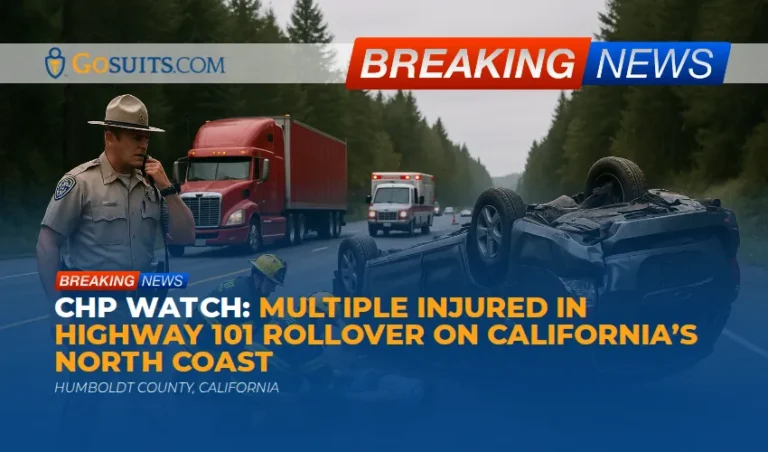
According to the CHP Watch dispatch log, at approximately 12:20 p.m., a traffic collision occurred near the 17586 to 17599 block range on Highway 101. Early dispatch notes indicated there were occupants in the vehicle, and a red semi-truck pulled over to render aid. At 12:27 p.m., California Highway Patrol reported an officer was on scene with an overturned vehicle. The dispatch feed characterized the event as a traffic collision with unknown injuries initially, followed shortly by notes indicating multiple people were injured. Details about the number of vehicles involved, contributing factors, and the extent of injuries have not been publicly confirmed at this time.
As with any live dispatch feed, information can evolve quickly. Official collision reports and later CHP news releases typically provide more definitive facts about what happened, who was involved, and how responders handled the scene.
Where on Highway 101 this occurred and local North Coast context
While the exact pinpoint location is still being clarified, this collision happened along Highway 101 on the North Coast. For neighbors in Humboldt County, the 101 is the main artery connecting communities like Trinidad, McKinleyville, Arcata, Eureka, Loleta, Fortuna, and beyond. The corridor threads through the redwoods, crosses over river valleys, and often contends with coastal fog, rain-soaked pavement, and rapidly changing visibility.
If the crash occurred near mid-day, traffic volumes can be brisk with commercial trucks, commuters, and travelers heading to and from work, schools, medical appointments, and the airport. On this stretch, shoulders can narrow near overpasses or curves, and response times can be affected by congestion, construction zones, or incidents blocking lanes. Even when speeds are moderate, secondary collisions can occur if approaching drivers are not prepared for sudden slowdowns.
Injuries reported and immediate response on scene
Dispatch notes referenced an overturned vehicle and multiple injuries. On the North Coast, CHP and local fire-rescue often work in tandem to secure the scene, triage the injured, and coordinate ambulance transport. A semi-truck driver stopping to help reflects what many of us have seen locally: motorists and commercial drivers sometimes step up as Good Samaritans to offer basic assistance until professionals arrive. California’s Good Samaritan statute provides certain immunity to those who render emergency care at the scene, except for gross negligence or willful misconduct [4].
When a vehicle overturns on Highway 101, responders commonly prioritize stabilizing the vehicle, checking for ejection or entrapment, addressing fire risks, and safely rerouting traffic. On-scene officers may also begin preliminary documentation while waiting for tow units and additional support.
Why rollovers are so dangerous on highways like 101
Rollover crashes are among the most hazardous types of roadway incidents. The risk of serious injury increases due to roof deformation, multiple impact points, and the potential for partial or full ejection. Seat belts dramatically reduce the risk of fatal ejection during rollovers and other severe crashes [5].
On a corridor like 101, rollovers can be triggered or compounded by factors such as abrupt overcorrections, soft shoulder drop-offs, uneven pavement transitions, or swerves to avoid debris or wildlife. None of these have been confirmed here, and it is too early to draw conclusions about this case. Still, understanding general rollover dynamics helps families interpret later findings in an official report, especially if roof crush, multi-quarter turns, or roadway edge conditions are discussed in the documentation.

Key steps to take after a Highway 101 collision
When a collision happens close to home in Humboldt County, people often want a clear, grounded roadmap. Here are practical steps that fit our local reality and California’s administrative framework:
- Prioritize medical care right away. Even if injuries feel minor at first, get evaluated. Some trauma, including head and neck injuries or internal injuries, may not show immediate symptoms. Retain all discharge instructions and imaging reports.
- Document everything you can do safely. Photos of vehicle positions, roadway conditions, skid marks, and debris fields can prove invaluable. If you cannot take photos, ask a trusted person to help later with scene checks or vehicle photos at the tow yard.
- Identify witnesses. Gather names and contact information of anyone who saw the crash or its aftermath, including that helpful semi-truck driver if possible.
- Preserve damaged property. Keep torn clothing, shattered accessories, and child car seats as-is until a professional can evaluate them.
- Report as required by law. California requires drivers to file an SR-1 report with the DMV within 10 days if the crash involved injury, death, or property damage of $1000 or more [2].
- Be careful speaking to insurance. Before calling any insurer, consider consulting an attorney first. What someone says in a recorded statement can be used later to limit or deny a claim.
- Track all expenses and time lost. Keep receipts for medical costs, medications, mobility aids, rides to appointments, and notes on missed work.
How to get official reports and records
Getting the right documents quickly can make a real difference for families. Here are common records and where they typically come from:
CHP collision report
For a crash investigated by the California Highway Patrol, families or involved parties can request the official collision report. The CHP provides a public guidance page for requesting collision reports and outlines who may obtain them and how [1]. Collision reports can include diagram(s), narrative summaries, listed violations if any, witness statements, and officer observations.
DMV accident reporting
Separate from a police report, California law may require drivers to submit a DMV SR-1 report within 10 days when there are injuries, fatalities, or at least $1000 in property damage [2]. Failing to file this can lead to administrative issues with vehicle registration or licensing.
Medical records
Individuals generally have a right to access their medical records under federal HIPAA rules. Hospitals and clinics have deadlines to respond to requests and must provide copies at reasonable cost [3]. Be sure to request all relevant records, including ER notes, imaging, specialist consults, lab results, and physical therapy summaries.

Coroner and death records in severe or fatal incidents
When crashes result in fatalities, California law assigns investigative duties to county coroners to determine cause of death and related details [9]. Families typically can request certain reports and certified death certificates through official channels, such as the California Department of Public Health for statewide vital records services [11]. Local coroner offices usually provide next-of-kin instructions for obtaining reports and personal effects.
Public records and 911/dispatch materials
California’s Public Records Act provides a general right to access many government records, with important exemptions for privacy, investigations, and safety [7]. Families sometimes request audio of 911 calls, CAD logs, or additional non-exempt materials to help piece together the timeline. Agencies can charge duplication costs and may redact sensitive portions.
Insurance and liability basics after a California highway crash
California is a fault-based auto insurance system. That means the driver who is legally responsible for causing a collision is generally liable for resulting damages, though insurance often handles the defense and payment up to policy limits. The California Department of Insurance offers consumer-facing guidance on auto coverage types and how claims usually flow [8]. Minimum financial responsibility standards are set by the state, and the DMV explains basic obligations drivers must meet [10].
Liability is not always simple. Multi-vehicle collisions on Highway 101 can involve sudden slowing, lane changes, secondary impacts, or debris that complicates fault allocation. Even when one motorist is primarily responsible, California’s comparative fault framework can apportion percentages of fault among multiple parties depending on evidence. Vehicle owners, employers of on-duty drivers, and entities responsible for road maintenance could be implicated in some cases, depending on facts established in an investigation.
Insurance companies scrutinize statements, medical timelines, pre-existing conditions, and vehicle damage to minimize payouts. It is common for adjusters to ask for recorded statements quickly. Many people choose to consult an attorney before giving any statement to ensure their rights are protected and to understand how coverage like MedPay, UM, or UIM may apply.
What rights injured people may have in California
Injury claims after a highway collision can include economic losses like medical bills and lost income, along with non-economic harms such as pain, suffering, and loss of enjoyment of life, all depending on the case facts and applicable law. When a crash causes long-term effects or disability, claims may address future medical needs, job retraining, or life-care planning. Every situation is unique.
If a government agency is potentially involved, special rules often apply, including a much shorter claim deadline for public entities. In many California cases involving governmental responsibility, a written claim must be presented within six months of the injury under Government Code section 911.2 [9]. That is a short window. Identifying all potentially responsible parties early can prevent missed deadlines.
Before speaking with any insurer, many people choose to talk with car accident lawyers about what to say and what not to say. Insurance companies may use any inconsistencies or casual remarks to challenge medical causation, limit treatment approvals, or devalue a claim.
Evidence that often decides highway cases
On a corridor like 101, evidence can disappear fast. Rain, fog, traffic, and tow operations can quickly erase skid patterns or debris fields. A focused evidence plan makes a difference:
- Scene photos and measurements. Early photos of final rest positions, fluid trails, gouge marks, and scrape patterns help reconstruction efforts.
- Vehicle inspections. Tow yard photos and a professional inspection can reveal crush profiles, restraint system status, and rollover contact points.
- Event Data Recorder (EDR). Many vehicles store pre-crash and crash data such as speed, brake application, and delta-V. NHTSA provides public information about EDRs and their role in understanding crashes [6].
- Traffic and security cameras. Caltrans and nearby businesses sometimes have cameras that capture approach paths or the moment of impact. Footage can be overwritten quickly, so prompt requests matter. For practical steps on securing roadway or nearby business video, see our guide on request cctv footage after a california car accident.
- Witness accounts. Statements from motorists who stopped to help, like the red semi-truck driver mentioned in dispatch notes, can clarify vehicle movements or driver behavior seconds before the crash.
- Medical linkage. Immediate and consistent treatment helps document the causal connection between the collision and the injuries identified by physicians and therapists.
Community safety notes for the 101 corridor
Local drivers know Humboldt’s challenges well. Coastal fog near Trinidad, sun glare as you crest hills by McKinleyville, slick pavement on shaded curves south of Eureka, and rapidly changing speeds through Fortuna all stress test a driver’s attention. Wildlife crossings, downed branches after a storm, or gravel tracked from side roads can show up with little warning.
Simple habits go a long way on Highway 101:
- Seat belts every trip. Consistent belt use reduces the risk of ejection and serious harm in rollovers and high-energy impacts [5].
- Mind speed and spacing. Leave extra stopping room in wet weather and near work zones.
- Scan ahead. Look past the vehicle in front to spot brake lights or hazards early.
- Secure loads. Make sure cargo in pickups or on trailers is properly tied down to prevent roadway debris.
- Pull fully off the roadway. If you must stop, get as far onto the shoulder as safely possible and use hazards.
When crashes do occur, our North Coast first responders and medical teams are accustomed to handling serious incidents along 101. California’s trauma system is designed to route the most critical patients to designated facilities when available, with EMS triage guidelines in place to match care to need [11].
Why acting quickly matters
When a collision happens, timing affects everything from health outcomes to the quality of evidence. Here is why prompt, organized action matters after a Highway 101 crash:
- Medical recovery begins sooner. Early diagnosis and treatment improve healing prospects and create a clean medical record of what the crash caused versus what developed later.
- Evidence preservation is time sensitive. Video systems overwrite, tow yards release vehicles, and witnesses disperse. Acting fast helps secure key proof before it disappears.
- Administrative deadlines are strict. The DMV SR-1 report has a 10-day requirement in qualifying cases, and public entity claims can carry a six-month presentment deadline [2] [9].
- Insurance positioning begins immediately. Adjusters often make early calls. Talking to a qualified attorney before giving a statement reduces the risk of saying something that harms a claim later.
- Accurate valuation depends on full documentation. From pay stubs and tax forms for lost wages to therapy logs and pain journals, a strong paper trail supports fair consideration of all losses.
As a practical next move, get medical care, organize your records, and consider a free consultation with a seasoned injury attorney before contacting insurance. Understanding the process and your options early can reduce stress and prevent costly missteps. Many people look for Los Angeles car accident lawyers online. Even if the crash happened on the North Coast, the general California rules, deadlines, and insurance dynamics apply statewide.

Commentary from Gosuits Humboldt County, California Personal Injury Attorney
Our hearts go out to everyone affected by today’s Highway 101 rollover and the injuries reported on scene. What follows is educational information to help the community understand what typically happens after a serious highway collision and how to navigate the first critical days.
From what the dispatch notes show, responders arrived quickly and a passing semi-truck driver stopped to help. Rollovers are among the most dangerous roadway events. In many highway cases, liability turns on small details that are easy to miss in the moment: tire marks, vehicle crush patterns, restraint usage, and even whether lane closures or hazards were properly marked. The formal CHP collision report will be central to understanding how and why this occurred.
In our experience, insurance companies move fast to lock in statements and shape the narrative. They review photos for inconsistencies, comb through medical records for gaps, and sometimes imply that symptoms are unrelated or exaggerated. Large corporate insurers and risk management teams do this every day. Most families do not. That imbalance is why it is important to learn your rights early and avoid recorded statements until you feel prepared.
A no-cost consultation can help people understand potential fault issues, coverages that might apply, and the deadlines that could affect a claim. This is not legal advice, but a general reminder that early guidance can prevent unforced errors. If public entities or commercial carriers are potentially involved, preserving evidence and sending proper notices quickly is especially important given California’s short timeframes for certain claims.
References
- Collision Report Request – California Highway Patrol
- Report of Traffic Accident Occurring in California (SR-1) – California DMV
- Your Rights Under HIPAA to Access Your Health Information – HHS
- California Health and Safety Code § 1799.102 – Good Samaritan Law
- Seat Belts – NHTSA
- Event Data Recorder (EDR) – NHTSA
- California Public Records Act Overview – California Attorney General
- Automobile Insurance 101 – California Department of Insurance
- California Government Code § 911.2 – Government Claims Act Deadline
- Financial Responsibility – California DMV
- California Trauma System – EMSA
Note: Before providing any official statement to an insurer about this Highway 101 incident, consider speaking with car accident lawyers to understand your rights and obligations. What gets said early can shape the entire claim.