- What we know about the South Los Angeles I-10 multi-vehicle crash
- Where and when it happened in the South Los Angeles corridor
- How officials investigate multi-vehicle freeway fatalities
- Why multi-car freeway crashes raise complex liability questions
- Resources families can contact right now
- Preserving evidence after a freeway crash
- Insurance and civil claims considerations after a fatal crash
- Important timelines and California deadlines to keep in mind
- Safety context for Los Angeles drivers and community concerns
- Why prompt action matters after a freeway fatality
- Commentary from Gosuits Los Angeles, California Personal Injury Attorney
- References
What we know about the South Los Angeles I-10 multi-vehicle crash
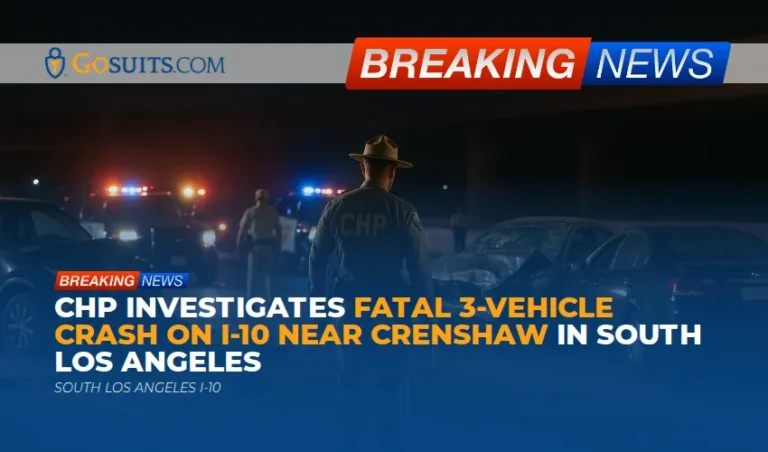
Early Sunday morning, March 29, 2026, a three-vehicle collision occurred on the eastbound Santa Monica Freeway, just east of Crenshaw Boulevard in South Los Angeles. The California Highway Patrol responded and closed multiple lanes due to heavy debris while they investigated and cleared the scene. The Los Angeles County Medical Examiner later identified the person who died as 23-year-old Nelson Borja-Ramos, who suffered blunt force injuries. Official investigators have not yet released what precipitated the chain of events, and the incident remains under investigation by the CHP.
When a collision of this scale happens before sunrise along I-10, it disrupts more than traffic. Neighbors from West Adams to Jefferson Park feel the impact, and the morning drive between Crenshaw and the Downtown spine often slows as officers work in the dark to document evidence safely. It is normal for families and community members to have questions right now. The sections below explain what typically happens in multi-vehicle freeway crashes, the kinds of evidence officials review, and where families can obtain essential records in Los Angeles County.
Where and when it happened in the South Los Angeles corridor
The crash location sits on a highly traveled stretch of the Santa Monica Freeway as it pushes east toward Downtown, with entrances and exits that feed Crenshaw Boulevard and nearby surface streets across West Adams and Baldwin Village. Around 5 a.m., traffic volumes are lower than peak rush hour but often include a mix of rideshare vehicles, commuters on early shifts, and long-distance travelers transitioning through the I-10 and I-110 corridors. Even at that hour, a multi-lane closure quickly backs up traffic and complicates response time for tow operations and roadway cleanup.
Caltrans District 7 typically supports lane closures and incident management in coordination with CHP during serious collisions on Los Angeles freeways, which can require extensive debris removal or temporary repairs to guardrails and signage as needed [9]. On-scene safety and roadway clearance are prioritized, so the public often sees extended closures in the immediate aftermath.
How officials investigate multi-vehicle freeway fatalities
In freeway fatalities that involve multiple vehicles, the CHP’s process generally includes securing the scene, rendering medical aid as appropriate, documenting vehicle positions and roadway evidence, interviewing involved drivers and witnesses, and identifying potential contributing factors such as speed, impairment, distraction, mechanical failure, or roadway conditions. Depending on severity and complexity, CHP may deploy specialized collision reconstruction resources, including a Multi-Disciplinary Accident Investigation Team, known as MAIT [2].
Investigators typically gather:
- Physical roadway evidence such as skid marks, yaw marks, debris fields, and gouges that help model pre-impact paths and speeds.
- Vehicle damage profiles that indicate impact angles and sequence in multi-vehicle crashes.
- Statements from drivers, passengers, and independent witnesses, plus any available dashcam or nearby camera footage when it exists.
- Electronic data from modern vehicles’ Event Data Recorders when accessible and legally obtainable. EDRs can show limited pre-crash metrics like speed, brake application, and throttle position in the seconds before impact [7].
- Toxicology results that the Medical Examiner and other labs may develop as part of a fatality investigation [3].
Nationally, driver behavior contributes to a significant share of fatal crashes, including speeding, alcohol or drug impairment, and distraction. NHTSA’s recent early estimates show thousands of lives lost in the first quarter of 2025 alone, a reminder of the ongoing risks on our roads [6]. While each crash is unique, these trends inform how investigators and safety planners approach prevention.
Why multi-car freeway crashes raise complex liability questions
On a tight urban freeway like I-10 through South Los Angeles, a split-second issue can cascade quickly. A sudden stop or lane change can trigger a series of impacts across two or three lanes, and darkness shortens reaction time. In a three-vehicle scenario, determining fault sometimes requires reconstructing the sequence of collisions to understand whether one driver’s initial negligence caused the subsequent impacts, or whether multiple drivers each contributed in different ways.
From a civil-injury perspective, liability analysis may consider:
- Primary vs. secondary impacts to determine whether the first negligent act set up unavoidable follow-on collisions.
- Comparative fault where more than one motorist may share responsibility under California’s negligence rules [12].
- Visibility and lighting at pre-dawn hours, including whether headlights and hazard lights were used.
- Speed and following distance in the moments before the crash, given urban freeway spacing.
- Mechanical factors such as tire or brake failures, where evidence supports further inquiry.
Because the details here are still developing, it is important not to jump to conclusions about cause. Families often find clarity as official reports and lab results are finalized over the coming weeks.
Resources families can contact right now
Several public agencies maintain critical records families may need in the days and weeks after a fatal crash. In Los Angeles County, the following are common starting points. Where possible, request certified copies and keep notes of dates, times, and any agency reference numbers.
California Highway Patrol collision report
The investigating agency for freeway collisions in Los Angeles is typically the California Highway Patrol. Families or authorized representatives can request the CHP collision report once it is available. The CHP provides a statewide process and form for requesting reports, and the appropriate Area Office will fulfill the request based on jurisdiction [1] [12]. It is helpful to have the report number, date and time, freeway and direction, and nearest on- and off-ramps ready when making the request.
Los Angeles County Medical Examiner records
The Los Angeles County Medical Examiner is responsible for identifying decedents, determining cause and manner of death, and releasing official records for qualifying requesters. Families may request documents such as a death investigation report or autopsy findings when available, subject to eligibility and timing requirements posted by the agency [3]. The Medical Examiner also maintains a public case search tool for status updates on investigations [4].
Death certificates and vital records
Certified death certificates in Los Angeles County are issued by the Registrar-Recorder/County Clerk. These certificates are often required for insurance claims, estate matters, and other legal or financial steps. The County provides instructions for ordering and explains requester eligibility categories [5].
Traffic management and roadway information
For context about freeway closures and incident response, Caltrans District 7 provides roadway operations information for Los Angeles and Ventura Counties. While this is not a substitute for the official CHP collision report, it can help families understand why lanes remained closed and how cleanup and recovery unfolded after a freeway fatality [9].
Public records and video sources
When collisions occur near public facilities, some families ask about potential video sources. Public traffic cameras are primarily used for live traffic management and are not always recorded. Any public records or footage requests must follow agency procedures and privacy laws. An attorney can help evaluate whether to pursue targeted public records requests for traffic management data or CCTV where appropriate under California law. If families want a practical overview of forms and documents they may need to organize, this Los Angeles wrongful death checklist offers a helpful starting point.
Preserving evidence after a freeway crash
In fast-moving freeway environments, evidence can be lost as vehicles are towed and lanes are reopened. Timely steps may make a difference in understanding what happened.
- Keep personal items and photos that were already taken at or near the scene, and organize them by date. If any dashcam footage exists, save a copy and back it up.
- Document communications with insurance, towing yards, and agencies. Dates and names matter later.
- Note vehicle locations if you know where involved vehicles were towed or stored. Storage yards can change quickly in Los Angeles due to space constraints.
- Consider EDR preservation. Modern vehicles may store limited pre-crash data in an Event Data Recorder. Access often requires technical steps and permissions under law, but it can be important in complex crashes [7].
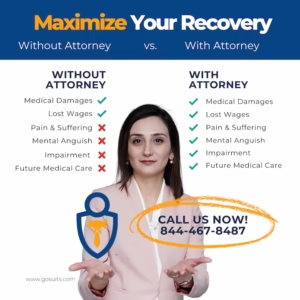
- Be cautious with early statements. Insurance adjusters may call within days. Statements can be referenced later in ways that feel unfair. Many families choose to speak with car accident lawyers before providing recorded statements so they understand their rights and options.
Insurance and civil claims considerations after a fatal crash
For families dealing with a fatal freeway collision, the civil side usually involves claims under California law such as wrongful death and, in some cases, a survival claim on behalf of the decedent’s estate. These claims focus on losses such as support the person would have provided, funeral and burial expenses, and other damages defined by California statutes. Policies that can come into play include the at-fault driver’s liability coverage, as well as uninsured or underinsured motorist coverage on a household policy if at-fault limits are insufficient.
In multi-vehicle crashes, several insurers may be involved, and adjusters will often try to secure statements, shift blame, or close files quickly. Insurance companies and large corporate policyholders typically have processes that capitalize on confusion during the first days after a collision. It is common for families to feel rushed by paperwork or release forms. Many choose to consult Los Angeles car accident lawyers early to understand the sequence of steps, preserve evidence, and avoid mistakes that can limit future legal options.
If an insurance claim will be made, it is prudent to consult an attorney before contacting any insurer. What is said to an adjuster can be used against claimants later. An initial consultation helps clarify who should be contacted, what should be said, and what can wait until records are gathered. Even when fault appears clear, timing and documentation matter.
California is not a no-fault state for car collisions, so liability and damages are typically established under negligence principles. Comparative fault may reduce, but does not necessarily eliminate, recovery if more than one driver contributed to an incident [12]. Because liability discussions in a three-vehicle freeway crash can get technical, families often choose to speak with car accident lawyers to map out the investigative path and identify all potentially responsible parties and coverages.
Important timelines and California deadlines to keep in mind
There are legal deadlines that apply to civil claims in California. A general two-year period applies to wrongful death actions under the California Code of Civil Procedure [10]. Some deadlines can be shorter or longer depending on specific facts, and separate procedural rules may apply if any public entity is involved in a claim about roadway conditions or government vehicles. For potential claims against a California public entity, a government claim is generally required within six months in many personal injury contexts before a civil lawsuit can be filed, with limited exceptions [11].
These timelines are not paused simply because multiple insurers are talking or because families are waiting on official reports. Tracking dates carefully and organizing documents early can prevent last-minute urgency later.
Safety context for Los Angeles drivers and community concerns
Crashes along the I-10 through South Los Angeles affect neighbors far beyond the freeway’s shoulders. Early-morning collisions can strand commuters from Leimert Park to Exposition Park, delay buses feeding the E Line stations, and reroute local traffic into residential streets where families are heading to worship or morning shifts. It is not just congestion. It is the reminder that residents in our community face daily risks while doing normal life in a big city.
State and national data consistently point to core behaviors that increase fatal crash risk: excessive speed, driving under the influence, and distraction from phones. California’s Office of Traffic Safety highlights these concerns statewide and funds education and enforcement across counties, including Los Angeles [8]. Nationally, NHTSA’s early 2025 estimates underscore how many families are affected each season, even as vehicles add new safety technologies [6]. In this corridor, where narrow shoulders and quick merges are common, it only takes a moment for a risky choice to become irreversible.
Local reminders that can help everyone:
- Keep right unless passing to reduce unexpected lane changes at higher speeds.
- Maintain space in pre-dawn darkness. Headlights and following distance are your best tools when visibility is limited.
- Put the phone down or use true hands-free. Even brief glances away from the road at freeway speeds carry major risk.
- Yield to responders and follow posted incident signs and cones. Quick compliance helps keep lanes moving and protects road crews.
Why prompt action matters after a freeway fatality
What to do
- Organize key details such as the date and time, location markers on I-10, and any CHP report or incident numbers.
- Request official records from the CHP and the Los Angeles County Medical Examiner when eligible and available.
- Preserve evidence including dashcam files, phone photos, and towing or storage information.
- Consult a qualified attorney before speaking with insurance companies or signing documents, to understand rights and obligations.
Why act now
- Evidence is time-sensitive. Vehicle data can be overwritten or lost, tow yards may relocate cars, and witnesses become harder to reach.
- Deadlines are strict. California civil timelines continue to run even while reports are pending.
- Insurance adjusters move quickly. Early statements can be taken out of context, and releases can limit future options.
- Clarity reduces stress. A clear plan for records, evidence, and communication can ease the administrative burden during grief.
Where this matters
- Freeway corridors like I-10, I-110, and I-105, where multi-vehicle incidents and complex lane closures are common.
- Urban merges near Crenshaw Boulevard, La Brea Avenue, and Western Avenue, where sudden maneuvers can trigger secondary impacts.
- Regional agencies in Los Angeles County, where centralized processes govern collision reports, autopsy records, and vital certificates.
Commentary from Gosuits Los Angeles, California Personal Injury Attorney
Our hearts go out to the family and friends of Nelson Borja-Ramos. A life lost on a Sunday morning along the Santa Monica Freeway is a tragedy that ripples through South Los Angeles. This overview is intended for general information, and we encourage families to rely on official reports and documents as they become available.
From what is known, this three-vehicle collision east of Crenshaw involved significant debris and required multi-lane closures. Crashes at that hour often develop in seconds, and even careful drivers can be caught in a chain reaction. In our experience, thorough investigations that gather roadway evidence, EDR data where available, and full statements are essential to understand sequence and responsibility.
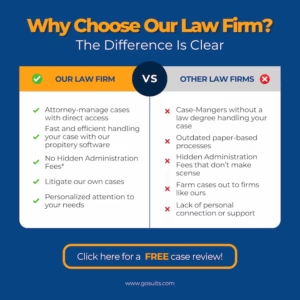
Insurance carriers and corporate policyholders often act quickly after serious crashes. They may request recorded statements right away, present complex forms, or suggest early resolutions that do not reflect the full measure of harm. That approach can take advantage of people’s lack of familiarity with claims processes. A free consultation can help clarify rights, outline next steps, and prevent missteps before any insurance conversation occurs.
References
- Request a Collision Report – California Highway Patrol
- Multi-Disciplinary Accident Investigation Team (MAIT) – California Highway Patrol
- Forensic Records Requests – Los Angeles County Medical Examiner
- Case Search – Los Angeles County Medical Examiner
- Death Records – Los Angeles County Registrar-Recorder/County Clerk
- Early Estimates of Motor Vehicle Traffic Fatalities, 2025 – NHTSA
- Event Data Recorder (EDR) – NHTSA
- Media and Research Data – California Office of Traffic Safety
- District 7 Los Angeles and Ventura – Caltrans
- California Code of Civil Procedure 335.1 – Official California Legislative Information
- Government Claims Program, How to File a Claim – California DGS
- Find a CHP Office – California Highway Patrol