- What changed on California freeways this week
- How the new 100 mph enforcement pilot works
- What this means for Los Angeles families after a high speed crash
- Civil liability insight when speeds exceed 100 mph
- Insurance issues after a high speed freeway crash
- Records to request and who to contact
- Data and safety reality on Southern California corridors
- Step by step guide after a high speed freeway crash
- Common defenses and how civil courts analyze them
- Deadlines and timelines that matter in California
- A note on community enforcement and seasonal conditions
- Action steps to consider now
- Commentary from Gosuits Los Angeles, California Personal Injury Attorney
- References
What changed on California freeways this week
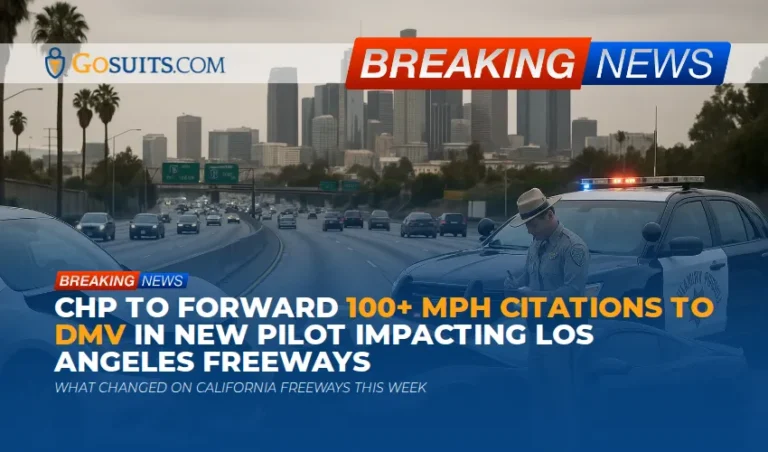
California officials have launched a pilot program that targets motorists cited for driving faster than 100 miles per hour. According to the announcement, citations issued by the California Highway Patrol for 100 plus mph will be forwarded to the Department of Motor Vehicles Driver Safety Branch for review. The DMV may consider a driver’s history and can impose administrative actions that include suspension or revocation of driving privileges. The program is intended to reduce severe crashes and the harm that follows.
The rollout matters in Los Angeles, where the 110 Freeway funnels commuters past Exposition Park, USC, and through the downtown stack. The combination of tight curves, short on ramps, and late night open stretches has long made the corridor unforgiving when drivers push into triple digits. Los Angeles residents have seen the aftermath far too often, from predawn collisions near the 3rd Street tunnels to chain reaction crashes approaching the Four Level Interchange.
State leaders have publicly tied the pilot to a broader push to reduce traffic deaths and serious injuries in California, where thousands of families are affected each year [1]. The administrative review adds another layer of accountability for the worst speeding behavior, separate from what happens in traffic court.
How the new 100 mph enforcement pilot works
Here is what officials have said and what California law already allows, in plain terms:
- Who triggers the pilot. Drivers cited by the California Highway Patrol for traveling more than 100 miles per hour on California roads.
- What happens to the citation. The CHP forwards the citation information to the DMV’s Driver Safety Branch for administrative review. Driver Safety actions are civil and administrative, not criminal, and they focus on whether a person should be permitted to continue driving [3].
- What the DMV can do. Depending on the driver’s record and the risk indicated by the conduct, the DMV can impose restrictions up to and including suspension or revocation of driving privileges, under California’s existing Driver Safety authority and negligent operator rules [2][3].
- How this relates to court. The DMV’s administrative process can move forward independently of any court conviction. Courts handle guilt and fines under the Vehicle Code, while the DMV handles licensing and safety fitness to drive. These are separate tracks [3].
- What traffic law already says about 100 plus mph. California Vehicle Code section 22348 allows enhanced penalties for speeds over 100 miles per hour, including fines and potential court ordered license suspensions. The new pilot supplements those consequences by ensuring a Driver Safety review occurs for every 100 plus mph citation that CHP writes [4].
In short, the change is about accelerating the review of the most dangerous speeders so that the state can intervene sooner. The focus is prevention, sparing other road users from the risk that comes with triple digit speeds.
What this means for Los Angeles families after a high speed crash
When a loved one is injured or killed because another driver chose to travel at extreme speeds, the harm is devastating and it ripples across the household. This pilot does not replace the civil justice process, but it can create an additional official record that may matter later. If DMV initiates a Driver Safety action, that administrative file may contain statements, notices, and determinations relevant to a later civil claim.
From a practical standpoint, here is how it may help families navigating the aftermath of a Los Angeles freeway crash:
- Documentation of dangerous driving. A 100 plus mph citation and any DMV Driver Safety action can corroborate that the conduct was far outside normal traffic flow, which matters when allocating fault.
- Potential for quicker identification of repeat behavior. A DMV review looks at the driver’s history. If a pattern emerges, that context can be important in civil proceedings.
- No delay in civil options. The administrative track runs separately, so families do not need to wait for DMV to finish before pursuing a car accident injury or wrongful death claim.
Los Angeles corridors like the 110, 10, and 101 see heavy daily volumes and sudden slowdowns. At 100 miles per hour, stopping distances multiply, impact forces spike, and car frames intrude further into the passenger space. The result is more severe trauma, greater medical needs, and higher stakes for households.
Civil liability insight when speeds exceed 100 mph
California civil law generally requires drivers to use reasonable care. When someone violates a safety statute and that violation substantially causes harm, a court may apply the negligence per se doctrine under Evidence Code section 669. That means the statutory violation can serve as evidence of failure to use reasonable care if certain conditions are met [11].
Speeding more than 100 miles per hour is prohibited by California Vehicle Code section 22348. If a plaintiff proves the violation and that the violation caused the collision and injuries, the burden can shift to the speeding driver to show a legally valid excuse for breaking the law [4][11].
A few practical implications from a personal injury perspective:
- Liability is often clear, but causation still matters. Even when a driver was traveling at 100 plus mph, the evidence still needs to connect that conduct to the crash sequence. Skid marks, crush damage, EDR data, and video can help reconstruct the event.
- Comparative fault may be raised. California uses pure comparative fault. Defense counsel may argue other drivers contributed to the collision, for example by unsafe lane changes or distraction. Allocation of percentages can change the damages award.
- Punitive damages are rare, but extreme facts are scrutinized. California law allows punitive damages when a defendant’s conduct is carried out with malice, oppression, or fraud. Excessive speed, by itself, does not automatically meet that standard. Courts look closely at the totality of circumstances.
Each crash is unique. Still, a 100 plus mph citation and a DMV administrative finding, if any, can be significant pieces of the civil puzzle.

Insurance issues after a high speed freeway crash
Insurance companies move fast after high severity collisions. They collect statements, triage exposure, and look for ways to minimize payouts. When extreme speed is involved, several coverage layers often come into play:
- Liability coverage of the at fault driver. This is the primary source for bodily injury and property damage. Policy limits vary widely.
- Uninsured and underinsured motorist coverage. If the at fault driver’s liability limits are not enough, UM or UIM on the victim’s policy can step in. Many serious freeway injuries require this layer.
- Medical payments coverage. Some policies include med pay for immediate bills regardless of fault, which can help bridge early care costs.
- Umbrella policies. In rare cases, additional liability coverage sits above the auto policy.
If a claim is going to be made with an insurance company, it is wise to contact an attorney first for a free consultation to understand rights and obligations. What someone says to an insurer in an early recorded statement can be used against them later. This is especially true when speed and multiple vehicles are involved, because small wording choices can be misinterpreted.
Insurers may argue that high speed made the crash unavoidable, that a phantom vehicle caused a sudden stop, or that injury complaints are inconsistent with damage photos. Those talking points are common. Prompt preservation of evidence can counter them.
Records to request and who to contact
Timely records help families understand what happened and protect their rights. On Los Angeles freeways, multiple agencies may hold pieces of the story. Here is where to look and how to request what you need.
Police collision reports and roadway evidence
- California Highway Patrol collision report. CHP investigates most crashes on state freeways, including the 110. To request a CHP collision report, submit the appropriate request to the Area office that handled the crash. The CHP provides instructions for obtaining a traffic collision report and typically requires the CHP 190 form and proof of involvement or interest [9].
- Photographs, diagrams, and 911 audio. Ask the CHP Area office what additional materials are available and the process to request them. Some items may require a Public Records Act request under state law.
- California Office of Traffic Safety facts and regional trends. While not case specific, OTS statewide data can help families contextualize risk factors like speed and nighttime driving in Southern California corridors [5].
Autopsy and coroner records in Los Angeles County
- Los Angeles County Medical Examiner. For fatal collisions in the county, the Medical Examiner maintains autopsy reports, coroner investigator narratives, and toxicology results. Eligible next of kin can request records directly from the department through their records request process. The Medical Examiner also provides information for funeral homes and release procedures [10].
Medical records and billing
- Treating hospitals and clinics. Request complete records, imaging, and itemized bills for all emergency department and inpatient care. In the central city, this might include LAC plus USC Medical Center, California Hospital Medical Center, or Cedars Sinai if the patient was transferred.
- EMS records. Paramedic run sheets from the Los Angeles Fire Department or private EMS providers detail on scene findings, vitals, and interventions. These are often critical in high energy impacts.
Video, roadway, and traffic data
- Caltrans traffic cameras and roadway information. Caltrans operates and maintains state highways. Families or their representatives can request relevant traffic camera footage where available, lane closure logs, and maintenance records. Caltrans also publishes statewide safety program materials that explain how the department analyzes and mitigates crash risks [8].
- Event Data Recorder downloads. Many vehicles store pre crash speed, braking, and throttle data. Prompt steps are needed to preserve vehicles so that EDR data can be safely downloaded.
DMV Driver Safety actions and notices
- Driver Safety Offices. If the DMV initiates a Driver Safety action related to a 100 plus mph citation, the driver will receive notice of any proposed suspension and information about hearings. The DMV posts locations and contact information for Driver Safety Offices statewide, including Los Angeles [3].
- Negligent Operator history. The DMV’s negligent operator system assigns points for certain violations. While personal driving records are confidential, your representative may use formal channels to obtain necessary documents when litigation is pending [2].
Data and safety reality on Southern California corridors
California leaders have flagged the human toll of roadway violence. In 2023, state data reflect several thousand traffic fatalities and many more serious injuries on California public roads [1]. Speed is a well documented factor that increases both the likelihood of a crash and the severity when a crash occurs. National Highway Traffic Safety Administration research consistently shows speeding contributes to a significant share of fatal crashes nationwide each year [6].
Southern California’s freeways are complex systems. The 110 through downtown Los Angeles mixes legacy design with heavy volumes from the harbor, mid city neighborhoods, and the central business district. Farther inland, the 10 and 15 carry freight and commuter traffic through the Inland Empire, with long distances between interchanges. When speeds spike, lane changes become riskier, sight lines shrink, and impact forces climb. Federal highway safety materials outline proven speed management strategies because higher speeds reduce reaction time and increase stopping distances, which in turn raise crash risk and severity [13].
For families, the lesson is simple but urgent. Triple digit speeds are not just unlawful, they are uniquely destructive in the dense Los Angeles freeway environment. A moment of thrill can cascade into a lifetime of medical care, financial strain, and grief.
Step by step guide after a high speed freeway crash
In the first days and weeks, it helps to work from a simple checklist. Not everything will apply in every situation, and no two cases are identical. Treat these as practical steps that prioritize safety, evidence preservation, and informed decision making.
- Put health first. Follow through on emergency and follow up care. Keep all discharge summaries, imaging CDs, and referrals. Track symptoms, especially head injuries and pain that worsens over time.
- Preserve vehicles and evidence. Do not authorize a total loss vehicle to be destroyed until you have written confirmation that photographs and EDR data have been captured. Save dashcam or phone videos and back them up in at least two places.
- Request official records early. Submit requests for the CHP collision report and, in fatal incidents, coroner records. Ask the tow yard to note the vehicle’s condition and tire status in intake records [9][10].
- Document the human impact. Start a journal that records pain levels, sleep disruption, missed work, and the day to day ways the crash has changed life. Photographs of bruising, lacerations, and assistive devices can help tell the full story.
- Be careful with insurance communications. Before giving any recorded statement to any insurer, including your own, contact an attorney for a free consultation to understand your rights. What you say can be used to limit your recovery later.
- Notify the DMV if required. California requires drivers to file an SR 1 with the DMV within 10 days if a crash results in injury, death, or property damage above the statutory threshold. You can find the DMV’s SR 1 information and form online [12].
- Consider scene reconstruction. In extreme speed cases, reconstruction can make the difference. Prompt measurements, total station mapping, and crush analysis preserve key details before they are lost to weather or repairs.
Common defenses and how civil courts analyze them
When a collision involves a 100 plus mph driver, certain defenses appear again and again. Understanding them helps families anticipate the road ahead.
- Sudden emergency. A driver may claim another vehicle cut in or a hazard appeared with no time to react. Courts will still examine whether traveling at extreme speed contributed, because higher speeds reduce reaction time and lengthen stopping distance [13].
- Minimal vehicle damage equals minimal injury. Insurance often argues that limited visible damage means limited injury. Medical literature and crash dynamics show otherwise, particularly when forces concentrate on specific structures or the occupant’s body position at impact.
- Shared fault bars recovery. In California, comparative fault reduces damages by a percentage but does not bar recovery entirely. Liability for violating safety statutes, including 100 plus mph, remains relevant to the allocation analysis [11].
Deadlines and timelines that matter in California
Time limits vary, but a few key clocks start running immediately after a freeway crash:
- DMV SR 1 reporting. Ten days for injury, death, or qualifying property damage crashes [12].
- Public records requests. Some agencies retain traffic video for very short periods. Submit requests quickly and in writing to avoid loss of critical footage.
- Civil claims. California statutes of limitation set outer deadlines for filing lawsuits. Special rules apply when public entities are involved, requiring government claims far sooner. Speak with counsel promptly so deadlines are identified and preserved.
A note on community enforcement and seasonal conditions
In Los Angeles, enforcement often ramps up during holiday travel periods and long weekends. CHP publicizes maximum enforcement periods that put more officers on freeways. Rainy season adds its own hazards. First storms bring oil to the surface, making the 110’s concrete slick, especially on the downhill curves into downtown. Darkness falls early in winter, and glare from stadium lights near Exposition Park can complicate visibility. Triple digit speeds leave no margin for those realities.
Neighborhoods around the 110, from University Park to Chinatown, feel these impacts. Residents describe sirens at night and morning gridlock after serious crashes. The new DMV and CHP pilot is one piece of a larger safety puzzle that includes roadway design, enforcement, and community education.
Action steps to consider now
Here is a clear, non promotional set of actions that community members can take in the wake of a high speed freeway crash, and why timing matters.
- Secure official reports and notices. Obtain the CHP collision report and any related DMV Driver Safety notices. These documents capture key facts, timelines, and administrative actions while memories are fresh and records are available. Acting now helps avoid delays from backlogs and retention limits.
- Preserve and back up evidence. Save dashcam clips, surveillance video, and smartphone photos to multiple locations. Many systems overwrite footage within days. Early preservation prevents permanent loss of crucial context on speed and traffic flow.
- Map medical care and costs. Build a file with every visit, referral, prescription, and bill. This helps care teams coordinate and positions households to seek reimbursement later without scrambling to reconstruct months of treatment.
- Consult before claims calls. Speak with a qualified legal professional in a free consultation before providing recorded statements to any insurance company. Early advice reduces the chance that a hurried call undermines a future recovery.
- Request roadway and agency data. Submit Public Records Act requests to Caltrans or local agencies for lane closure logs, camera footage, and maintenance records. Agencies often have short retention windows, so early requests can be the difference between evidence saved and evidence lost.
- Plan for the long term. Serious freeway injuries may require months or years of care. Build a simple budget and support network now, including transportation to appointments and workplace accommodations when possible.

Commentary from Gosuits Los Angeles, California Personal Injury Attorney
Our hearts are with every family in Los Angeles whose life has been upended by a high speed freeway crash. This article is meant to provide educational information and general context about recent changes in state enforcement, not to serve as a directive for anyone’s specific case.
From our perspective, forwarding every 100 plus mph citation to the DMV’s Driver Safety Branch is a common sense step. The conduct is uniquely dangerous in the tight geometry of the 110 and other Southland corridors. An administrative review that can happen quickly acknowledges the risk triple digit speeds impose on everyone else using the road.
We have also seen how insurance companies and large corporations leverage complexity. They move quickly to gather statements, shape the narrative, and point to selective facts. Without guidance, people can feel pressured to accept blame, minimize symptoms, or give recorded statements that later get used against them. The power imbalance is real, especially while someone is juggling medical care, work, and family responsibilities.
That is why a free consultation matters. It helps people understand the process, preserve evidence, and avoid avoidable mistakes with insurers while they focus on healing. Information levels the playing field. No one should have to navigate the aftermath of a violent freeway crash alone, particularly when extreme speed is involved.
References
- Data Driven Road Safety Initiative Launch – California State Transportation Agency
- Negligent Operator Treatment System – California DMV
- Driver Safety Offices and Hearings – California DMV
- Vehicle Code Section 22348 – California Legislative Information
- Traffic Safety Facts and Statistics – California Office of Traffic Safety
- Traffic Safety Facts: Speeding 2022 – NHTSA
- Transportation Injury Mapping System (SWITRS) – UC Berkeley SafeTREC
- Safety Programs and Plans – Caltrans
- How to Obtain a Traffic Collision Report – California Highway Patrol
- Request Records – LA County Medical Examiner
- Evidence Code Section 669 Negligence Per Se – California Legislative Information
- File an Accident Report SR 1 – California DMV
- Speed Management Proven Safety Countermeasures – FHWA