- What We Know About the West Loop Kennedy Expressway Crash
- Location Context: Kennedy Expressway at Randolph Street
- How Crashes Like This Happen on Urban Interstates at Night
- Rear-End Collisions and Stopped Vehicles: Liability Basics in Illinois
- What Injured People and Families Can Do in the First 72 Hours
- Where to Get Official Records and Information
- Insurance Considerations After a Serious Highway Crash
- Preserving Evidence Around the West Loop
- How Illinois Law May Apply
- Data Snapshot and Safety Notes for I-90 and I-94
- What To Do Next
- Commentary from Gosuits Chicago, Illinois Personal Injury Attorney
- References and Resources
What We Know About the West Loop Kennedy Expressway Crash
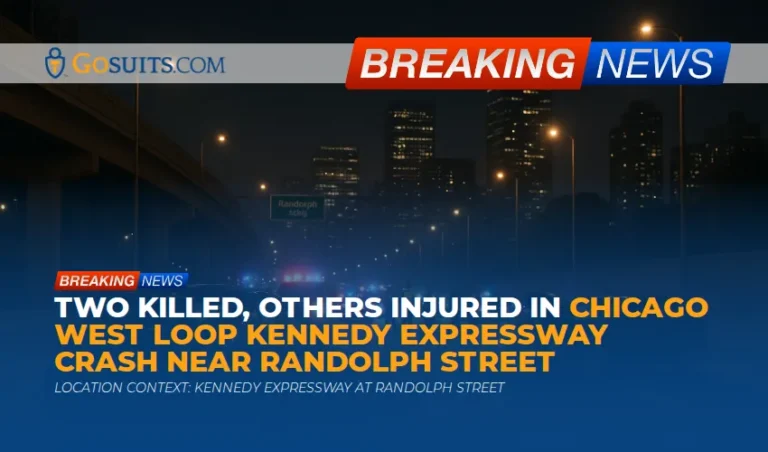
Early Sunday morning, a deadly collision on the inbound Kennedy Expressway in Chicago’s West Loop claimed two lives and injured others. According to information released by state authorities and reported locally, Illinois State Police were called at approximately 1:46 a.m. to the southbound Kennedy near Randolph Street for a two-vehicle crash. A car was stopped in active lanes for reasons not yet known, when it was struck from behind by another vehicle traveling in the same direction. Five people were inside the stationary car, and one person from the striking vehicle was also injured. Tragically, two people from the first car did not survive. All inbound lanes were closed around 1:58 a.m. to allow for crash investigation and reconstruction, and the roadway reopened at approximately 7:30 a.m.
Names have not been made public as of this writing. Investigators will determine why the first vehicle was stationary in live traffic, what visibility or mechanical factors may have played a role, and whether speed or inattention contributed. That process typically includes event data recorder downloads, scene measurements, video review, and witness interviews. This article summarizes what’s known, shares practical next steps for those affected, and explains how key Illinois laws and available records typically fit into a case like this.
Location Context: Kennedy Expressway at Randolph Street
The crash location sits where inbound I-90 and I-94 converge toward the Loop, just north of the Randolph Street bridges and within sight of the West Loop skyline. Even in the early morning, this corridor can be busy with late-night traffic leaving Fulton Market, Greektown, and River North, as well as overnight freight and rideshares returning to depots near the Jane Byrne Interchange. Lane shifts, lighting transitions near overpasses, and the curve of the roadway can complicate sightlines. When a vehicle becomes disabled in a live lane here, every second matters because the closing speeds are high and shoulder access is limited in spots.
Residents know the mix of commuters, delivery vans, and rideshares that funnel into downtown before dawn. It’s a tight corridor with limited safe pull-offs. That context helps explain why investigators shut down inbound lanes for several hours: documenting complex crash scenes on an urban interstate takes time and space, and safety for responders is paramount.
How Crashes Like This Happen on Urban Interstates at Night
Serious interstate crashes overnight often involve a chain of hazards: a mechanical failure that forces a vehicle to stop in a travel lane, limited illumination under an overpass, a driver cresting a slope with less time to react, or distracted driving that shortens the window to brake. National safety analyses show that rear-end crashes comprise a significant share of all collisions, underscoring how quickly closing distances can become deadly when a vehicle in front is moving slowly or stopped [12]. In metro areas like Chicago, nighttime traffic may be lighter, but operating speeds can increase. That can reduce the margin for error if an unexpected obstacle appears ahead.
Investigations evaluate many possibilities: Was the hazard visible and for how long? Were hazard lights activated? Was the stopped vehicle disabled by a flat tire or engine failure? Could the trailing driver reasonably see and avoid the stopped vehicle given lighting, traffic, and curve geometry? Independent crash reconstruction and official forensic work by the authorities attempt to answer those questions objectively.
Rear-End Collisions and Stopped Vehicles: Liability Basics in Illinois
In Illinois, a rear-end crash does not automatically settle liability in every case. Generally, a driver following another vehicle has a duty to maintain a safe speed and distance and to keep a proper lookout. At the same time, if a vehicle is stopped in a live lane and creates a sudden hazard, that can factor into comparative fault analysis. Facts like lighting, lane position, hazard lights, advance warning, road design, and whether the vehicle was disabled all matter. Investigators also examine event data recorders for speed, braking, and steering inputs in the seconds before impact.
For a clear explanation tailored to local conditions and proof issues, see Chicago Rear End Crash Fault Proof. Illinois’ modified comparative negligence rule allows a recovery to be reduced by a party’s percentage of fault, and bars recovery if a plaintiff is more than 50 percent at fault [8]. That makes accurate, unbiased reconstruction and timely evidence preservation especially important in serious highway crashes.
What Injured People and Families Can Do in the First 72 Hours
After a serious crash like this one, the first days can feel overwhelming. A few focused steps can protect health, preserve evidence, and reduce future disputes about what happened.
Medical attention and documentation
- Seek prompt care. Even if symptoms feel minor, some injuries do not fully emerge for hours or days. Chicago-area Level 1 trauma centers include John H. Stroger, Jr. Hospital of Cook County and Northwestern Memorial, among others recognized by the Illinois Department of Public Health [5]. Follow-up visits create a reliable medical record that connects symptoms to the crash date.
- Track symptoms and treatment. Keep copies of discharge instructions, imaging results, prescriptions, and referrals. A simple pain and function journal can help your providers, and later, any insurers or investigators understand the course of recovery.
Preserving scene evidence
- Secure photos and video. If safe at the time, photograph vehicle positions, debris fields, skid marks, lane signage, lighting, and any dashboard warnings. If that was not possible, return soon to capture fixed features like signage and sightlines. Preserve photos with timestamps.
- Identify cameras. Downtown and West Loop corridors may have city-operated traffic cameras and private building cameras near on and off ramps. Request video promptly because retention periods can be short.
- Save vehicle data. Modern vehicles store pre-crash data on speed and braking. Discuss preservation with a qualified professional before repairs or total-loss processing, as insurers and repair facilities may not retain data indefinitely.
Witnesses and official numbers
- Collect names and contact information. Neutral witness statements can fill gaps when visibility or vantage points differ.
- Record the incident and report numbers. Note the Illinois State Police incident number and any tow sheet or inventory numbers. These details simplify later records requests [1].
Where to Get Official Records and Information
Official records confirm the who, what, when, and where. They also help avoid disputes over timeline and injuries.
Illinois State Police crash reports
Expressways in Chicago are typically policed by the Illinois State Police, District Chicago. To obtain a crash report or learn the process for release, consult the State Police crash reports portal and the District Chicago information page [1] [2]. Some records are available by request after the investigation phase, and certain materials may require a Freedom of Information Act request depending on the record type and investigation status.
911 audio, dispatch logs, and traffic records from the City of Chicago
For incidents affecting city resources, the Office of Emergency Management and Communications maintains certain records, including 911 call audio and dispatch logs that may capture the timing of lane closures and resource deployment. Requests can be submitted through the City’s FOIA process [14]. Retention times vary, so timely requests are important.
Autopsy and medical examiner records
In fatal crashes, the Cook County Medical Examiner oversees medicolegal death investigations. Families may request autopsy and toxicology reports as permitted by policy and law. Guidance and request procedures are available through Cook County’s official site [6].
Death certificates
Certified death certificates are issued by the Cook County Clerk. These documents are often required for estates, insurance claims, and other administrative steps. Instructions and eligibility are available on the Clerk’s site [7].
Crash and roadway data
For a broader picture, the Illinois Department of Transportation compiles statewide crash facts and statistics, which can provide context on frequency, severity, and contributing factors [3]. In Chicago, Vision Zero resources also map high-crash corridors and highlight localized risks near the Loop and Fulton Market [4].
Insurance Considerations After a Serious Highway Crash
After medical needs are stabilized, insurance questions arrive quickly. Illinois drivers must carry minimum liability insurance, and Illinois law also requires uninsured motorist coverage at certain minimums, which can be critical in multi-injury crashes or when fault is disputed [11] [12]. If multiple injured people make claims against limited bodily injury liability limits, early confirmation of all applicable coverages becomes important.
Before giving recorded statements or signing medical authorizations, it is prudent to consult with a qualified attorney. Insurance carriers evaluate information through a liability and exposure lens, and statements given early can be used later to challenge causation, necessity of treatment, or damages. Many people search for car accident lawyers to understand their options and to avoid missteps that can weaken a legitimate claim.
Because this crash occurred on a state-policed interstate, more than one insurance policy may be implicated: the striking driver’s liability coverage, potential underinsured motorist coverage of injured occupants, and possibly coverage for the stationary vehicle depending on mechanical failure or maintenance issues. It is common for carriers to dispute apportionment in stopped-vehicle rear-end collisions, which makes timely evidence gathering and legal guidance essential. When needed, Chicago car accident lawyers can coordinate preservation letters, event data downloads, and witness outreach to prevent key proof from disappearing.
Preserving Evidence Around the West Loop
Evidence around the Kennedy near Randolph can disappear quickly after lanes reopen. Private security cameras near on and off ramps, restaurants along Randolph Street, garages facing the expressway, and rooftop cameras in the Fulton Market area sometimes capture approach lanes or sound. Some buildings keep recordings for only a few days. Quickly identifying where a camera may have faced the roadway, confirming retention, and sending a formal preservation request can make the difference in whether a crucial clip is saved.
Public records can complement video. Dispatch logs may confirm when hazard vehicles or emergency traffic patrols were requested, while medical records time-stamp injury complaints and diagnostic impressions. Nighttime visibility, glare from downtown lighting, or a lane-closure taper nearby can all be documented after the fact with measured photos and a site visit during similar light conditions.
How Illinois Law May Apply
Illinois applies a modified comparative negligence system. If an injured party is found to be 50 percent or less at fault, a recovery can be reduced by that percentage; if more than 50 percent at fault, there is no recovery [8]. In multi-vehicle highway crashes, that framework means each driver’s actions before impact are scrutinized closely, along with vehicle conditions, warnings, and visibility. The presence of a stopped vehicle in a travel lane may be one factor among several, particularly if the vehicle was disabled and the occupants were attempting to reach safety.
Illinois generally has a two-year limitations period for personal injury actions, measured from the date of injury, with exceptions in limited circumstances [9]. Wrongful death claims are also subject to a two-year limitations period under the Wrongful Death Act, with specific statutory exceptions [10]. Timelines can be shorter when governmental entities are involved in certain capacities, and claims involving minors or estates may require additional procedural steps. Because deadlines and notice rules can be outcome-determinative, it is important to confirm the correct timeline early.
Illinois law requires all motorists to maintain minimum bodily injury and property damage liability coverage [11]. Illinois also mandates uninsured motorist coverage at minimum limits for bodily injury, which can provide a pathway for recovery when an at-fault driver is uninsured or unidentified [12]. Policy language, anti-stacking provisions, and the classification of occupants versus drivers can affect how these coverages apply in multi-claim crashes.
Data Snapshot and Safety Notes for I-90 and I-94
State and national safety data offer context for crashes like the one near Randolph Street:
- Rear-end crashes are common. National safety research highlights rear-end collisions as a significant share of all crashes, emphasizing how quickly closing distances reduce reaction time when a vehicle ahead is moving slowly or is stopped [12].
- Urban interstate risks. IDOT crash data and Chicago’s Vision Zero program identify high-crash corridors where on and off ramps, lane splits, and complex lighting conditions increase risk, particularly at night [3] [4].
- Nighttime visibility. Darkness and transitional lighting under overpasses can delay detection of a stopped vehicle, even for attentive drivers. Good lighting and advance hazard signaling can mitigate risk, but sudden mechanical failures can still produce emergencies.
Practical safety reminders can help all of us navigate the Kennedy safely. Maintain longer following distances at night, scan well ahead for taillights or unexpected obstacles, and, if you experience a vehicle failure, activate hazard lights immediately and steer toward the shoulder if feasible. The Illinois Rules of the Road provide guidance on defensive driving, following distance, and responding to roadway hazards that apply on interstates like I-90 and I-94 [15].
What To Do Next
This section explains immediate, concrete actions that can protect health, preserve rights, and support clarity about what happened. Timing matters because records and video can be lost, and insurance decisions often turn on early facts.
- Secure the official crash report details. Identify the Illinois State Police report or incident number. Follow instructions on the State Police crash report portal to request the report once it is available [1]. If an investigation is ongoing, note when to check back and whether a FOIA request is appropriate.
- Preserve potential video within days. Send preservation requests to nearby buildings with exterior cameras facing the expressway approaches or ramps. Ask about retention duration and the process to share video to authorized parties.
- Organize medical records and bills. Keep every record tied to the crash, including imaging, therapy notes, and prescriptions. This organizes proof of causation and cost.
- Confirm all applicable insurance coverages. Identify the liability policy of the striking driver, the coverages on the stationary vehicle, and any uninsured or underinsured motorist coverage that may benefit injured occupants. Gather policy numbers and declarations pages early.
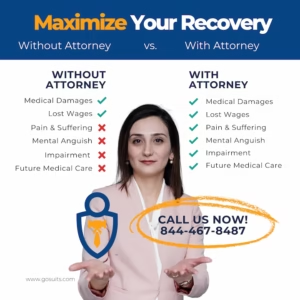
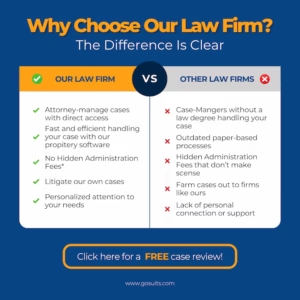
- Consult an attorney before speaking with insurers. Insurance adjusters move quickly to obtain statements. What is said can be used later to dispute liability, medical necessity, or damages. A free consultation can clarify rights, help coordinate preservation of critical evidence, and reduce the risk of avoidable mistakes in recorded statements.
- For families facing a loss. Request guidance from the Cook County Medical Examiner for autopsy and toxicology results [6], and obtain certified death certificates from the Cook County Clerk for estate and insurance purposes [7].
Acting within the first week makes a measurable difference in serious interstate crashes. It helps ensure that an accurate record, not fading memory, shapes the outcome.
Commentary from Gosuits Chicago, Illinois Personal Injury Attorney
First and foremost, our hearts go out to everyone affected by this West Loop tragedy. Losing a loved one or suffering sudden injuries on a familiar stretch of the Kennedy shakes a community. The information here is meant for education and general awareness. Every incident is unique, and families deserve compassionate, individualized guidance.
Based on what has been reported, investigators will likely focus on two key questions: why the first vehicle was stationary in a live lane, and whether the striking driver had a reasonable opportunity to perceive and avoid that hazard given lighting, approach distance, and speed. In Chicago’s dense urban interstate environment, a disabled vehicle can become a life-or-death hazard in seconds. Careful reconstruction, including vehicle data and any available footage from nearby structures, will be important to reach a fair and fact-based understanding.
In crashes with multiple injuries and potential fault disputes, insurance carriers tend to move fast to shape the narrative. They analyze statements, highlight ambiguities, and sometimes suggest preexisting causes for injuries. Large carriers and corporate entities understand the claims process inside and out, and they know how to leverage delays or missing records. When families do not know what to ask for, critical proof can slip away, like short-retention camera footage or downloadable vehicle data that may be lost before repairs begin.
That is why obtaining a free consultation matters. Learning how comparative fault works, which records to request first, and how to avoid recorded-statement pitfalls can change the trajectory of a claim. Whether injuries are moderate or severe, timely guidance helps ensure that the facts drive the outcome, not assumptions.
References and Resources
- Traffic Crash Reports – Illinois State Police
- District Chicago Patrol – Illinois State Police
- Crash Information and Data – Illinois Department of Transportation
- Vision Zero Chicago – City of Chicago
- Illinois Designated Trauma Centers – Illinois Department of Public Health
- Medical Examiner – Cook County Government
- Death Certificates – Cook County Clerk
- 735 ILCS 5/2-1116 Modified Comparative Fault – Illinois General Assembly
- 735 ILCS 5/13-202 Personal Injury Limitations – Illinois General Assembly
- 740 ILCS 180/2 Wrongful Death Act – Illinois General Assembly
- 625 ILCS 5/7-601 Mandatory Insurance – Illinois General Assembly
- 215 ILCS 5/143a Uninsured Motorist Coverage – Illinois General Assembly
- What Do We Know About Rear-End Crashes? – NHTSA
- Freedom of Information Requests – City of Chicago
- Illinois Rules of the Road – Illinois Secretary of State