- What we know so far about the Chicago Heights crash
- Community context around Chicago Road and Joe Orr Road
- Why intersection crashes and post impact fires are so dangerous
- How investigators typically reconstruct multi vehicle crashes
- Immediate steps people can take after a serious crash in Chicago Heights
- Where to get official records and information
- Medical care and regional trauma centers that serve the South Suburbs
- Understanding fault, insurance, and timelines under Illinois law
- Preserving evidence and protecting your claim
- Practical steps to take next and why timing matters
- Commentary from Gosuits Chicago Heights, Illinois Personal Injury Attorney
What we know so far about the Chicago Heights crash
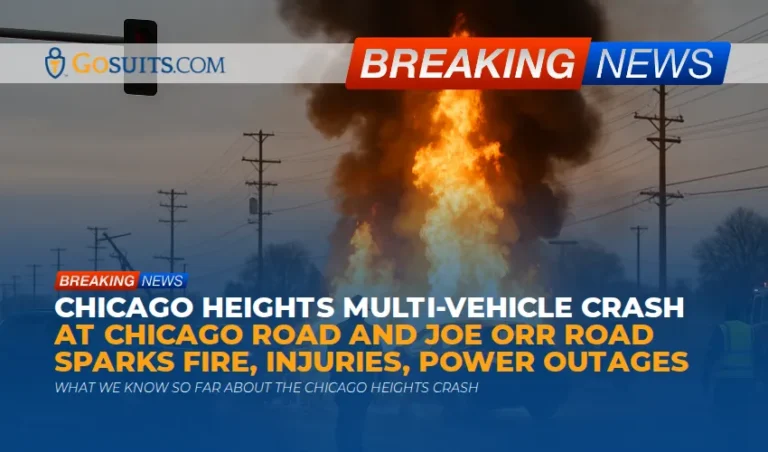
On Friday evening, April 3, 2026, police responded to a severe multi vehicle crash at the intersection of Chicago Road and Joe Orr Road in Chicago Heights. Initial reports indicate that a fire occurred at the scene and that several people were hurt. Chicago Heights police have stated they will release details after completing their investigation. Utility officials also reported power disruptions affecting hundreds of nearby customers due to the crash. This is a developing situation, and official information may change as investigators analyze the scene and speak with witnesses.
Community context around Chicago Road and Joe Orr Road
People who live and work in Chicago Heights know that Chicago Road and Joe Orr Road form a busy crossroads in the South Suburbs, serving commuters, school traffic, and shoppers throughout the day. Chicago Road is a state route corridor through the area, and Joe Orr Road connects residential neighborhoods with nearby commercial hubs and parks. Intersections like this can see heavy turning movements, short left turn queues, and drivers trying to make lights at peak hours. Add nighttime visibility or wet pavement, and risk can climb. That local reality is why even one mistake at a signalized intersection can ripple into a chain reaction within seconds.
Why intersection crashes and post impact fires are so dangerous
Intersection collisions concentrate energy into small spaces where vehicles, pedestrians, and cyclists converge. National research shows a significant share of crashes occur at or near intersections, and safety agencies have long focused on improving sight lines, signal timing, and turning controls to reduce severe conflicts [1]. When a high energy impact damages fuel systems, electrical components, or batteries, the risk of a vehicle fire rises. Highway vehicle fires can escalate quickly, creating heat, smoke, and toxic gases that make self rescue and bystander rescue difficult, especially before fire crews arrive [2].
In multi vehicle crashes, secondary impacts can trap occupants, and fire makes extrication harder. That is one reason first responders triage quickly, control hazards, and coordinate with utilities when power poles or equipment are damaged.
How investigators typically reconstruct multi vehicle crashes
In complex intersection events involving several vehicles and a post impact fire, investigators generally focus on collecting perishable evidence early. Although the Chicago Heights investigation is ongoing, these are the common elements police and reconstruction teams examine in similar cases:
- Signal phase and timing: What color was the traffic signal for each approach at the moment of impact, and were any protected turn arrows displayed [3]? This often involves reviewing controller logs, maintenance records, and, when available, signal timing plans from roadway authorities.
- Vehicle speeds and movements: Skid marks, yaw marks, crush profiles, and final rest positions help estimate speed and angle of impact. Modern vehicles also store event data that can capture pre crash speed, braking, and throttle input in certain circumstances [4].
- Witness accounts and 911 records: Dispatch logs and caller statements can help confirm timing and initial conditions.
- Environmental and roadway factors: Lighting conditions, sight obstructions, lane markings, and any construction or detours are documented.
- Mechanical inspections: Post crash inspections can rule out or reveal brake failures, tire issues, and other defects.
- Fire origin and spread: Fire crews and investigators assess where a blaze started, whether it was fueled by leaked fluids, and how quickly it spread.
Investigations aim to determine what happened and why, not only to clarify civil liability but also to identify any systemic safety issues that agencies could address going forward.
Immediate steps people can take after a serious crash in Chicago Heights
In the first day or two, practical actions matter. If someone is hurt, prioritize medical care first. Even if injuries feel minor, certain conditions such as concussions, internal injuries, or smoke inhalation symptoms can appear or worsen hours after a crash. Once the immediate health needs are addressed, documentation becomes essential.
Consider the following approach:
- Medical care and documentation: Follow up promptly at an urgent care or hospital if anything feels off. Keep discharge instructions, imaging reports, and all receipts together.
- Photos and video: If safe and possible, capture photos of the scene, vehicle positions, debris, skid marks, and any damaged signs or signals. After vehicles are towed, photograph all sides, interior damage, airbag deployment, and child seat condition.
- Witness information: Secure full names, phone numbers, and brief statements from witnesses. Confirm if anyone had dashcam footage.
- Property and utility damage: If the crash affected power or communications near your property, note the times of the outage and any resulting losses. Keep receipts for temporary lodging, food replacement, or emergency repairs if applicable.
- Insurance caution: Before speaking to any insurance company about the crash, consult an attorney. Recorded statements can be used later and partial descriptions can be misunderstood. Early legal guidance can help protect your rights.
For a step by step, Chicago focused checklist on organizing medical care, gathering evidence, and avoiding common mistakes, see what to do after a car accident in Chicago.
Where to get official records and information
Families and people involved often need official documents to understand what happened and to navigate insurance. Here is how these records typically work in Illinois and Cook County.
Police crash reports
For a city street crash within Chicago Heights, the police department that responded usually prepares the primary crash report. These reports are typically available from the department’s records division after processing. If the incident occurred on or immediately along a state route and the Illinois State Police led the investigation, reports may be available through the Illinois State Police Crash Reports portal [5]. When requesting, have the date, approximate time, location, and, if known, the report number. A government issued ID may be required.
911 audio, traffic signal data, and nearby video
- 911 recordings and CAD logs: These may be obtainable through a public records request routed to the local public safety agency. Illinois FOIA provides the framework for requesting public records, subject to exemptions for ongoing investigations and privacy [6].
- Traffic signal timing and logs: For state maintained signals, timing plans and maintenance logs may be held by the Illinois Department of Transportation’s District 1 office. Requests for records can be made through IDOT’s FOIA process [7].
- Cameras: Private businesses and residences sometimes share footage voluntarily when asked promptly. Public safety or traffic cameras, where they exist, can have short retention periods. Early outreach matters because many systems overwrite within days.
Medical examiner and autopsy records
If a crash results in a fatality, Cook County’s Medical Examiner determines cause and manner of death. Families can request autopsy and related records from the Cook County Medical Examiner’s Office. The office provides guidance on eligible requesters, required identification, and available documents [8].
Medical care and regional trauma centers that serve the South Suburbs
Serious injuries from high energy intersection crashes often require coordinated emergency care. The Illinois Department of Public Health oversees the trauma center network statewide, which includes Level I and Level II centers tasked with receiving and treating the most severely injured patients [9]. In the South Suburban region, EMS providers triage and transport based on injury patterns, vital signs, and proximity to appropriate facilities, including Level I trauma centers in the Chicago area. The system is designed so that critically injured patients can be stabilized locally and, when needed, transferred to higher level centers in coordination with regional trauma protocols [10].
If someone was transported from the Chicago Heights scene, discharge paperwork and follow up instructions from the receiving hospital are key. Keep every page. Those records will later help clarify the injury timeline, treatment decisions, and ongoing needs.
Understanding fault, insurance, and timelines under Illinois law
Illinois follows a fault based system for motor vehicle crashes. That means the driver or entity found negligent is generally responsible for the harm caused, subject to defenses and comparative fault allocation. At intersections controlled by traffic lights, the rules for entering on steady red, steady green, and turn arrows are set out in the Illinois Vehicle Code [3].
Illinois uses modified comparative negligence. An injured person’s recovery is reduced by their percentage of fault, and recovery is barred only if that person’s fault exceeds 50 percent [11]. Understanding how insurers apply this rule to multi vehicle crashes can be complicated. It is one reason many people choose to speak with car accident lawyers early in the process to understand how facts and evidence may shape fault allocations.
There are also time limits. In most Illinois personal injury cases, the statute of limitations is two years from the date of injury, with separate rules for wrongful death and claims involving governmental entities [12][13]. Claim deadlines for property damage can differ. Always verify how these rules apply to a specific situation before taking action.
When it comes to insurance, the Illinois Department of Insurance provides consumer guidance on what to expect from auto insurers and what rights policyholders have when filing claims [14]. Keep in mind that insurers for other drivers have no duty to you beyond handling the claim against their insured. That is why recorded statements should be avoided until you have legal guidance.
Preserving evidence and protecting your claim
Evidence can fade quickly after a crash. Skid marks wash away, cars are repaired or scrapped, and camera systems overwrite footage. Here are practical steps that often make a difference.
- Secure the vehicle: If there was a significant impact or a fire, ask the tow yard not to release or destroy the vehicle. Certain vehicles contain an event data recorder that may preserve pre crash information relevant to the collision [4].
- Request video promptly: Reach out to nearby businesses and residences within 24 to 72 hours. Many surveillance systems keep only a short archive.
- Document injuries and routine: Keep a simple recovery log noting pain levels, sleep, work impacts, and missed events.
- Do not post specifics online: Social posts can be misunderstood and sometimes used out of context.
- Consider legal help early: A seasoned local advocate can send preservation notices, request records, and coordinate inspections before key evidence disappears. Many people find that early support prevents avoidable mistakes long before any lawsuit is considered.
If you feel overwhelmed, that is normal. Multi vehicle intersection cases often involve multiple insurers and finger pointing. Insurers may contact you quickly, offering to fix a car or cover a few medical visits while collecting detailed statements. That early outreach can shape your claim. Many Chicago Heights residents choose to let an advocate handle communications so they can focus on healing. It is one place where Chicago Heights car accident lawyers can help level the playing field without forcing anything into litigation before you are ready.
Practical steps to take next and why timing matters
This section offers general next steps and why speed matters after a serious intersection crash. It is not tailored to any one person’s circumstances.
- Seek a medical evaluation within 24 to 48 hours: Early visits document injuries and give clinicians a baseline. Delays can make it harder to connect symptoms to the crash.
- Centralize your records: Create one folder for photos, hospital paperwork, doctor notes, repair estimates, tow yard receipts, and missed work notes.
- Preserve vehicles and components: If fire or apparent mechanical issues were involved, the vehicle may be critical evidence. Ask that it be held for inspection.
- Move quickly on video: Camera footage often auto deletes within days. Acting this week can be the difference between having clear proof and none at all.
- Get legal guidance before calling insurance: What someone says to any insurer, even casually, can be recorded and used later. An initial consult helps set boundaries for communications and protects against inadvertent admissions.
- Mark your calendar for deadlines: Illinois law sets specific time limits for injury and wrongful death claims, and some public records systems purge data on a schedule. Timely action preserves options [12][13].
People often ask what tangible benefit comes from acting now instead of in a few weeks. The answer is straightforward. Vehicle data can be overwritten when batteries are disconnected or cars are salvaged. Businesses routinely overwrite video. Signal controller logs are kept by agencies on set retention cycles. Each day that passes raises the risk of key proof disappearing. Getting oriented early and coordinating medical and evidence steps usually makes the later claim process smoother and more accurate. For those who prefer a guided approach, many choose to consult with car accident lawyers in Chicago Heights who can organize evidence preservation and insurer communications while medical care proceeds.
Commentary from Gosuits Chicago Heights, Illinois Personal Injury Attorney
Our hearts go out to everyone affected by the serious crash at Chicago Road and Joe Orr Road. Multi vehicle collisions with fire are traumatic for families and for bystanders who witness them. The thoughts shared here are for general information only and are not tailored to any single person’s situation.
From a civil injury perspective, intersection collisions raise important questions about signal phases, driver decisions, visibility, and whether any vehicle or roadway related factor made the outcome worse. Investigators will work through those questions in the coming days. In our view, the combination of multiple vehicles, a post impact fire, and a busy signalized intersection calls for prompt evidence preservation. That usually includes securing vehicle inspections, requesting available camera footage, and confirming signal timing records.
Insurance companies and large corporations often move quickly after a crash. Adjusters may sound helpful while collecting detailed statements and medical authorizations. Those early conversations can shape the claim and are sometimes used to minimize injuries, shift fault percentages, or offer low valuations before the full picture is known. People dealing with pain, transportation problems, and time off work are at a disadvantage in those early days.
A no cost initial consultation can make a real difference. It helps people understand the process, avoid missteps with insurers, and set a plan for preserving evidence and organizing medical care. Even if no claim is filed, knowing the timelines, the documents to keep, and the boundaries for communication with insurers can reduce stress and protect options while recovery unfolds.
Resources and references
- Intersection Safety – Federal Highway Administration
- Highway Vehicle Fires Topical Reports – U.S. Fire Administration
- 625 ILCS 5/11-306 Traffic-control signals – Illinois General Assembly
- Event Data Recorders – National Highway Traffic Safety Administration
- Crash Reports – Illinois State Police
- Illinois Freedom of Information Act Overview – Illinois Attorney General
- FOIA Requests – Illinois Department of Transportation
- Cook County Medical Examiner – Cook County Government
- Trauma Program Overview – Illinois Department of Public Health
- Illinois Trauma Center System – Illinois Department of Public Health
- 735 ILCS 5/2-1116 Comparative Fault – Illinois General Assembly
- 735 ILCS 5/13-202 Personal Injury Limitations – Illinois General Assembly
- 740 ILCS 180 Wrongful Death Act – Illinois General Assembly
- Consumer Auto Insurance Information – Illinois Department of Insurance
- Power Outages and Electrical Safety – Ready.gov