- What Happened: Reconstruction, Timeline, and Who Is Involved
- Why Construction Zones Amplify the Risk Around Heavy Trucks in California
- Regulatory Levers Under Review After the Crash
- Immediate Effects on Carriers and Shippers Using California Corridors
- Civil Liability Landscape After a Work Zone Truck Collision
- Evidence To Secure Quickly for an Injury Claim
- Where To Get Official Records in California
- Insurance Factors Unique to Commercial Trucking Crashes
- Industry Voices and Public Reaction
- Short Forecast: Could This Affect Global Logistics?
- Why Taking Action Soon Matters
- Commentary from Gosuits California Personal Injury Attorney
- References
What Happened: Reconstruction, Timeline, and Who Is Involved
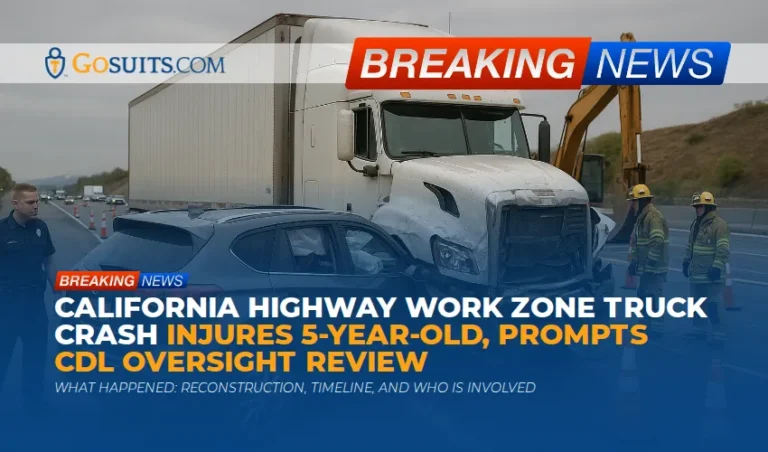
In June 2024, a commercial tractor-trailer entered a California highway construction zone and failed to stop in time for traffic that had slowed or stopped. Investigators reconstructed the sequence: the truck approached at an unsafe speed, struck multiple vehicles, and caused severe injuries to a 5-year-old child, later publicly identified as Dalilah Coleman, who endured a three-week coma before returning to school. The California Highway Patrol handled the initial crash response and investigation. This collision quickly moved beyond a single tragedy. It prompted state reviews of driver screening and, later, federal attention to how commercial driver’s licenses are issued and verified.
Several agencies and milestones emerged from the aftermath. In August 2025, the driver, identified publicly as Partap Singh, was arrested and placed in federal custody. By late 2025, federal authorities announced audits of state-level CDL issuance practices. National political leaders referenced the case during a State of the Union address, calling for a legislative response to restrict CDLs for non-domiciled or unlawfully present individuals. Throughout, the public conversation merged two themes: roadway safety and the mechanics of CDL vetting for drivers who operate 80,000-pound vehicles through active work zones and dense traffic corridors.
For California communities, the setting matters. Our highways are constantly under construction and improvement, from the I-5 stretches threading the Central Valley to the 405 through West Los Angeles. Work activity near the ports of Los Angeles and Long Beach often intersects heavy truck flows. When a big rig approaches a lane closure or a queue of vehicles too fast, the margin for error is almost zero. California’s basic speed law requires driving at a speed reasonable and prudent for conditions, including work zones and stopped traffic, regardless of the posted speed limit [8]. State law also enhances penalties for speeding in certain highway construction areas when workers are present [9].
Why Construction Zones Amplify the Risk Around Heavy Trucks in California
Construction zones compress lanes, alter sight lines, and create sudden slowdowns. For a fully loaded tractor-trailer, stopping distance can more than double compared with a passenger car under the same conditions. That reality is not just intuitive. Federal work zone safety data have shown a sustained risk profile for crashes and fatalities in and near work areas, emphasizing the importance of advance warning, driver attentiveness, and reduced speeds as vehicles approach queues and lane shifts [6] [7].
California’s “Slow for the Cone Zone” safety program reinforces the expectation that drivers reduce speed and exercise heightened care whenever they encounter work crews, cones, or signage. For truck drivers, that includes engaging lower gears early, maintaining safe following distances, and scanning well ahead for brake lights and arrow boards. These are not abstract rules. They are protocols meant to save lives on corridors like I-80 over the Carquinez Strait, US-101 along the Peninsula, or SR-99 through Fresno and Tulare Counties, where work zones and freight consistently mix.
Regulatory Levers Under Review After the Crash
The collision spotlighted multiple control points in the safety chain, many of which already exist in federal rules or state processes but are now under sharper scrutiny:
- CDL issuance standards and lawful presence verification. The federal CDL program sets baseline requirements for commercial licensing nationwide, while states issue the licenses and verify identities, residency, and driving history [1] [2]. California’s DMV outlines its own requirements for commercial licensing and lawful presence [4]. State DMVs may also use the federal SAVE program to verify immigration status or lawful presence where required by state or federal law [10].
- Training requirements. The Entry-Level Driver Training rule requires new commercial drivers to complete standardized theory and behind-the-wheel instruction from registered providers before taking certain CDL skills tests. The Training Provider Registry creates an auditable trail to verify completion [3].
- Data sharing and audits. Regulators are examining how DMVs, federal agencies, and law enforcement exchange data to identify disqualifying histories or mismatches across systems. The post-incident push includes stronger audits and consequences if a program is not aligned with federal expectations or fails to validate critical eligibility criteria [1].
- Language and sign literacy. The ability to read and understand English-language road signs, placards, and safety materials is essential for safe commercial operation and for hazmat compliance where applicable. Questions about how language proficiency is ensured have grown louder alongside the broader review of training and testing [3].
In short, the real focus is consistency. Policymakers want to know that a CDL issued in any state meets minimum verification, training, and safety screening requirements that protect drivers sharing narrow, shifting work-zone lanes with heavy trucks.
Immediate Effects on Carriers and Shippers Using California Corridors
Closer scrutiny of CDL issuance and vetting has ripple effects for fleets, brokers, and shippers active on California lanes. Here’s what operators are encountering on the ground:
- Driver pool volatility. If non-domiciled or otherwise ineligible applicants are excluded or delayed, some markets may see fewer available drivers in the near term. That tends to push wages up, lengthen recruiting cycles, and create pressure on dispatch teams covering time-sensitive lanes at the ports or along I-10 and I-15.
- Route and capacity shifts. Carriers may temporarily steer equipment away from corridors known for frequent work zones or heavy enforcement until they are confident their documentation, training records, and audit responses are airtight.
- Insurance and liability. Underwriters increasingly ask for proof of driver vetting and ELDT compliance. When a work-zone crash occurs, insurers look closely at a carrier’s hiring practices, training logs, and supervision policies before making coverage decisions [12].
- Procurement and contracting. Shippers frequently revisit vendor agreements to include audit rights, tighter vetting representations and warranties, and clear indemnity terms addressing driver qualifications and safety programs.
None of this is theoretical for those of us who live and work here. When a lane closure pops up near the 710 or 110 corridors or overnight work cuts capacity on I-5 through Orange County, the schedule math changes immediately for dispatchers. Safety teams are wise to treat this period as a stress test for their compliance culture.

Civil Liability Landscape After a Work Zone Truck Collision
From a personal injury perspective, work-zone truck crashes tend to raise multiple layers of potential civil liability. The specifics always depend on the facts, but several recurring issues are common:
- Driver negligence. Allegations can include unsafe speed for conditions, following too closely, failure to maintain a proper lookout, or failure to brake in time for stopped traffic in a construction queue. California’s basic speed law codifies the duty to slow for conditions like work zones [8].
- Employer liability. A motor carrier is generally responsible for the negligence of its on-duty driver under respondeat superior. Additional direct liability theories often surface, such as negligent hiring, training, retention, or supervision, particularly if the carrier’s screening and ELDT documentation are incomplete or inconsistent with federal standards [3].
- Regulatory noncompliance. Violations of FMCSA rules regarding hours of service, drug and alcohol testing, or entry-level driver training can be relevant to liability and may influence how insurers evaluate risk and reserves after a crash [3] [11].
- Work-zone traffic control. In some cases, questions arise about whether traffic control plans, signage, or lane closures met the standards in effect. Where government contractors or agencies are involved, additional procedural rules and potential immunities can complicate claims, so prompt consultation and careful public-records requests matter.
Because these cases are fact-intensive and evidence can vanish quickly, many people consult seasoned truck accident lawyers early to safeguard logs, device data, and traffic control records before they are overwritten or altered in the ordinary course of business.
Evidence To Secure Quickly for an Injury Claim
Securing the right records early can make a significant difference. Consider this non-exhaustive list when a heavy truck is involved in a California work-zone crash:
- Official crash records. California Highway Patrol collision reports, diagrams, and photos [5].
- Vehicle data. Electronic Control Module data, engine and brake fault codes, event data recorder snapshots, dashcam or driver-facing camera footage, and the truck’s telematics history.
- Driver qualification and training. The driver’s qualification file, ELDT completion records from a registered provider, road test forms, language and signage literacy training acknowledgments where applicable [3].
- Hours-of-service logs. ELD data, dispatch notes, and fuel or toll receipts that corroborate duty status.
- Post-accident testing documentation. Drug and alcohol testing conducted under 49 CFR 382.303 and the timing of specimen collection relative to the crash [11].
- Work-zone documentation. Traffic control plans, lane closure permits, and maintenance-of-traffic logs maintained by the relevant Caltrans district or contractor.
- Third-party visuals. Nearby business CCTV, Caltrans or municipal traffic cameras, and bystander video. California Public Records Act requests can help obtain agency records where permitted [13].
For a practical orientation on building a trucking case in this state, see our legal overview for truck accident victims in california. It walks through claim timing, documentation, and common hurdles in California trucking matters.
Where To Get Official Records in California
Collision reports and traffic documentation
Most highway crashes investigated by the California Highway Patrol are documented in a CHP collision report. Families can request copies using the CHP process, which includes submitting the appropriate form and proof of involvement or interest [5]. For additional roadway context, Caltrans district offices may hold work-zone traffic control plans, lane closure logs, and related records. Those may be available through a California Public Records Act request to the relevant district office [13].
Medical examiner and autopsy records
When a fatality occurs, the county Medical Examiner-Coroner maintains investigative and autopsy records. Processes and fees vary by county. As one example, the Los Angeles County Department of Medical Examiner posts guidance for requesting reports, which can serve as a general reference for what to expect when working with a California coroner’s office [14]. For non-fatal crashes, a treating hospital’s records department will be the primary source for medical documentation.
Driver and carrier compliance records
Some compliance materials, such as ELDT confirmations, are maintained by the carrier or training provider and may require a legal request to secure. Federal regulations govern how long carriers must keep certain records, so early requests and preservation letters are key [3].
Insurance Factors Unique to Commercial Trucking Crashes
Commercial motor carriers operating in interstate commerce must carry minimum levels of liability insurance. Required limits vary depending on vehicle type and cargo, but they are typically much higher than personal auto policies. Federal rules require filings and endorse coverage to protect the public, often through mechanisms like the MCS-90 endorsement for certain carriers [12]. These higher limits and filings can help cover catastrophic injuries in a multi-vehicle work-zone pileup, but accessing coverage is not automatic.
Insurers scrutinize qualification files, ELDT records, and post-accident compliance under 49 CFR Part 382 when evaluating liability and negotiating claims [11]. The carrier’s safety record and any prior citations matter too. Because recorded statements and early communications can be used against claimants later, many people in California choose to speak with truck accident lawyers in California before contacting any insurance adjuster about the crash.
Industry Voices and Public Reaction
Trucking groups have generally emphasized a safety-first message: anyone operating a heavy commercial vehicle must be trained to consistent standards and vetted thoroughly. Policymakers, meanwhile, have responded with proposals to tighten verification and restrict CDL issuance to certain categories of applicants. Advocacy organizations warn that overly broad restrictions could shrink the driver pool quickly and disrupt supply chains, especially during seasonal peaks at West Coast ports or agricultural harvests in the Central Valley.
Set against that policy debate is the lived reality for California families who drive these roads daily. For them, the question is simple: how do we prevent the next work-zone disaster? The answers point back to basics: diligent vetting, standardized training, readable and redundant signage, and alert, defensive driving when approaching cones and brake lights.
Short Forecast: Could This Affect Global Logistics?
Global impacts are likely limited. The most immediate effects should concentrate within the United States, particularly on West Coast freight corridors that connect ports to inland distribution hubs. However, because the Los Angeles and Long Beach complex moves a significant share of America’s containerized imports, even modest slowdowns or routing shifts in Southern California can ripple through rail schedules and transload operations that serve national and international supply chains. If underwriting tightens and driver vetting slows onboarding across multiple large carriers, short-term capacity and pricing pressure could intensify on key export and import lanes serving Asia-Pacific trade. Still, at a global scale, this remains a regional policy shock with localized logistics consequences that partners and stakeholders should monitor closely.
Why Taking Action Soon Matters
When a serious truck crash happens in a California construction zone, timing is critical. The exact next step depends on the situation, but the following priorities help protect safety and the ability to pursue a civil claim:
- Preserve evidence immediately. Electronic logging data, engine control module downloads, dashcam footage, and roadway camera recordings can be overwritten quickly. Request that all potential evidence be preserved in writing, and document what you can with photos and notes while it is still fresh.
- Obtain official records. Request the CHP collision report and any available supplemental materials. If a work-zone setup or lane closure plan is relevant, prepare a public-records request to the appropriate Caltrans district office.
- Prioritize medical care and documentation. Follow through with recommended treatment. Keep discharge summaries, diagnostic imaging, and specialist referrals organized in a single file.
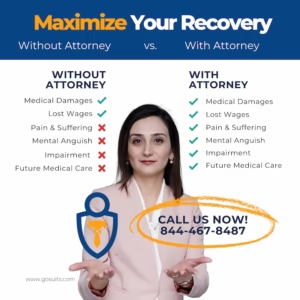
- Consult an attorney first before speaking to insurance. Early statements can be used against claimants later. A consultation can clarify what to say, what not to say, and how to structure preservation requests and medical documentation.
- Track expenses and impacts. Maintain a log of missed work, mileage to medical visits, and day-to-day limitations. For children injured in crashes, note school absences and therapy appointments.
The urgency is straightforward. Evidence grows stale, vehicles get repaired or scrapped, and key digital logs can cycle out. Acting promptly helps ensure the facts are preserved and that any future claim rests on a detailed and accurate record.
Commentary from Gosuits California Personal Injury Attorney
Our hearts are with the child and every family member affected by this work-zone crash. What follows is educational and general in nature. Each case has its own facts, and nothing here should be taken as a directive for your particular situation.
From a civil-injury standpoint, the reported sequence raises familiar red flags: unsafe speed for conditions, a failure to manage closing distance in a queue, and potential training or supervision gaps that can show up in hiring files and ELDT records. Construction zones eliminate the margin for error, especially for 80,000-pound vehicles. When a truck enters a cone zone too fast, multiple cars can be swept into a chain reaction in seconds.
Insurance carriers and corporate defendants often move fast after crashes like this. They may contact people quickly, request recorded statements, or suggest a narrow view of what happened based on selective documents. Many people do not realize that early statements can be used to minimize injury impacts or reframe fault. Regulatory complexity adds another layer. If post-accident testing or ELDT documentation is incomplete, that can color the negotiations, yet it may not be volunteered without targeted requests.
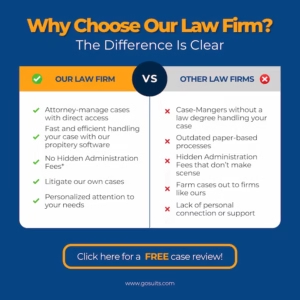
A free consultation can help people understand timelines, evidence needs, and the practical implications of FMCSA and California rules as they apply to a particular crash. It also provides a safe space to discuss how to interact with insurers and what to preserve while public records and device data are still within reach.
References
- Commercial Driver’s License Program Overview – FMCSA
- 49 CFR Part 383: Commercial Driver’s License Standards – eCFR
- Entry-Level Driver Training and Training Provider Registry – FMCSA
- Commercial Driver Licenses in California – California DMV
- How To Obtain a Collision Report – California Highway Patrol
- Work Zone Facts and Statistics – FHWA
- Work Zone Safety Program – Caltrans
- California Vehicle Code 22350: Basic Speed Law – California Legislature
- California Vehicle Code 42010: Construction Zone Penalties – California Legislature
- Systematic Alien Verification for Entitlements (SAVE) – USCIS
- 49 CFR 382.303: Post-Accident Testing – eCFR
- Insurance Requirements for Motor Carriers – FMCSA
- California Public Records Act Overview – California DOJ
- Requesting Records – LA County Department of Medical Examiner