- What We Know About the Boyle Heights I-5 Multi-Vehicle Crash
- Timeline and Location Context
- Why Big Rig Crashes On Freeways Are So Destructive
- Key Records To Request and Where To Get Them in Los Angeles
- Potential Civil Liability and Insurance Layers in a Truck Crash
- Practical Next Steps After a Serious Freeway Collision
- Local Support and Community Touchpoints
- Commentary from Gosuits Los Angeles, CA Personal Injury Attorney
- Call to Action: Why Timely Action Matters Now
- References
What We Know About the Boyle Heights I-5 Multi-Vehicle Crash
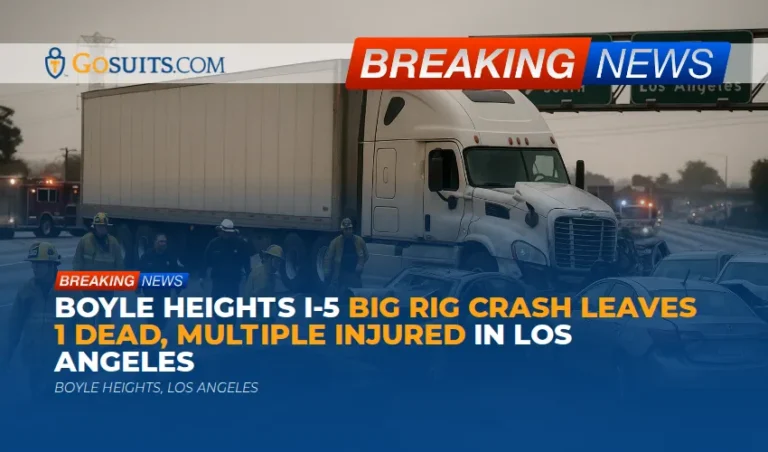
Early Sunday morning in Boyle Heights, a multi-vehicle collision on the southbound Golden State Freeway (I-5) just south of 4th Street led to one fatality and multiple injuries. Authorities reported that a big rig struck several vehicles around 5:10 a.m. The California Highway Patrol closed all southbound lanes shortly after, assessing a scene that included at least one vehicle fire, a request for a physical rescue, and nine vehicles with major front-end damage. Fifteen people were evaluated, and ten were transported to local hospitals, including Adventist Health White Memorial, with reports of moderate injuries. At the time of reporting, it remained unclear whether the big rig was loaded.
This corridor sits at the edge of the East Los Angeles Interchange, where I-5 converges with US-101 and SR-60. The stretch is among the busiest in the region, especially during early morning weekend hours when travelers are heading into Downtown or transitioning between freeways near the 4th Street area. The closure reportedly lasted two to three hours, which is typical for a complex crash scene where investigators must document positions of vehicles, debris fields, fire damage, and skid or yaw marks before lanes can safely reopen.
Timeline and Location Context
Approximate timeline based on initial official information
According to CHP, the crash occurred at approximately 5:10 a.m. on southbound I-5 south of 4th Street. All southbound lanes were shut down by 5:22 a.m. to allow for rescue, fire suppression, investigation, and debris clearing. Multiple vehicles exhibited major damage, and a fire was noted at the scene. Ten patients were transported to hospitals, and paramedics reported moderate injuries among some of the injured.
Where it happened
The crash location lies in Boyle Heights, immediately east of the Los Angeles River and near landmarks like Hollenbeck Park and Mariachi Plaza. This segment is known for heavy lane changes as drivers select the correct path into the East LA Interchange. At this hour, visibility may be influenced by pre-dawn lighting and any marine layer that sometimes drifts inland. It is also an area where commercial vehicles regularly travel to and from the Port of Los Angeles via intersecting freeway systems.
Agency involvement
The California Highway Patrol led traffic control and crash investigation, with fire and rescue support from the City of Los Angeles. Standard procedures include securing the scene, preventing secondary collisions, triaging and transporting the injured, documenting evidence, and coordinating with tow and hazmat resources when needed. Caltrans typically assists with traffic control and lane restoration once public safety objectives are complete.
Why Big Rig Crashes On Freeways Are So Destructive
Vehicle size and crash energy
Commercial big rigs often weigh up to 80,000 pounds when fully loaded. Even if the cargo status was unclear here, the weight and height mismatch between a tractor-trailer and passenger cars increases the risk of severe damage. Higher mass multiplies crash energy, which is one reason freeway pileups involving a large truck frequently cause multi-vehicle chain reactions and serious injuries. National data consistently show that collisions involving large trucks have disproportionate severe outcomes compared to crashes between passenger vehicles alone [7].

Secondary hazards: fire and multi-vehicle impacts
Reports of a vehicle fire at the scene reflect another risk factor in freeway pileups. Fuel leaks, electrical shorts, or hot components can ignite after a high-energy collision. Secondary crashes are also common when drivers approaching the scene brake abruptly or swerve at high speed, especially in darkness or low-visibility periods.
Complexity of evidence
Big rig crashes involve layers of potential evidence that can vanish quickly if not preserved. This includes electronic logging device data, engine control module event data, driver inspection logs, and records of recent maintenance. Federal rules impose duties on carriers to maintain various safety and inspection records for set periods, which can be crucial to later civil claims if evidence is secured in time [3] [4] [5].
Key Records To Request and Where To Get Them in Los Angeles
When a fatal or injury crash occurs on a state freeway, several public records can help families and injured people understand what happened. Below are the most common sources and how to access them in Los Angeles.
California Highway Patrol traffic collision report
Because this crash occurred on I-5 in Boyle Heights, CHP will typically be the reporting agency. A certified Traffic Collision Report can be requested online or by mail. CHP’s statewide guidance explains eligibility, fees, and how to submit the CHP 190 form [1]. The report may include a diagram, involved parties, witness statements, and the officer’s narrative. Supplemental documents, such as photographs or 911 logs, may also be available, though the process and availability vary by area office and case status.
Los Angeles County Department of Medical Examiner
In fatal incidents, the Los Angeles County Department of Medical Examiner handles the decedent investigation, including autopsy and cause of death determinations. Families can obtain information about case status, request certified copies of reports when available, and seek guidance on next steps directly from the department [2]. The main facility is on Mission Road, a short drive from the crash area.
Caltrans records: traffic cameras and incident logs
Caltrans District 7 manages freeway operations in Los Angeles County, including certain closed-circuit cameras and incident logs. Specific footage, if retained, and relevant records may be requested under the California Public Records Act through Caltrans’ PRA process [9]. Availability and retention periods vary, and requests should be submitted promptly.
Hospital and medical records
Patients generally have the right to access their medical records, including EMS transport records and hospital treatment documents, subject to standard privacy rules. The U.S. Department of Health and Human Services provides guidance on accessing medical records under HIPAA [10]. For minors or incapacitated adults, authorized representatives may need to provide documentation.

Crash data for community context
For those trying to understand broader patterns rather than the specifics of this case, the State Office of Traffic Safety and UC Berkeley SafeTREC provide California crash data tools and research. These can be used to view trends involving large trucks, multi-vehicle collisions, or corridor-specific data over time [8] [15].
Potential Civil Liability and Insurance Layers in a Truck Crash
Every crash is fact-specific. That said, big rig collisions often involve distinct legal and insurance considerations that differ from typical car crashes. Here are common issues that arise in a truck accident investigation.
Commercial truck duties under federal law
Interstate motor carriers and their drivers must follow federal safety rules. Investigations may examine:
- Hours of Service compliance – Whether the driver was within permissible driving and on-duty limits, and whether rest breaks were properly observed. Electronic logging devices typically record this data [3].
- Inspection, repair, and maintenance – Carriers must systematically inspect and maintain vehicles and retain certain records that can show recent repairs or recurring defects [4].
- Accident records – Carriers are required to maintain an accident register and related documentation, which can identify patterns or prior incidents relevant to safety practices [5].
- Financial responsibility – Commercial carriers generally carry higher minimum liability coverage than private passenger vehicles, often between $750,000 and several million dollars depending on operations and cargo [6].
These records can help reconstruct what happened and whether any mechanical or regulatory issues contributed to a loss of control or inability to avoid a pileup.
Comparative fault and multiple vehicles
California applies comparative fault principles. Responsibility for damages can be apportioned among multiple drivers and entities based on each party’s percentage of fault. In multi-vehicle freeway events, this can include the truck driver, the motor carrier, other motorists, and potentially entities responsible for vehicle maintenance or cargo. California law also limits joint liability for certain non-economic damages, allocating them based on comparative fault [14]. The practical takeaway is that careful evidence collection is crucial to fairly allocating responsibility.
Wrongful death and survival claims
When a fatality occurs, California law allows specific family members or a personal representative to bring a wrongful death action for their own losses, and a survival claim on behalf of the decedent’s estate for certain claims the decedent could have brought had they survived. Eligibility and recoverable categories differ between these two legal pathways [12] [13]. Families often pursue both, depending on the facts.
Insurance coverage and evidence preservation
Beyond the driver’s personal auto insurance, commercial policies, motor carrier policies, and sometimes shipper or broker arrangements may be relevant. Modern tractors often store event data, and carriers maintain electronic logging and maintenance records. Because electronic data can be overwritten or purged after set retention periods, timely preservation requests are vital. This is one reason people turn to truck accident lawyers or commercial truck accident attorneys who understand which entities to notify quickly so that critical data is not lost.
Practical Next Steps After a Serious Freeway Collision
Safety and documentation
Medical care comes first. After immediate needs are addressed, consider collecting or securing the following if it is safe and practical to do so: the CHP incident or report number, names of involved parties and insurers, photos or videos from the scene if available, and names of independent witnesses. If a vehicle was towed, note the yard. Be mindful that official reports may take time to complete.
Communicating with insurers
Insurance adjusters may contact people soon after a freeway pileup. It may feel natural to answer questions right away, but what is said in early recorded statements can be used to challenge later claims. Before contacting any insurance company, it is wise to discuss the situation with a qualified attorney in a free consultation to understand rights and obligations. If a claim must be opened, consider having counsel handle communications so statements are accurate and complete, and so the full scope of losses is documented. This is a common area where people benefit from guidance from truck collision lawyers or 18-wheeler accident lawyers familiar with multi-vehicle investigations.
Deadlines and timing
- Statute of limitations – Many California injury and wrongful death claims must be filed within two years of the incident date, with exceptions for certain parties and circumstances. Missing a deadline can bar a claim entirely [11].
- Evidence retention windows – Federal rules tie some motor carrier record retention to relatively short timeframes, such as six months for certain hours-of-service records, or specified periods for maintenance documentation. Prompt preservation letters can help protect electronic logging, engine control module data, and inspection records [3] [4] [5].
- Public records – Requests to CHP, Caltrans, and the Medical Examiner should be made as early as practical to account for processing times and potential retention limits [1] [2] [9].
Understanding the bigger picture
Nationally, large trucks are involved in a significant share of fatal and serious crashes relative to their roadway presence. NHTSA’s resources summarize risk factors for large truck crashes and the dynamics that make them different from car-only collisions [7]. In California, state and academic data tools can show where heavy-vehicle crashes cluster, which corridors are hot spots, and how risk changes over time [8] [15]. While data does not answer what happened in any single crash, it helps communities advocate for safety improvements along complex interchanges like those around Boyle Heights.
Local Support and Community Touchpoints
Boyle Heights carries a strong sense of place. Many residents live, work, and go to school within a few blocks of the I-5 and 4th Street area. Adventist Health White Memorial sits right in the neighborhood, and the LAC+USC Medical Center is just up Mission Road. In a serious freeway event, local families often rally around those injured, coordinating transportation, childcare, and support. If you are gathering records or trying to understand what happened, the following local agencies are the primary sources for official information:
- California Highway Patrol – Request the Traffic Collision Report and any supplemental materials available for the incident number [1].
- Los Angeles County Department of Medical Examiner – For decedent case information and reports in a fatal crash [2].
- Caltrans District 7 – For public records that may include traffic camera stills or incident logs where available [9].
- Hospitals – Patients or authorized representatives can request medical records following federal privacy rules [10].
Those caring for injured loved ones face a lot at once. Community groups and neighborhood networks near Mariachi Plaza, Evergreen, and Soto Street often become informal bridges to practical help while families work through the logistics of transportation, therapy appointments, and insurance issues.

Commentary from Gosuits Los Angeles, CA Personal Injury Attorney
First and foremost, our hearts are with the person who lost their life and with every neighbor injured in this pre-dawn crash in Boyle Heights. We share this information for educational purposes so the community has a clearer sense of what records exist, what questions matter, and how investigations typically unfold after a large freeway pileup.
From a civil-injury lens, crashes involving a big rig and numerous vehicles call for a meticulous look at driver actions, visibility and speed at the time of impact, and whether any mechanical or loading factors reduced stopping ability. In a corridor as complex as the I-5 near 4th Street and the East LA Interchange, small deviations or sudden slowdowns can cascade quickly. That makes preservation of data from the truck and timely witness follow-up especially important.
Insurance companies and corporate defendants often move quickly after a truck accident. Adjusters or investigators may reach out for statements when people are still in shock. They know the rules, and they know what evidence can disappear early. Without guidance, folks can unknowingly understate injuries, accept an early characterization of fault, or miss crucial steps that protect their rights. This information imbalance is one reason many people choose to have seasoned truck accident lawyers or semi-truck accident attorneys handle insurer communications and evidence preservation.
A free consultation can help anyone understand timelines, available insurance layers, and how evidence is best secured. Even if you decide not to pursue a claim, a short conversation can help you avoid unforced errors, especially before making recorded statements or signing any documents.
Call to Action: Why Timely Action Matters Now
- What to do – Secure the incident number, request the CHP Traffic Collision Report, and gather the names of involved insurers. Consider sending preservation requests for vehicle data and motor carrier records. Before giving recorded statements to any insurer, speak with a qualified attorney in a free consultation to understand your rights and potential pitfalls.
- Why act now – Key evidence can be lost quickly. Electronic logging device data, engine control module events, dash camera footage, and some maintenance records are not kept forever. Public records like traffic camera footage may be time-limited. Acting promptly helps ensure a complete record of what occurred.
- What you gain – A full, accurate picture of the crash. That means better decisions about medical care, vehicle repairs or total loss, and whether to pursue a claim. Early steps also reduce the risk that an insurer defines the narrative before all facts are known.
- When it matters most – The first days and weeks after a serious freeway crash are critical. This is when witness memories are freshest, physical evidence is still available, and insurance companies are setting their files. Do the information-gathering now while it can still make a difference.
References
- Traffic Collision Reports – California Highway Patrol
- Public Services and Case Information – Los Angeles County Department of Medical Examiner
- Hours of Service Summary – Federal Motor Carrier Safety Administration
- Inspection, Repair, and Maintenance Requirements 49 CFR Part 396 – FMCSA
- Accident Register and Records 49 CFR 390.15 – FMCSA
- Minimum Levels of Financial Responsibility 49 CFR Part 387 – FMCSA
- Large Trucks Safety Overview – National Highway Traffic Safety Administration
- Traffic Safety Research and Data – California Office of Traffic Safety
- Public Records Act Requests – California Department of Transportation
- Right of Access to Health Information – U.S. Department of Health and Human Services
- Statute of Limitations for Injury or Death 2 Years CCP 335.1 – California Legislature
- Wrongful Death CCP 377.60 – California Legislature
- Survival Actions CCP 377.30 – California Legislature
- Liability for Non-Economic Damages Civil Code 1431.2 – California Legislature
- Transportation Injury Mapping System – UC Berkeley SafeTREC