- What we know about the Boone County head-on crash with a semi
- Local roadway context near Rockford and Belvidere
- How these crashes are investigated and who is involved
- How to get official records in Illinois and Boone County
- Civil liability considerations in Illinois semi-truck crashes
- Key evidence to preserve in a semi-truck case
- Insurance issues and common pitfalls after a fatal wreck
- Practical next steps families often take
- Safety context and statewide data
- Why timely action matters now
- Commentary from Gosuits Boone County, Illinois Personal Injury Attorney
- References
What we know about the Boone County head-on crash with a semi
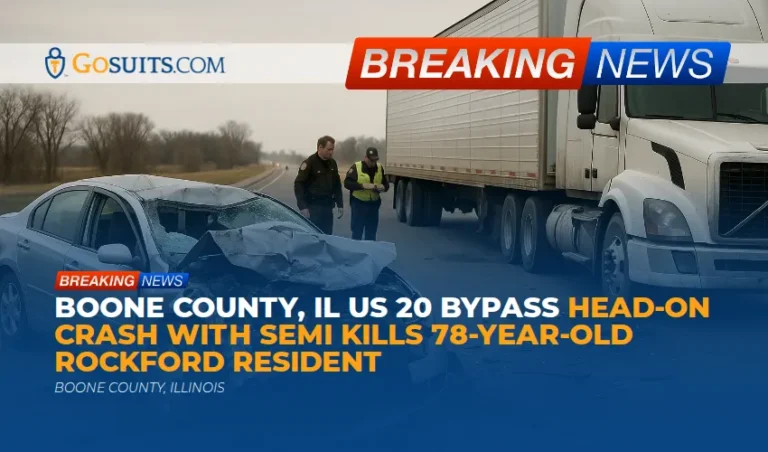
Authorities in Boone County reported a fatal head-on collision on Bypass Route 20 in the late afternoon of January 14. Investigators say a westbound passenger vehicle crossed the center line and struck an eastbound semi-truck. The driver of the passenger vehicle, a 78-year-old Rockford resident, was pronounced deceased at the scene just before 4 p.m. The Boone County Sheriff’s Office Crash Reconstruction Team and the Boone County Coroner are leading the investigation. Details about the semi driver have not been released at this time. Those facts may expand as the reconstruction and coroner review continue.
Head-on crashes with heavy trucks are among the most severe on our roads. Locally, when something like this happens on the US 20 Bypass, it ripples across communities from Rockford to Belvidere. Many neighbors think of their regular commutes past the Boone County Fairgrounds or toward I-90 and feel the weight of it. If you live or work near Poplar Grove or Caledonia, you know that section of US 20 is a key east-west corridor, and any serious crash there can disrupt traffic and families’ routines in an instant.
Local roadway context near Rockford and Belvidere
Bypass Route 20 is a major arterial that moves traffic around Rockford toward Belvidere, with connections to I-39 and I-90. Freight traffic is common. Rural stretches can feel open, but speeds are high and centerline departures leave very little margin for error. In winter months, even on dry days, low sun angles and patchy ice in shaded areas can affect visibility and traction. While officials have not publicly linked weather to this crash, it is common for investigators to review time-of-day lighting, pavement condition, and roadway geometry as part of a full reconstruction.
How these crashes are investigated and who is involved
Serious crashes in Boone County typically trigger a multi-agency response that can include patrol deputies, a specialized crash reconstruction team, fire/EMS, and the coroner. The reconstruction team documents physical evidence like skid marks, yaw marks, vehicle crush patterns, roadway gouges, and debris fields. They may use laser mapping, drone imagery, and event data recorder downloads where available. The coroner’s office manages next-of-kin notifications and the medical investigation of cause and manner of death. These processes can take weeks as labs and reports are finalized.
In crashes involving commercial motor vehicles, investigators may look at truck-specific issues such as hours-of-service compliance, the driver’s commercial driver’s license status, and vehicle condition under federal motor carrier safety standards. The Federal Motor Carrier Safety Administration regulates hours-of-service rules that limit driving and require rest, and carriers must maintain supporting records for defined periods [6]. Separately, federal record retention rules set how long carriers must keep certain safety and operations documents, which matters when families or insurers request records following a crash [7].
How to get official records in Illinois and Boone County

Police crash report
In Illinois, crash reports are typically available from the investigating law enforcement agency. For a crash handled by a county sheriff’s office, that agency is usually the point of contact. Illinois law also permits public records requests under the Illinois Freedom of Information Act, which sets procedures for requesting government records [8]. If the Illinois State Police assisted or took primary investigation duties, certain crash reports may be obtained through the ISP Crash Reports portal [10]. It is common for reports to be delayed while a reconstruction remains active.
Coroner records and death certificates
For deaths investigated by a county coroner in Illinois, next of kin can typically request coroner records once the investigation is complete. Death certificates are issued through the Illinois Department of Public Health’s Vital Records system and can be obtained by eligible family members or their authorized representatives [9]. Autopsy and toxicology results, if performed, are usually released by the coroner according to county procedures and applicable state law.
Medical records
If EMS transported anyone from the scene or provided care, families can request records from the responding fire district and any hospital involved in treatment or pronouncement. In the Rockford area, that could include facilities like OSF Saint Anthony Medical Center, UW Health SwedishAmerican, or Mercyhealth. Each provider has its own release process, and the coroner’s office coordinates closely with hospitals in fatality cases.
Civil liability considerations in Illinois semi-truck crashes
When a crash causes a loss of life, families often face two sets of questions: what happened and why. From a civil perspective, liability turns on the same core concepts as other injury cases, but trucking adds layers. Investigations may examine driver behavior, vehicle condition, carrier oversight, and compliance with federal and state rules. In a head-on collision, centerline crossing is a central fact, but investigators also evaluate whether any other factors contributed to the severity or avoidability of the crash, such as lighting, sight distance, speed, or vehicle defects. Illinois follows a modified comparative negligence rule for civil cases, meaning a claimant’s recovery can be reduced by their percentage of fault and is barred at more than 50 percent fault [5]. Each case is fact specific.
Illinois has two key statutes that often come up in fatal collision claims. The Wrongful Death Act allows the personal representative to bring a claim on behalf of the surviving next of kin for their losses, and it generally must be filed within two years of the death [4]. The separate Survival Act permits recovery for certain damages the decedent could have pursued if they had survived, such as conscious pain and suffering before passing. These frameworks guide how claims are presented and how damages are allocated under Illinois law.
Trucking claims can also involve questions about a motor carrier’s hiring, training, supervision, dispatching, and maintenance practices, along with driver hours, load securement, and electronic logging device data. Records in those categories can reveal whether a carrier met its safety obligations under federal rules, including hours-of-service limits and logkeeping [6]. When disputes arise over technical issues like vehicle dynamics, brake performance, or sight distance, it is common to consult independent reconstruction and engineering professionals to evaluate the evidence.
Families navigating these issues often look for guidance from seasoned truck accident lawyers who understand both Illinois law and federal motor carrier safety regulations. While nothing can make a loss like this easier, clear information can help families make informed choices about next steps without being rushed.
Key evidence to preserve in a semi-truck case
Evidence preservation can be critical in a semi-truck crash investigation. Some key categories include:
- Event data recorders and telematics that capture speed, braking, and throttle data in the seconds before impact.
- Dash camera or inward/outward-facing video from the truck or nearby vehicles and businesses.
- Hours-of-service and ELD records, including supporting documents like fuel, toll, and scale receipts that corroborate time on duty [6].
- Driver qualification and training files, vehicle inspection and maintenance logs, and dispatch records, which carriers are required to keep for set time periods under federal record retention schedules [7].
- Physical scene data including measurements of tire marks, gouge marks, debris locations, and vehicle rest positions.
- Cell phone records and any communications just before the crash, where relevant.
Because some trucking records are only kept for limited windows, taking steps early to request preservation can matter. Technical issues commonly require professional analysis, and using an independent reconstruction can clarify whether the physical evidence aligns with the narrative in the police report. For a plain-English overview of how technical testimony can affect trucking cases, see our resource on expert witness trucking accident role.

Insurance issues and common pitfalls after a fatal wreck
Insurance in a fatal semi-truck crash can involve multiple layers. The truck’s motor carrier usually has a commercial auto policy and may have excess coverage. The decedent’s own auto policy, including uninsured or underinsured motorist coverage, can also be implicated depending on fault allocation and available limits. Families sometimes receive calls quickly from insurers seeking recorded statements. It is understandable to want to cooperate, but statements can be used later to dispute liability or damages. Before speaking with any insurer, it is wise to consult a qualified legal representative so you understand your rights. What someone says in an early statement can shape the entire claim process.
Commercial trucking insurers are also focused on rapid response. They may dispatch their own investigators within hours to photograph the scene and vehicles. They control data that families cannot access on their own, like ELD logs and training files. In Illinois claims, statements about liability, speed, vision obstructions, or health conditions may become contested topics under the state’s comparative negligence law [5]. Having someone on your side who can engage with insurers, identify what data must be preserved, and avoid common traps can make a practical difference.
There is also a timing element with commercial carrier records. Hours-of-service supporting documents are generally preserved by carriers for defined periods, often six months for certain records, which makes early preservation letters a priority [6]. Likewise, motor carriers have set retention schedules for safety and operations documents under federal rules [7]. Where appropriate, requests to maintain vehicle condition in its post-crash state can protect the ability to inspect brakes, steering, tires, lights, and other components later.
Navigating these steps can be overwhelming. Many families decide to speak with truck accident lawyers in Illinois to map out a plan that accounts for multiple insurers and the specific facts of a head-on crash with a semi.
Practical next steps families often take
Coordinating with local agencies
- Stay in contact with the coroner’s office for updates on cause and manner of death. This may take time while testing is completed. Once available, families can request copies as permitted by law and county policy.
- Request the crash report from the investigating agency when it is ready. If you are unsure which agency holds it, check with the Boone County Sheriff’s Office or, if the state police assisted, consult the Illinois State Police Crash Reports system [10].
- Gather personal records such as photos, medical notes, and any communications around the time of the crash. Keep a notebook of dates, calls, and contacts.
Preserving vehicle and scene evidence
- Identify the tow yard or storage lot holding the vehicles and note any storage or teardown plans. Written preservation requests can help ensure no changes are made without notice.
- List potential witnesses including first responders, other drivers, or nearby businesses that may have captured video.
Understanding the civil framework
- Illinois Wrongful Death Act defines who can bring a claim and how proceeds are distributed to next of kin [4].
- Comparative negligence affects how responsibility is allocated among the parties and may reduce recoverable damages if fault is shared [5].
These are general steps, not a checklist anyone has to tackle alone or right away. Grief comes first, and many families lean on trusted friends to handle early phone calls while they take time to breathe.
Safety context and statewide data
Large trucks play an essential role in moving goods through northern Illinois, including around Rockford’s industrial corridors and the I-90 freight spine. The added mass and stopping distance of tractor-trailers raise the stakes in a head-on crash. Federal data underscore the severity: crashes involving large trucks account for a significant share of fatal traffic crashes nationwide each year, and federal safety rules exist to manage driver fatigue and equipment risk [1] [6]. Statewide, Illinois transportation officials publish crash data that help communities understand where and why severe crashes happen, which supports roadway safety planning and enforcement priorities [3].
Age-related factors can also be relevant to crash outcomes, separate from fault questions. Federal safety research notes that older adults are at greater risk of serious injury in crashes due to increased fragility, which can affect survivability even in similar crash forces [2]. That context helps explain why head-on impacts on high-speed corridors like the US 20 Bypass so often result in devastating consequences for families across Boone and Winnebago Counties.
Community members often ask what is being done to make corridors like the Bypass safer. While those decisions happen at the state and county levels, crash reconstruction findings and IDOT data feed the process that evaluates centerline rumble strips, turn-lane design, median barriers, and enforcement strategies over time [3]. In the meantime, local drivers can reduce risk by maintaining lane discipline, scanning ahead for subtle curves, and slowing when sight distance is limited at dusk or dawn.
Why timely action matters now
When a fatal crash involves a commercial truck, the timeline for securing evidence and records is not open-ended. Certain logs and supporting documents may be kept by carriers for only a matter of months. Tow yards may move or dispose of vehicles. Witness memories fade quickly. The exact step to take is to formalize preservation of critical evidence as soon as practical and to coordinate requests for official records with the investigating agencies. Acting sooner helps safeguard the information needed to answer what happened and why it happened, and it reduces the risk that key materials are lost to time or routine company record purges.
Those who plan to communicate with any insurer should consider first speaking with a qualified legal representative and obtaining a free consultation to understand their rights. Early statements to insurers can be used against them later in the process, even when offered in good faith. A brief, informed conversation before giving any recorded statement can prevent avoidable misunderstandings and ensure that all communications are accurate and complete.
Where it matters most is in aligning timelines. Coroner determinations, police reconstruction, and insurance claim investigations move on different clocks. Knowing how those processes interact can help keep information flowing without missteps. A measured approach avoids unnecessary delays while protecting the integrity of the fact-finding.
Commentary from Gosuits Boone County, Illinois Personal Injury Attorney
Our hearts are with the family and friends grieving this loss. Crashes like this on the US 20 Bypass shake the Rockford and Belvidere communities. This overview is meant for general information and education only. It is not a substitute for advice tailored to any specific situation.
Based on what officials have shared, investigators are focusing on a centerline crossing and the dynamics of a head-on impact with a semi. In a case like this, we look not only at lane position but also at the broader context that can influence severity and avoidability. That includes lighting, roadway configuration, speed, vehicle condition, and whether the truck’s onboard systems captured helpful data. Objective measurements from the scene and vehicle downloads often bring needed clarity when memories conflict or details are scarce.
Insurance companies and large motor carriers know the value of speed. They may deploy adjusters and investigators within hours, gathering statements and data before families have time to process what happened. They also control records the public cannot access without formal requests. That imbalance can lead to quick, recorded statements that later get taken out of context or to incomplete disclosures about available coverages. It is a familiar pattern: the more complex the crash, the more opportunities for information gaps that do not favor the family.
One way to even the playing field is to obtain a free consultation promptly and understand the preservation steps that protect access to evidence. Early coordination helps ensure that nothing important goes missing and that communications with insurers are careful and accurate. No one should have to navigate those decisions alone while grieving.
References
- Large Truck and Bus Crash Facts – FMCSA
- Older Drivers – NHTSA
- Illinois Roadway Crash Data – Illinois Department of Transportation
- Illinois Wrongful Death Act, 740 ILCS 180 – Illinois General Assembly
- Comparative Fault, 735 ILCS 5/2-1116 – Illinois General Assembly
- Summary of Hours of Service Regulations – FMCSA
- 49 CFR Part 379 Records Retention – eCFR
- Illinois Freedom of Information Act, 5 ILCS 140 – Illinois General Assembly
- Death Certificates – Illinois Department of Public Health
- Crash Reports – Illinois State Police