- What we know about the Castillo and Montecito collision
- Local scene context near Highway 101 and West Beach
- Immediate steps families can take right now
- How investigators determine what happened
- Rights and options for injured bicyclists in California
- Insurance considerations after a truck vs. bicycle collision
- Where to get official reports and records in Santa Barbara
- Community safety notes for cyclists and drivers near the 101 corridor
- What evidence to preserve in the first days
- Common pitfalls to avoid when speaking with insurers
- Next steps and why timing matters
- Commentary from Gosuits Santa Barbara, California Personal Injury Attorney
- References
What we know about the Castillo and Montecito collision
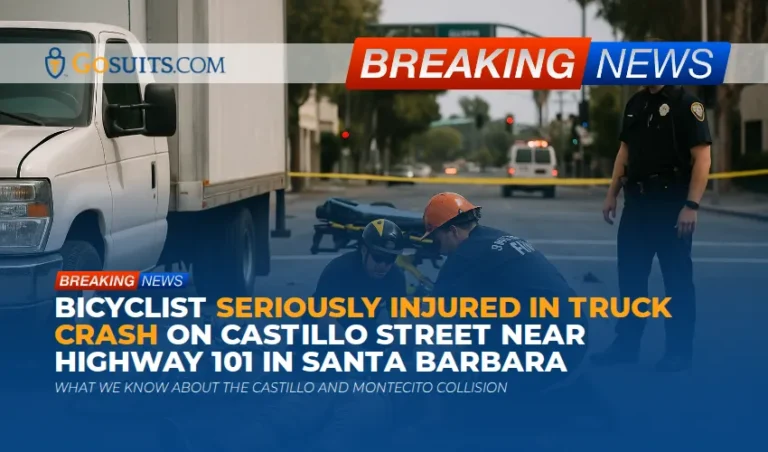
Late Friday afternoon, February 20, 2026, a collision in the 300 block of Castillo Street between Montecito Street and Highway 101 prompted a full road closure and a significant emergency response. Initial reports referenced a pedestrian; an evening update clarified that a bicyclist was struck by a truck around 2:42 p.m. The bicyclist was transported to Cottage Hospital with serious injuries. The driver reportedly stayed on scene, and officers stated the driver was not impaired. Santa Barbara City Fire arrived quickly, including Engine 71 and Medic 33, and a transport unit took the patient from the scene. Authorities closed the stretch of Castillo Street between Montecito and the 101 to conduct a thorough investigation.
Details such as precise movements of the truck and bicyclist, traffic signal status, speed, and sightlines will typically be determined during the traffic collision investigation. As of the update time, that information had not been released publicly. We will avoid speculation and focus on steps families can take, what California law says about bikes and vehicles sharing the road, and how investigations like this commonly unfold in Santa Barbara.
Local scene context near Highway 101 and West Beach
Residents know this corridor well. Castillo runs north-south and connects the West Beach neighborhood and lower Westside with the Highway 101 ramps. Afternoon traffic often includes delivery trucks, passenger vehicles headed to and from the beach, and drivers navigating the nearby on and off ramps. The area near West Montecito Street includes small businesses, with JJ’s Liquor and Wine on that stretch, and there is frequent cross traffic. With the freeway just steps away, vehicle speeds can vary, and drivers sometimes accelerate or merge abruptly as they approach or leave Highway 101.
In short, it is a mixed-use block that demands extra attention. People on bikes often ride this route to reach the waterfront, Stearns Wharf, the harbor, or simply to traverse east-west via Montecito Street and north toward downtown. The City and Caltrans both have roles in how traffic flows here: Castillo Street is a city roadway, while the 101 ramps and freeway are under Caltrans oversight. That mix can affect signage, lane markings, and potential camera coverage used later during the investigation.
Immediate steps families can take right now
When a loved one is hurt in a bike and truck collision, there is a lot to juggle. The hours and days after an incident are when key evidence can be preserved and important notifications must be made. Here are practical steps families commonly take, tailored to California and Santa Barbara:
- Prioritize medical care and follow-up. Keep every discharge summary, imaging report, and referral. Document symptoms daily for the first several weeks. If advised, schedule prompt follow-up with primary care and any specialists. California data show bicyclist injuries carry higher risks for head, chest, and extremity trauma, so careful monitoring matters [5][6].
- Request the police collision report when eligible. In California, collision reports are generally confidential but available to involved parties and their representatives [9]. The Santa Barbara Police Department Records Unit maintains the official report and supplemental materials once complete. See the department’s page for process and eligibility details [10].
- File the DMV SR-1 if required. California requires drivers and involved parties to submit an SR-1 to the DMV within 10 days if anyone was injured or property damage appears to exceed the statutory threshold [7].
- Be cautious with insurance contacts. Before speaking with any insurer, consult a qualified attorney for a free consultation to understand your rights and how recorded statements could be used against you later.
- Note possible video sources. This block of Castillo may have public or private cameras that captured the event or the moments before and after. Caltrans freeway cameras sometimes show nearby surface streets and ramps, and nearby businesses can have CCTV that overwrites quickly [11].

How investigators determine what happened
Traffic investigators and reconstruction specialists typically combine sources to form a clear picture:
- Scene measurements and physical evidence. Skid marks, scrape marks, roadway debris, bicycle and vehicle resting positions, and damage profiles can help reconstruct speed, direction, and impact angles.
- Witness statements and 911 logs. Investigators gather accounts from bystanders and occupants, cross-referencing dispatch timelines and unit arrival times. Consistency and proximity in time to the event are weighed carefully.
- Video. Caltrans traffic management cameras, nearby storefront CCTV, and residential doorbell cameras are commonly reviewed. Requests should go out quickly before footage overwrites [11].
- Vehicle data. Many trucks and modern vehicles store “event data recorder” information such as speed, brake use, and throttle immediately before a crash. Accessing and preserving this data can be crucial in severe-injury cases [13].
- Applicable traffic controls. Stop signs, signals, bike lane markings, and turn pockets are documented for visibility and compliance.
On a corridor like Castillo near the 101, investigators will often examine merging and turning patterns, lane position of the bicyclist, whether the truck was passing or turning, and whether either party had the right of way. California statutes assign duties to both drivers and bicyclists, and those standards guide the analysis.
Rights and options for injured bicyclists in California
California law treats bicyclists as having the same rights and responsibilities as drivers when operating on the roadway [2]. A few key rules often relevant in truck and bike cases include:
- Three-foot passing rule. Drivers must give a bicyclist at least three feet when passing. If that clearance is not possible, drivers must slow and pass only when it is safe [1].
- Right-side operation of bicycles. Cyclists generally ride as close as practicable to the right-hand curb or edge, with important exceptions such as when passing, preparing for a left turn, avoiding hazards, or when the lane is too narrow for a bicycle and vehicle to travel safely side-by-side [3].
- Basic speed law and safe speed for conditions. All drivers must operate at a speed that is reasonable and prudent, considering visibility, traffic, and roadway conditions, regardless of the posted limit [4].
When serious injuries occur, California allows injured people to seek compensation for medical expenses, lost income, and non-economic harm under negligence principles. California uses a comparative fault system, which means responsibility can be allocated between parties based on the evidence. This makes careful preservation and assessment of the facts critical.
Insurance considerations after a truck vs. bicycle collision
Truck and bicycle collisions frequently involve multiple policies and coverage layers. There may be a commercial auto policy for the truck, a personal or commercial umbrella policy, and your own auto or homeowner’s policy that could provide medical payments or uninsured/underinsured motorist coverage in certain scenarios. California’s Department of Insurance publishes consumer guidance on claims handling standards and filing complaints when appropriate [8].
A few practical points:
- Consult an attorney before any insurance statements. What someone says to the insurer can be used to reduce or deny recovery later. A brief, free consultation can help set the right tone and strategy early.
- Request declarations pages. An attorney can request proof of policy limits and applicable endorsements, which helps scope realistic recovery pathways.
- Document out-of-pocket costs meticulously. Keep receipts for medical copays, equipment, transportation to appointments, and home modifications related to injuries.
- Mind the DMV SR-1 requirement. It is separate from insurance claims and can be mandatory after injury crashes [7].
Where to get official reports and records in Santa Barbara
Here is where families typically obtain key documents in and around Santa Barbara:
- Santa Barbara Police Department collision report. The SBPD Records Unit is responsible for releasing eligible traffic collision reports once finalized. California Vehicle Code 20012 governs who may access collision reports and the confidentiality of these records [9][10].
- California Highway Patrol collision report. If a crash falls under CHP jurisdiction, the CHP 190 process explains who may obtain a copy and how to apply. Even when SBPD handles the scene, this resource clarifies statewide eligibility standards [12].
- Medical records. Request treatment records, imaging, and billing statements from the hospital and any clinics providing follow-up care. In Santa Barbara, many serious trauma cases are stabilized or treated at Cottage Hospital.
- Coroner’s records. If an injury case were to become fatal, families would interface with the county coroner’s office for autopsy and related documentation. In Santa Barbara County, the Coroner’s Bureau operates through the Sheriff’s Office. These records are typically available to next of kin under state law.
- DMV documentation. If required, submit the SR-1 within 10 days and retain proof of submission [7].
Community safety notes for cyclists and drivers near the 101 corridor
Many Santa Barbara residents bike this corridor to reach the waterfront or downtown. Sharing the road safely around Castillo and Montecito depends on predictable behavior by both drivers and cyclists:
- Drivers: Reduce speed as you approach the 101 ramps, check mirrors and blind spots twice for cyclists, and leave at least three feet when passing a person on a bike [1][4].
- Cyclists: Hold a visible lane position where appropriate, especially where lanes are too narrow to share; use hand signals; and make eye contact at intersections when possible [3].
- Everyone: Expect turning movements at Montecito Street and changes in speed near the on and off ramps. Patience helps here. Distracted driving and rushed decisions near freeway connectors can be especially dangerous for people on bikes [6].
What evidence to preserve in the first days
Evidence can disappear quickly. Taking organized steps within the first days can make a significant difference.
- Scene photos and video. If available, save photos showing the bike’s resting location, debris, road markings, and any vehicle damage. Time-stamp them if you can.
- Nearby CCTV. Politely ask businesses along Castillo and West Montecito whether they have video. Many systems overwrite within 24 to 72 hours. Caltrans QuickMap cameras can also be relevant if they captured approach movements on or off the 101 [11].
- Vehicle data. If a truck was involved, ask counsel about sending a prompt preservation notice for any event data recorder logs and relevant telematics [13].
- Medical trail. Keep every record, referral, and receipt. This helps connect each treatment to the incident and document the full course of care.
- Repair and replacement estimates. Save estimates for the bicycle, helmet, clothing, and gear. Keep before and after photos if possible.
For detailed, step-by-step guidance on how to request video, see Request CCTV footage after a California car accident. This walk-through explains timing, how to frame requests, and practical follow-up tips specific to California.
Common pitfalls to avoid when speaking with insurers
It is normal to get calls from multiple insurance adjusters after a serious injury. The process can feel overwhelming. A few issues to watch for:
- Recorded statements too early. Adjusters often ask for a recorded statement before medical facts and the collision details are fully known. It is reasonable to decline until after a consultation with an attorney, because early statements can be misinterpreted later.
- Quick settlement offers. Early offers might not account for the full scope of injuries, follow-up care, lost time from work, or long-term effects. California’s Department of Insurance outlines consumer protections in the claims process [8].
- Scope of medical releases. Broad authorizations can give an insurer access to unrelated medical history. Narrowly tailored releases protect privacy while allowing legitimate claim review.
- Misunderstanding comparative fault. In California, shared fault does not bar recovery. Percentage allocations affect the final outcome, which is why careful evidence gathering is so important.
In every one of these situations, a quick, no-cost consultation can clarify your options and help you avoid avoidable mistakes.
Next steps and why timing matters
Here is what people typically do in the days and weeks following a truck and bicycle collision in Santa Barbara, and why timing matters:
- Secure the collision report and dispatch logs. These documents anchor the timeline. Request them as soon as they are available so there is time to correct errors before negotiations mature [9][10].
- Preserve video immediately. Many cameras overwrite within days. Early outreach to nearby businesses on Castillo Street and to any traffic camera custodians can be decisive [11].
- Complete mandatory DMV filing. The SR-1 deadline is 10 days in injury crashes. Missing it can cause administrative problems separate from any claim [7].
- Get a focused medical plan. Early follow-up can catch hidden injuries and generate a cleaner medical record that ties symptoms to the incident, which insurers will scrutinize [6].
- Consider early legal guidance. Early input can stop unhelpful insurer tactics before they start, tailor evidence collection to the location and vehicles involved, and ensure timely preservation of truck data [13].
The benefit of acting promptly is straightforward: you protect crucial evidence, meet legal and administrative deadlines, and build a clear, credible record of what happened and how it affected daily life.

Commentary from Gosuits Santa Barbara, California Personal Injury Attorney
Our thoughts are with the bicyclist and their loved ones. A serious injury on a familiar block like Castillo is frightening and disruptive, and the uncertainty in the first 48 hours can be the hardest part. This article is meant for general information and education about the process that typically follows a collision like this in Santa Barbara.
Based on what is publicly known, this was a truck and bicycle collision in the 300 block of Castillo near Montecito, with the driver remaining at the scene. That corridor blends city traffic with freeway ramps, and small changes in speed, lane position, or visibility can have outsize consequences there. California law is clear that vehicles must allow adequate passing distance and operate at a safe speed for conditions. When investigators finish their work, the record will point to which actions contributed most to the outcome.
In our experience, insurance carriers and large corporate policyholders often move quickly to shape the narrative. They may seek early statements, downplay evolving symptoms, or press for blanket medical releases. They understand how to use those steps to reduce what they view as exposure. People unfamiliar with the process do not always realize how those early decisions can echo throughout a claim.
That is why a free consultation can be important. It gives you a chance to understand rights and risks before speaking on the record, and to map out a plan for preserving video, roadway evidence, and any available truck data. Even a short conversation can help you avoid mistakes that are hard to unwind later.
References
- California Vehicle Code 21760 Three-Foot Passing Law – California Legislature
- California Vehicle Code 21200 Rights and Duties of Bicyclists – California Legislature
- California Vehicle Code 21202 Position on Roadway – California Legislature
- California Vehicle Code 22350 Basic Speed Law – California Legislature
- Bicyclist Safety in California – Office of Traffic Safety
- Bicyclist Safety Overview – National Highway Traffic Safety Administration
- Accident Reporting Requirements SR-1 – California DMV
- Consumer Services and Claims Help – California Department of Insurance
- California Vehicle Code 20012 Traffic Collision Reports Confidentiality – California Legislature
- Santa Barbara Police Department – City of Santa Barbara
- Caltrans QuickMap Cameras and Traffic – California Department of Transportation
- Collision Report CHP 190 Access and Instructions – California Highway Patrol
- Event Data Recorders Information – National Highway Traffic Safety Administration
- Caltrans District 5 Santa Barbara and Central Coast – California Department of Transportation