- What we know from CHP dispatch logs
- Timeline of response and medical transport
- Highway 101 location context on the North Coast
- Safety and legal context for bicycle and vehicle collisions in California
- Common injuries in vehicle vs bicycle crashes and urgent care steps
- How to get official records and information
- Insurance issues after a bike and vehicle collision
- Evidence preservation along the Highway 101 corridor
- Possible civil liability paths that may be evaluated
- Community safety notes for the Eureka Arcata corridor
- Practical next steps for those affected
- Why taking timely action matters
- Commentary from Gosuits Humboldt County, California Personal Injury Attorney
What we know from CHP dispatch logs
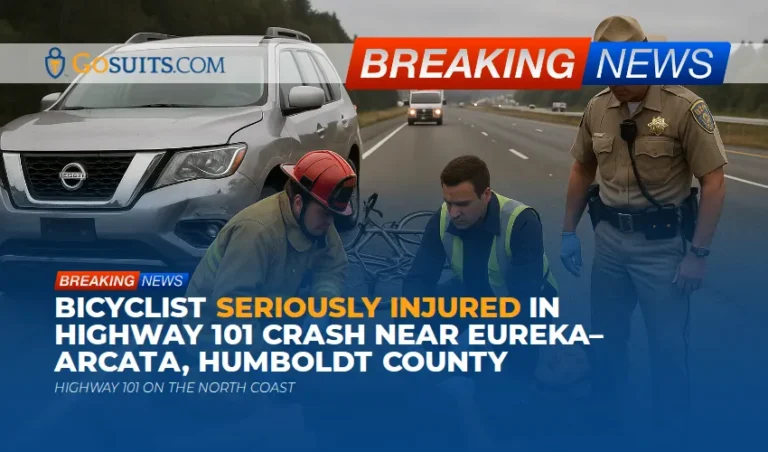
According to California Highway Patrol dispatch logs reviewed on CHP Watch, a collision occurred on Highway 101 on the North Coast involving a vehicle and a bicyclist. The log identified an associated vehicle described as a silver Nissan Pathfinder. Initial entries around 2 p.m. indicated a vehicle versus bicycle incident with the bicyclist reported injured. CHP units responded and managed the scene. The roadway was not reported blocked by the involved vehicle. At 2:51 p.m., dispatch noted the injured party was transported to a hospital, and at 3:55 p.m., the incident was cleared from the log. Later administrative updates indicated the incident was classified as a major injury collision. The dispatch log does not include the bicyclist’s identity or detailed medical condition.
Because dispatch summaries are living records that can change as more information arrives, it is common to see problem types or severity codes updated after first reports. In this case, the later classification signals that responders believed the injuries to be significant, even if precise diagnoses are not yet public.
Timeline of response and medical transport
From what is reflected in the log, the sequence was roughly as follows:
- About 2 p.m. The crash was reported as a vehicle versus bicyclist collision on Highway 101.
- Shortly after CHP dispatchers notified responding units and an ambulance response was coordinated.
- 2:51 p.m. The injured party was transported to a local hospital. In the Humboldt Bay area, that often means a transport to Mad River Community Hospital in Arcata or Providence St. Joseph Hospital in Eureka, depending on proximity and medical needs.
- 3:55 p.m. The incident was cleared in dispatch.
Times in dispatch logs mark communications, not necessarily the exact minute of each event on scene. But they are helpful to understand when emergency care and traffic control occurred.
Highway 101 location context on the North Coast
Highway 101 is the main north south route through Humboldt County, connecting communities like Eureka, Arcata, McKinleyville, and Fortuna. Segments between the Eureka waterfront and Arcata often carry high commuter volumes, bicyclists traveling between towns or to Humboldt Bay Trail segments, and visitors heading to the redwoods. Some stretches feel like freeway, while others operate more like expressway or arterial corridors with frequent merging, changing shoulders, and changing speed environments. In winter, low clouds and fog around the bay and Samoa Peninsula can reduce visibility, and afternoon glare can be a factor on sunny days.
While the dispatch summary did not pinpoint the exact mile marker, collisions of this type tend to occur near interchanges, merges, or access points where drivers make quick lane choices or approach the shoulder. Even on segments where bicycles are permitted, close passing and speed differentials raise the stakes for everyone involved.
Safety and legal context for bicycle and vehicle collisions in California
Many people ask, what laws govern a driver’s behavior when passing a person on a bike in California, and how is fault evaluated after a crash like this? Here are core principles that often matter in vehicle bicycle collisions on Highway 101 or nearby arterials.
California’s three foot passing requirement
California law requires drivers to give at least three feet of clearance when passing someone riding a bicycle when conditions permit. When three feet are not feasible due to lane width or traffic, the driver must slow to a safe speed and only pass when doing so will not endanger the bicyclist. This duty is set out in California Vehicle Code section 21760 [1], and summarized for the public by the California DMV’s bicyclist safety guidance [2]. To learn how this rule applies in real life, see our plain language guide, california three foot law cyclists.
Right of way, bike lanes, and duties of care
- Bike lanes and right of way: Where bike lanes are present, motorists entering or crossing a bike lane must do so with care and only when safe, yielding to bicyclists proceeding within the lane. Riders are generally expected to travel with traffic and follow traffic control devices.
- Turning movements: Many collisions occur when a driver turns across a bicyclist’s path. California rules require signaling and safe turning that does not endanger others.
- General duty of care: All road users owe a duty to act reasonably and prudently given conditions. That includes scanning mirrors, checking blind spots, and adjusting speed to avoid collisions.
These duties apply on high speed corridors and surface streets alike. Compliance is especially critical along corridors like the Eureka Arcata stretch, where speeds can vary and shoulder widths change abruptly.
Comparative negligence and how fault is assessed
California uses a comparative negligence framework. That means multiple parties can share fault, and an injured person’s recovery can be reduced by their percentage of responsibility rather than barred completely. Jurors, insurers, and courts consider the totality of circumstances, including compliance with traffic laws, visibility, lane position, signaling, and speed. The general principle of shared responsibility is long recognized in California civil law [3].
Investigations often rely on objective evidence like scene measurements, vehicle and bicycle damage, witness statements, and any available camera footage. In contested cases, testimony from collision reconstruction or human factors professionals may be considered.
Common injuries in vehicle vs bicycle crashes and urgent care steps
Even when a crash occurs at moderate speed, a person on a bike can suffer significant trauma. Typical injuries include concussions and other traumatic brain injuries, fractures to the collarbone, wrist, or ribs, soft tissue injuries to the neck and back, and internal trauma that is not always obvious at the scene. The later dispatch classification here as a major injury collision is consistent with the types of harm often seen in these incidents. National and state safety agencies have observed the disproportionate severity of outcomes for bicyclists struck by vehicles [4][5].
After any crash involving a bike and a motor vehicle, it helps to document symptoms early and continue monitoring for delayed effects like headaches, dizziness, numbness, abdominal pain, or visual changes. If new or worsening symptoms appear in the first 48 hours, prompt follow up can protect health and create a clear medical record.

Local hospitals and trauma resources on the North Coast
In the Eureka Arcata area, emergency care is typically provided at Mad River Community Hospital in Arcata or Providence St. Joseph Hospital in Eureka. Humboldt Bay communities also rely on area EMS providers for rapid transport. Depending on injuries, patients may be transferred to out of area trauma centers for specialized care. Family members seeking information should contact the hospital’s main line for patient status, understanding that privacy rules limit what can be shared without patient consent.
How to get official records and information
The first days after a serious collision can be confusing. These are the key record sources that typically exist after a highway crash in Humboldt County.
CHP collision report
When CHP investigates, the primary document is the CHP collision report, often on CHP 555 forms with diagrams and narrative. Qualified parties can request a copy by submitting CHP Form 190 to the area office that took the report. You will need the date, approximate location, the involved party names or vehicle information, and your relationship to the incident. The CHP outlines who may receive a report, how to submit the request, and fee details [6].
Ambulance and paramedic records
EMS providers generate a prehospital care report documenting condition at the scene, vitals, and treatments provided during transport. Patients or their legal representatives can request these records directly from the EMS agency. These records help establish injury timelines and symptom progression.
Hospital records and imaging
Emergency department records, imaging, consult notes, and discharge instructions are crucial for documenting injuries and recommended care. Patients have the right to their medical records, and hospitals explain how to request them through Health Information Management departments.
Coroner’s office information
When a collision involves a fatality, the coroner’s office manages death investigations, autopsy reports, and next of kin notifications. In Humboldt County, the Coroner’s Office provides guidance on release of information and how families can obtain copies of reports when they become available, subject to state law [7]. This incident was reported as an injury collision, not a fatal one, but these resources are included for completeness for families handling other serious crashes.
Insurance issues after a bike and vehicle collision
Crashes that injure someone riding a bicycle often trigger multiple insurance coverages. Understanding which policies may apply can help families navigate calls and paperwork.
Liability coverage of the driver
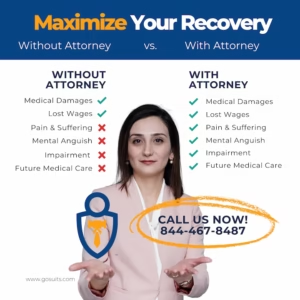
If the motor vehicle operator is found at fault, the driver’s auto liability insurance typically addresses injury claims. This can include medical expenses, lost income, and other legally recoverable damages. Insurers commonly try to get quick recorded statements. Before speaking to any insurer, it is prudent to consult a qualified attorney so you understand your rights, because statements can be used against you later. Experienced car accident lawyers work to secure documentation before it is lost and to manage communications so you can focus on medical care.
Medical payments coverage and health insurance
Some auto policies have medical payments coverage that may apply to a bicyclist injured by a covered vehicle, regardless of fault. In addition, the injured person’s own health insurance may address treatment, with subrogation rights later. The California Department of Insurance provides consumer level guidance on how auto insurance coverages work and what protections exist for policyholders [8].
Uninsured and underinsured motorist coverage for bicyclists
UM and UIM can apply to bicyclists too, usually through the cyclist’s own auto policy or sometimes a household resident policy, even though they were not driving. This coverage can matter if the at fault driver lacks insurance or has low limits. The details depend on policy language and California law. Speaking with counsel before initiating claims helps avoid missteps. Many people do not realize how UM or UIM can help after a roadway bicycle injury. Seasoned car accident lawyers in California can examine policy stacking issues and coordinate benefits in complex situations.
Property damage to the bicycle and gear
Claims can include the cost to repair or replace a damaged bicycle, helmet, lights, GPS units, and other gear. Preserve receipts and take clear photos of all damage. If the bicycle was custom built, component level documentation can speed valuation discussions.
Evidence preservation along the Highway 101 corridor
On the North Coast, valuable evidence can disappear quickly because weather, traffic, and routine cleaning change the scene within hours. Timely collection is key.
Scene and vehicle evidence
- Photographs and video: Capture the roadway, skid or scuff marks, debris fields, shoulder conditions, posted signs, and lighting. Even a short smartphone video walking through the scene can help later.
- Vehicle and bicycle inspection: Keep the bicycle and damaged equipment unchanged until they can be inspected. The same goes for the vehicle when possible. Impound or storage yards may have strict release rules, so get the location and hold details early.
- Clothing and safety gear: Retain helmets, reflective vests, and lighting equipment. These items can show impact points and working condition.
Witnesses and dispatch records
- Witness names and contact information: If bystanders assisted, note their contact details while memories are fresh.
- 911 audio and CAD logs: In some cases, call audio or computer aided dispatch details can be requested through public records channels, subject to exemptions. These can corroborate timing and initial observations.
Camera footage
Footage can come from dashcams, nearby businesses along Highway 101 frontage roads, buses, or public cameras. Retention times can be very short, sometimes days. Request preservation immediately. When public agencies are involved, California’s records laws apply, with exemptions. Some agencies publish retention schedules and procedures for requesting footage.
Possible civil liability paths that may be evaluated
Without assigning blame in this incident, these are the typical civil law routes that may be explored after a vehicle bicycle crash in California.
Driver negligence
This is the most common theory and may involve unsafe passing, speed unsafe for conditions, failure to yield when turning, or inattention. Compliance with the three foot passing requirement and other vehicle code duties is often central to the evaluation [1][2].
Roadway design or maintenance issues
On occasion, visibility problems, signage, shoulder drop offs, or dangerous conditions of public property are alleged to contribute to a collision. Claims that involve public entities have a shorter administrative deadline. In California, a government claim generally must be filed within six months of the incident before a civil suit may proceed, with limited exceptions [9]. Public agencies provide procedures and forms for presenting a claim.
Comparative fault considerations
California’s comparative negligence system allows for allocation of fault among multiple parties when the facts support it [3]. Even where fault is disputed, injury claims may proceed and evidence will guide eventual resolution.
Community safety notes for the Eureka Arcata corridor
Residents know that Highway 101 in Humboldt County transitions from urban to rural conditions in minutes. Between the Eureka waterfront, the Indianola area, and Arcata, speed changes, merging lanes, and varying shoulder widths demand attention from drivers and people on bikes alike. Winter and early spring bring fog banks rolling off the bay, rain slicked pavement, and low contrast lighting in the late afternoon.
Many locals choose routes that incorporate the Humboldt Bay Trail or parallel surface streets when possible. Even then, access points to 101 and crossings near on and off ramps remain high conflict zones. Community reminders that make a difference include slowing when visibility drops, signaling early, and deliberately checking mirrors and blind spots before changing position relative to the shoulder or a bike lane.

Practical next steps for those affected
Every situation is unique, but these steps tend to help families and injured riders organize the response after a serious collision along Highway 101.
- Prioritize medical care: Follow through on diagnostic imaging and specialist referrals. Keep all discharge papers, visit summaries, and receipts in one folder.
- Preserve evidence: Photograph the bicycle, equipment, visible injuries, and the clothing worn. Do not repair or discard items until you receive clear guidance.
- Document symptoms and impacts: Start a simple recovery journal that notes pain levels, mobility limits, sleep issues, and how injuries affect work, school, and family life.
- Identify potential witnesses and video: Note names, phone numbers, and business locations that may have cameras facing the route of travel. Ask that footage be preserved.
- Request official records: Plan to request the CHP collision report using CHP Form 190 [6]. If transported by ambulance, ask how to request the prehospital care report.
- Be cautious with insurance communications: Before speaking with any insurance company, consult an attorney to understand your rights and obligations. What is said early can be used later in ways that are hard to undo.
- Calendar important deadlines: In California, most personal injury claims must be filed within two years from the date of injury [10]. Claims involving public entities generally have a six month administrative claim deadline [9].
Why taking timely action matters
The specific thing that should happen next is organized information gathering and protection of rights. That includes preserving evidence, requesting official records, and seeking a free consultation with a qualified attorney before initiating any insurance claim. Acting early provides three concrete benefits.
- Evidence is perishable: Dashcam video is overwritten, businesses tape over old footage, and skid marks wash away in the rain. A prompt preservation request can mean the difference between having a neutral witness and facing a pure he said, she said dispute.
- Deadlines are strict: California’s two year statute for personal injury can pass quickly when medical care and work disruptions take center stage [10]. If a roadway condition or public entity is involved, the six month government claim deadline is even shorter [9]. Missing a deadline can limit or eliminate legal options.
- Insurers act fast: Insurance adjusters sometimes reach out within days, asking for recorded statements or medical authorizations. Understanding what to say and what to decline before that call helps protect privacy and claim integrity [8].
Where should these steps occur and when is best? Start immediately, within the first week if possible. Requests for the CHP collision report go to the CHP area office that investigated the crash [6]. Evidence preservation letters to nearby businesses should be sent within days while footage still exists. Medical documentation should be continuous from day one through recovery. And any consideration of a government claim should begin well before the six month deadline to allow for investigation and careful presentation [9].
Commentary from Gosuits Humboldt County, California Personal Injury Attorney
First, our thoughts are with the injured bicyclist and their loved ones. A vehicle and bicycle collision on Highway 101 is frightening, and we know the community feels it when sirens run up and down the Eureka Arcata corridor. This article is for general information and education. It is not a substitute for tailored guidance about any particular situation.
From what is publicly available, CHP classified this as a major injury collision after initial dispatch. That change, and the rapid transport noted in the log, suggests responders recognized significant trauma. On a corridor with changing shoulder widths and high speed traffic, safe passing and extra scanning by drivers are essential. At the same time, riders traveling near on and off ramps face sudden conflict points, and even small mistakes by motorists can have outsized consequences for a person on a bike.
In our experience, insurance companies and even large corporations often move quickly to control the narrative. They may push for early recorded statements, broad medical authorizations, or quick settlements before the full scope of injuries and future care needs are known. They count on the fact that most people do not navigate this process often. That imbalance of information can limit fair consideration of long term impacts like ongoing therapy, time away from work, or loss of mobility.
That is why obtaining a free consultation matters. A brief conversation with a skilled local injury attorney before engaging with any insurer can clarify rights and obligations, help preserve time sensitive evidence, and prevent unintentional mistakes in those early calls. Even if someone decides not to pursue a claim, understanding the process removes uncertainty during a stressful moment.
References
- California Vehicle Code 21760 Three-Foot Passing Law – California Legislative Information
- Bicycle Safety – California DMV
- California Comparative Fault Overview in Civil Cases – Judicial Council of California
- Bicyclist Safety – National Highway Traffic Safety Administration
- Bicyclist Safety Facts – California Office of Traffic Safety
- Requesting a Collision Report – California Highway Patrol
- Coroner’s Office Information – Humboldt County
- Automobile Insurance Guide – California Department of Insurance
- Government Claims Act Six-Month Presentation Requirement – California Legislative Information
- Code of Civil Procedure 335.1 Statute of Limitations for Personal Injury – California Legislative Information