- What We Know About the Bellflower 91 Freeway Motorcycle-SUV Crash
- When and Where It Happened
- What Authorities Have Reported So Far
- Understanding the Process After a Fatal Freeway Collision
- How to Obtain Official Records and Reports
- Traffic and Safety Context Near the 91 and 605 Interchange
- Legal Rights After a Fatal Motorcycle Collision in California
- Possible Civil Liability Pathways in a Case Like This
- Insurance Considerations and Cautions
- Practical Next Steps in the Days Ahead
- Local Support and Practical Resources for Los Angeles County Families
- Data and Safety Context for Motorcycle Collisions
- How Investigations Typically Unfold After a Freeway Fatality
- Commentary from Gosuits Bellflower, California Personal Injury Attorney
- Time-Sensitive Next Steps After a Serious Crash
What We Know About the Bellflower 91 Freeway Motorcycle-SUV Crash
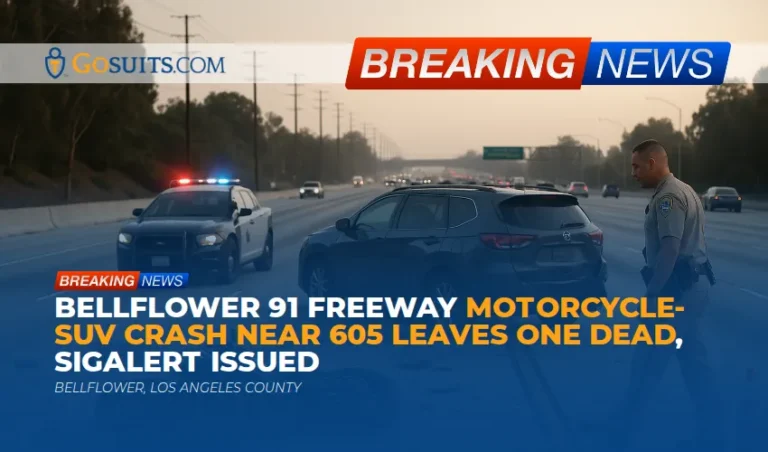
On a weekday morning commute in Bellflower, a collision involving a motorcycle and an SUV happened on the eastbound Artesia 91 Freeway just west of the San Gabriel River 605 Freeway. The crash was reported around 7:30 a.m. One person was pronounced deceased at the scene. The California Highway Patrol responded, closed the carpool and far-left lane for emergency operations and investigation, and issued a SigAlert as traffic backed up toward the 710. Those are the confirmed public details so far. Names and further identifying information were not immediately available at the time of the initial report.
If you drive this stretch often, you know how quickly traffic conditions can change approaching the 605 interchange. Morning commutes around Bellflower Boulevard, the San Gabriel River flood control channel, and the nearby neighborhoods see heavy merging and lane changes. A single incident can bring the corridor to a standstill. That’s what unfolded Wednesday, according to the initial report from authorities at the scene.
When and Where It Happened
According to the early report, the crash occurred:
- Time: Around 7:30 a.m., during peak morning commute hours when speeds and density vary widely.
- Location: Eastbound 91 Freeway, just west of the 605 interchange in Bellflower, Los Angeles County.
- Immediate impact: Closure of the carpool and far-left lane for emergency response and investigation, with traffic backing up toward the 710 and a SigAlert issued.
This stretch serves local drivers from Bellflower, Cerritos, Lakewood, and communities along the San Gabriel River corridor. Access points to the eastbound 91 near Bellflower Boulevard and Lakewood Boulevard feed a steady flow into the lane configurations that tighten as drivers approach the 605. It’s a familiar pain point for locals, especially on weekdays.
What Authorities Have Reported So Far
CHP officers confirmed a fatality at the scene. As part of standard procedure in a death on a state freeway, CHP typically secures the scene, preserves evidence, and coordinates with Los Angeles County fire and emergency medical personnel. When there is a fatality, the Los Angeles County Department of Medical Examiner is notified to manage identification and next-of-kin notification and to handle any autopsy or forensic examinations required by law. The closure of lanes and a SigAlert are standard safety and traffic management measures while responders work.
At the time of the early public report, specific causes, contributing factors, and identities had not been released. Those details usually emerge later, after preliminary investigation steps and family notifications are complete.
Understanding the Process After a Fatal Freeway Collision
After a death on a California freeway, several agencies and steps are commonly involved. Families often have to navigate these processes at the same time they’re dealing with grief and logistics. Here’s the typical sequence.
- Scene response and control: CHP secures the area, coordinates with fire/EMS, and manages traffic. Evidence is identified and preserved. Vehicles are photographed and documented, and debris fields are mapped.
- Medical Examiner involvement: The Los Angeles County Department of Medical Examiner generally takes custody of the decedent for identification, cause and manner of death determination, and legal documentation. Their office later provides official records when permitted.
- Preliminary fact-finding: Officers gather witness statements, inspect vehicles, check for skid or yaw marks, note traffic controls, and may review available video sources, including dashcams, freeway cameras, or nearby business cameras if accessible.
- Notification: Once identification is confirmed, next-of-kin notification is made by lawful authorities. Families may then obtain information about release procedures and available records.
- Collision report and supplemental documentation: The official collision report is completed by CHP. It can be requested by legally entitled parties once available.
Some crashes, especially those with disputes about speed, visibility, or vehicle dynamics, receive more detailed reconstruction work. That may involve reviewing vehicle data, diagrams, and measurements from the scene.
How to Obtain Official Records and Reports
CHP Collision Report
Eligible parties can request the CHP collision report from the specific CHP Area office that took the report. CHP uses an application form and requires identification and any available report number. You can locate area office contact information using the CHP’s office finder tool and find public forms on the CHP site:
Requesting the report typically involves the CHP 190 form, a copy of a government-issued ID, proof of a qualifying interest, and any required fee. Families often find it helpful to keep the incident date, time, freeway direction, and a brief location description handy when communicating with the Area office.
Medical Examiner Records in Los Angeles County
The Los Angeles County Department of Medical Examiner provides information about case status, records, and procedures for families. For details about autopsy reports, cause of death documents, and case updates, you can consult their official website:
The Medical Examiner’s site outlines how families can request records when they become available. Identification of the decedent and next-of-kin verification are required steps before confidential information is released.
Death Certificates
Certified death records for events in Los Angeles County can be obtained through the Registrar-Recorder/County Clerk. These records are often needed for estate matters, insurance claims, and other practical issues that arise in the weeks following a loss.
- Los Angeles County Registrar-Recorder/County Clerk — Death Records
DMV Accident Reporting
California requires an SR-1 report to the DMV within 10 days when a crash involves injury, death, or property damage over a statutory threshold. Families helping manage affairs should know this reporting requirement may apply to involved drivers or their representatives.
- DMV accident reporting information
If a decedent was a party to the crash, representatives should review DMV guidance and timelines. When in doubt, asking an attorney for guidance before filing helps ensure accuracy and protection of rights.
Traffic and Safety Context Near the 91 and 605 Interchange
The approach to the 605 from the eastbound 91 funnels multiple lanes and frequently sees abrupt speed changes as drivers sort into the carpool and transition lanes. Morning hours can include sun glare from the southeast and high vehicle density. While Wednesday’s crash specifics have not been released, the following general resources help drivers understand conditions and plan routes:
For locals, it’s common to detour through Bellflower surface streets like Artesia Boulevard or Lakewood Boulevard when a SigAlert hits the 91. Still, responders and incident investigators need time and space to complete their work safely on the freeway.
Legal Rights After a Fatal Motorcycle Collision in California
Families dealing with the sudden loss of a loved one often want to understand what civil rights may apply. In California, certain survivors can bring a wrongful death claim. The statute that defines who may file is in the California Code of Civil Procedure. You can review its language directly on the state’s official legislative website:
- Wrongful death claimants: CCP 377.60
There are deadlines for bringing claims. In many cases involving wrongful death based on negligence, the deadline is two years from the date of death. The statute is also published on the state’s site:
- Statute of limitations for wrongful death: CCP 335.1
California also follows principles allowing fault to be divided among multiple actors in many circumstances. The comparative fault concept is embedded in California law and can affect how damages are assessed. The Civil Code provides the general duty of ordinary care that often anchors negligence discussions:
- General duty of care and negligence framework: Civil Code 1714
If a public entity’s conduct or a dangerous roadway condition is alleged to be a contributing factor, separate and shorter claim presentation rules may apply. The California Government Claims Act generally requires a written claim within six months before filing a lawsuit against a public entity:
- Claim presentation deadline to public entities: Gov. Code 911.2
Because each situation is fact specific, it’s important not to assume one-size-fits-all answers. The application of these rules depends on the evidence and the parties involved.
Possible Civil Liability Pathways in a Case Like This
Without speculating about the cause of this particular crash, families often want to understand how liability is generally assessed in fatal motorcycle collisions on freeways.
- Negligent driving by another motorist: A common path involves evidence that another driver failed to use reasonable care, such as unsafe lane changes, failure to yield, inadequate signaling, or inattentive driving. Freeway merging and carpool lane transitions can create conflicts if motorists don’t check blind spots or misjudge motorcycle distance and speed.
- Employer liability: If a driver was working within the course and scope of employment, the employer may share responsibility under respondeat superior principles. This can change the available insurance and recovery sources.
- Product or maintenance issues: In rare cases, vehicle defects or component failures may be relevant. That requires technical investigation and, if warranted, expert analysis to evaluate vehicle systems.
- Public entity claims: If a dangerous condition of public property is alleged, families should know that unique notice and proof requirements apply. Timelines under the Government Claims Act are short, and investigations into design, signage, or sight-line issues can be complex.
Each of these potential paths depends on the facts. That’s why timely preservation of evidence is crucial, including photographs, dashcam footage, vehicle data, and witness information.
Insurance Considerations and Cautions
Insurance questions surface early after a fatal crash, and they can be confusing. It’s very common for insurance adjusters to reach out for statements. It’s also common for grieving families to answer questions without realizing those statements can be used later to limit or deny claims. Proceed carefully.
- Liability coverage of the at-fault driver: A wrongful death claim often proceeds against the negligent driver’s bodily injury liability policy. The policy limits may be a ceiling unless additional avenues of recovery exist.
- Uninsured and underinsured motorist coverage: If the decedent had UM/UIM coverage, it may apply in certain scenarios when the at-fault driver is uninsured or underinsured. Policy terms matter, and notice provisions can be strict.
- Medical payments and funeral costs: Depending on available policies, limited benefits may help address immediate expenses. Keep all receipts and documentation.
- Recorded statements: Always consider speaking with an attorney before giving any recorded statement. What someone says to an insurer can be used to dispute liability or damages later.
If contacting an insurance company seems unavoidable, consider seeking a free consultation first to understand rights, obligations, and the impact of any statements you’re asked to provide.
Practical Next Steps in the Days Ahead
There’s no easy way through the first days following a tragedy. Still, certain steps help protect a family’s ability to get clear answers and, if appropriate, pursue a civil claim.
- Preserve evidence immediately: Save helmets, riding gear, and the motorcycle in their post-crash condition. Keep any dashcam footage, riding apps data, or phone location data. If the SUV had a dashcam, note that for later investigation.
- Gather documents: Collect insurance policies, registration, maintenance records, and any recent communications that might be relevant to the trip or route that morning.
- Identify witnesses and video sources: Write down names and contact information for anyone who came forward at the scene. Nearby businesses along the 91 corridor and overpasses may have cameras; many systems overwrite video within days, so timeliness matters.
- Request official records: Track the CHP report number, request the collision report when available, and monitor the Medical Examiner’s case status for official determinations.
- Avoid premature statements to insurers: Consult with an attorney first. Early statements often occur before all facts are known and can be misinterpreted later.
- Document the human impact: Keep a journal of the aftermath, including the effect on family members, funeral and memorial costs, and any counseling. These records can matter in a civil case.
Local Support and Practical Resources for Los Angeles County Families
Families in Bellflower often navigate multiple agencies within Los Angeles County government. These links provide official information and contacts for common needs after a fatal crash:
- California Highway Patrol — Find an Office
- CHP Public Forms
- Los Angeles County Department of Medical Examiner
- Death Records — Los Angeles County Registrar-Recorder/County Clerk
- DMV Accident Reporting
- Caltrans QuickMap for live closures and travel times
For those in and around Bellflower, practical errands often include coordinating with the Medical Examiner downtown, visiting county offices, and navigating traffic to and from service locations. Planning around peak commute windows on the 91 and 605 can save time and stress when handling paperwork.
Data and Safety Context for Motorcycle Collisions
Motorcyclists face unique risks in mixed traffic, especially on multilane freeways with frequent merges and lane changes. Federal and state agencies publish safety insights and recommendations relevant to riders and the drivers who share the road with them.
- NHTSA motorcycle safety overview: NHTSA’s road safety materials discuss visibility challenges, protective gear, and risk factors for riders. See NHTSA motorcycle safety overview.
- California Office of Traffic Safety: OTS provides state-level crash trends and safety information. See California Office of Traffic Safety research and data.
- CHP motorcyclist safety resources: CHP offers guidance for riders on sharing the road and making safe choices in California traffic. See CHP motorcyclist safety resources.
California also permits lane splitting under certain conditions, and CHP has published safety tips for riders and drivers alike. Understanding how lane positioning, speed differentials, and driver expectations affect visibility can help reduce risk, though nothing eliminates it entirely.
How Investigations Typically Unfold After a Freeway Fatality
Families often ask, how do investigators figure out what happened in a complex freeway crash involving a motorcycle and a larger SUV? While each investigation is different, several consistent methods are used.
- Scene documentation: Investigators collect photographs, measurements of skid or scuff marks, debris paths, points of rest, and any roadway defects or obstructions. These physical clues help reconstruct speed, direction, and angles of impact.
- Vehicle inspections: Examiners look at crush patterns, lighting and signal function, brake condition, and tire wear. Some vehicles have event data recorders that may provide pre-impact data.
- Witness statements and 911 data: Witness recollections are gathered, and if available, recordings of 911 calls can help corroborate timing and initial observations.
- Video review: Investigators may seek traffic camera footage, private security video, or dashcam files. Time is critical because many systems overwrite footage quickly.
- Environmental and traffic conditions: Light, weather, and traffic density are considered, particularly during the morning rush on corridors like the 91 approaching the 605.
When uncertainties remain, more detailed collision reconstruction may be ordered. Civil cases sometimes include independent reconstruction to ensure all data points are analyzed, particularly when liability is disputed.
Commentary from Gosuits Bellflower, California Personal Injury Attorney
Our hearts go out to everyone impacted by the loss reported on the 91 near the 605. Crashes in this corridor touch many of our neighbors who commute between Bellflower, Cerritos, Lakewood, and beyond. This article is provided for general information and educational purposes. It’s meant to help the community understand what typically happens next, what records exist, and which rights may apply under California law.
From a civil personal injury perspective, freeway collisions involving a motorcycle and a larger vehicle often turn on careful analysis of lane positioning, lane changes, speed differentials, signaling, and visibility. The law looks at whether each party used reasonable care in the circumstances. That’s why preserving the full picture matters, from vehicle data to witness accounts to scene measurements. With limited early details available publicly, it’s vital not to jump to conclusions while ensuring that critical evidence is not lost.
Insurance companies and large corporations are adept at moving quickly after an incident. Adjusters may seek recorded statements or releases long before a family has complete information. They understand that early statements, given in shock or grief, can later be used to minimize fault or limit damages. They also know that many people don’t realize how coverage types like UM/UIM, medical payments, or employer policies interact. Without a knowledgeable advocate, families may inadvertently give up leverage, miss deadlines, or forego important avenues of recovery.
A free consultation can be an important first step to understanding options before engaging with insurers or signing any documents. It helps people make informed decisions, plan a strategy to safeguard evidence, and avoid missteps that could affect the outcome of a civil claim. No one should have to navigate these issues alone during such a difficult time.
Time-Sensitive Next Steps After a Serious Crash
- Request and preserve official records: Obtain the CHP collision report when it’s available and monitor the Medical Examiner’s case updates. These documents anchor the facts and timelines that everything else will reference.
- Secure time-sensitive evidence: Ask that nearby businesses and any involved parties preserve video and data. Many systems automatically overwrite footage within days.
- Document the impact and expenses: Keep receipts for funeral and memorial costs, counseling, and any related expenses. Organized records shorten claims timelines and reduce disputes later.
- Avoid premature insurer statements: Seek a free consultation before making recorded statements or signing releases. What is said early can shape the entire claim.
- Calendar legal timelines: Note potential deadlines, including the general wrongful death statute and any public entity claim deadlines, where applicable. Acting within these windows preserves options that might otherwise be lost.
- Coordinate with agencies efficiently: Use official resources to find the correct CHP Area office and request forms, and plan travel around known traffic peaks on the 91 and 605 to reduce delays during in-person errands.
Government and Educational Sources Referenced
- California Highway Patrol — Find an Office
- California Highway Patrol — Public Forms
- Los Angeles County Department of Medical Examiner
- Los Angeles County Registrar-Recorder/County Clerk — Death Records
- California DMV — Accident Reporting
- Caltrans — QuickMap
- California Code of Civil Procedure 377.60
- California Code of Civil Procedure 335.1
- California Government Code 911.2
- California Civil Code 1714
- NHTSA — Motorcycle Safety
- California Office of Traffic Safety — Media and Research
- CHP — Motorcyclist Safety