- What we know so far about the Azle FM 730 crash
- Where and when it happened
- Agencies that responded and the investigation
- Community context and roadway safety along FM 730 S
- Civil legal context after a fatal North Texas crash
- Potential civil liability issues in a multi-vehicle chain-reaction
- What records to request and where to get them in Parker and Tarrant counties
- Preserving evidence and timelines to be aware of in Texas
- Insurance considerations after a fatal collision
- Steps families can take now
- Click to Action: Why timely action matters for roadway fatalities
- Commentary from Gosuits Azle, Texas Personal Injury Attorney
- References and resources
What we know so far about the Azle FM 730 crash
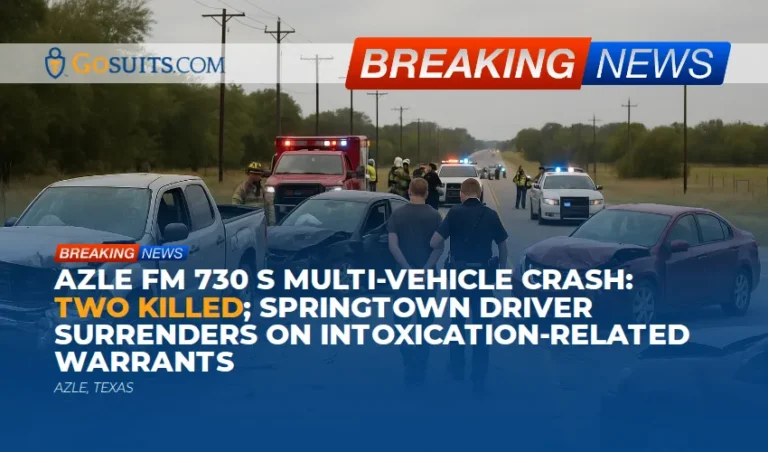
Azle residents remember the quiet midday of Sept. 23, 2025 being disrupted when a serious multi-vehicle collision occurred in the 13000 block of FM 730 S. According to information shared by local authorities, a northbound vehicle crossed into oncoming traffic and struck two vehicles, triggering a chain-reaction that ultimately involved two more. A southbound driver and a northbound passenger were pronounced deceased at the scene. Two additional people suffered serious injuries and were transported to nearby hospitals, and a third person was taken for evaluation. Lanes were shut in both directions between Creekwood Ranch Road and Main Street while emergency responders worked the scene and investigators documented evidence.
Authorities reported that on Feb. 14, 2026, a Springtown resident surrendered to law enforcement at the Parker County Jail after learning of active warrants tied to the crash. Investigators have stated the driver faces counts related to intoxication, though any criminal case proceeds separately from the civil claims families may consider. At this time, civil liability, insurance coverage, and the long-term needs of those injured remain primary concerns for many in our North Texas community.
Where and when it happened
The collision happened shortly after noon on Tuesday, Sept. 23, 2025 in the 13000 block of FM 730 S in or near Azle, impacting both directions of travel between Creekwood Ranch Road and Main Street. Many locals know this stretch as a busy corridor that funnels drivers toward Main and the town center, with quick access to Eagle Mountain Lake and the neighborhoods east of town. Midday traffic along FM 730 S can include commuters, tradespeople heading between job sites, and families handling school or lunch-hour errands. Weather conditions were not referenced by officials in the initial statements shared publicly.
Agencies that responded and the investigation
Azle police and fire personnel responded rapidly, alongside the Tarrant County Accident Reconstruction Team and the Parker County Medical Examiner. When a multi-vehicle collision results in fatalities, the responding agencies conduct a careful, methodical investigation that includes roadway measurements, photos and video, vehicle inspections, and witness interviews. If impairment is suspected, investigators may gather toxicology evidence consistent with Texas law and departmental protocols. In a multi-vehicle chain-reaction, reconstruction teams often use scene mapping and event data recorders, when available, to reconstruct speeds and movements in the seconds before impact.
From a civil perspective, this early evidence collection can be critical later on. Reconstruction files, photographs, measurements, and official reports can help clarify sequence of impacts and potential fault allocation among all involved vehicles. Because evidence can be time-sensitive, it is often important for families to understand where to request records and what to ask for, particularly in the weeks and months after a fatal roadway event.

Community context and roadway safety along FM 730 S
FM 730 S serves as a vital North Texas connector through parts of Azle and neighboring communities in Parker and Tarrant counties. Traffic volumes fluctuate with school schedules, seasonal lake activity, and weekend events. Residents often share concerns about speed, passing zones, and distracted or impaired driving along this corridor. While each crash has its own facts, law enforcement, TxDOT, and local governments emphasize driver attentiveness, lane discipline, and never driving under the influence as essential community safety measures. TxDOT also maintains crash records and publishes safety information statewide for public review and planning purposes [1].
Civil legal context after a fatal North Texas crash
When a fatal collision happens in Texas, two civil pathways commonly arise: a claim under the Wrongful Death Act and a separate Survival claim. The Wrongful Death Act allows certain surviving family members to bring a civil action for the harms they sustain due to the death of their loved one [4]. Survival actions pursue the claims the deceased person could have brought had they lived. These are distinct claims with different damages frameworks, and they may be pursued together in appropriate cases.
Families often speak with wrongful death attorneys to learn how these claims apply, what evidence matters most, and how insurance might respond. An overview like what happens if someone is killed in a car accident can help people understand the process, key documents, and timelines before making important decisions.
Texas sets a general two-year statute of limitations for wrongful death claims in most cases, though there are exceptions and nuances that should be evaluated early [5]. Because multi-vehicle crashes can involve several insurance carriers and potentially multiple at-fault parties, timely evidence preservation and careful documentation are especially important in the Azle and greater DFW area.
Potential civil liability issues in a multi-vehicle chain-reaction
Multi-vehicle collisions require careful analysis of who did what, when, and why. Under Texas proportionate responsibility, fault can be divided among multiple parties based on each person’s percentage of responsibility for the harm [6]. In chain-reaction events, the sequence of impacts matters. Reconstruction data, witness statements, photos, and any available vehicle event data recorders can help clarify whether the initiating event was a centerline crossing, sudden braking, loss of control, or another trigger.
When impairment is alleged by authorities and supported by evidence, that can influence how civil cases are framed. In some circumstances, if the conduct meets the elements of certain serious felonies and is proven in the civil case, Texas law allows exemplary damages without the general punitive damages cap that typically applies [8]. Whether those provisions apply depends on the specific facts and proof offered in the civil matter, which is separate from any criminal case or outcome.
In limited situations, families may also evaluate whether a third party’s alcohol service contributed to impairment. Texas’ “Dram Shop” statute can allow claims against an alcohol provider when specific statutory criteria are met, including obvious intoxication and proximate cause of the harm [7]. There is no information in the public statements indicating that any such provider was involved here, so this point is provided only as a general legal context for North Texas roadway fatalities.

What records to request and where to get them in Parker and Tarrant counties
Official records help families and injured survivors understand what happened and advance any civil claims appropriately. In and around Azle, consider the following record sources:
- Texas Peace Officer’s Crash Report (CR-3) Request through the Texas Department of Transportation’s Crash Report Online Purchase System. You’ll typically need at least one qualifying party detail to locate the report, such as a person’s name, date of crash, or incident number [1].
- Azle Police Department records Incident reports, 911 audio, CAD logs, and supplemental materials may be available under the Texas Public Information Act, subject to statutory exceptions. Requests can be made to the City of Azle Police Records Unit. Guidance on the Public Information Act is available from the Office of the Texas Attorney General [2].
- Tarrant County Accident Reconstruction Team materials Certain investigative records may be held by Tarrant County agencies. Availability can depend on case status and statutory exemptions. Open records requests are governed by the Texas Public Information Act [2].
- Medical examiner records Because the Parker County Medical Examiner responded, families can typically request autopsy reports, toxicology (if performed), and confirmation of identification and cause of death through the medical examiner’s office. Regional services are provided by the Tarrant County Medical Examiner’s Office, which outlines request procedures on its website [3].
- Traffic signal and roadway data If signal timing or signage are relevant, requests to TxDOT or city engineering departments may help. TxDOT maintains crash data and traffic safety information that can inform context for a given location [1].
A practical tip for requestors: identify the date, approximate time, roadway, nearest cross streets, and case number if you have it. Ask for all supplements, scene photos, body-worn camera video, 911 audio, CAD logs, and measurements where applicable. Some items can be delayed or redacted if a criminal case remains open, but making a timely, clear request helps preserve your place in the queue and ensures evidence is retained appropriately under agency policies.
Preserving evidence and timelines to be aware of in Texas
Preservation steps can make a meaningful difference in a multi-vehicle collision case:
- Send preservation letters Promptly notify potentially responsible parties and insurers to preserve vehicle data, dashcam video, and any third-party surveillance that may have captured pre-impact driving.
- Collect medical documentation Keep discharge summaries, imaging studies, physician notes, and billing records in one place. This documentation supports both injury claims and, in a fatal case, potential Survival damages.
- Document economic impacts Track missed work, mileage to medical appointments, home care needs, and out-of-pocket expenses. Tangible records help substantiate damages.
- Be mindful of the statute of limitations Wrongful death and injury claims generally must be filed within two years in Texas, though exceptions exist and should be evaluated as early as possible [5].
- Understand proportionate responsibility In multi-party events, Texas courts apportion fault. Thorough evidence collection helps ensure fault is assigned based on the strongest available proof rather than assumption [6].
Insurance considerations after a fatal collision
Multiple victims in a single crash can strain available policy limits, especially when several households have catastrophic losses. The order of coverage evaluation often includes the at-fault driver’s bodily injury liability coverage, any applicable resident relative policies, personal umbrella coverage if in force, and for injured survivors, potential claims under their own uninsured or underinsured motorist coverage. Medical payments or personal injury protection benefits may help with some immediate expenses while the liability investigation continues.
Adjusters may seek recorded statements or broad medical authorizations early. Before speaking with the at-fault party’s carrier, it is prudent to consult an attorney. What someone says to an insurer can be used against them later, and early statements sometimes occur before the full medical picture or reconstruction analysis is known. Because fatal cases often involve complex damages and sensitive family issues, discussions with counsel about strategy and timing can be important even before submitting a formal claim or making any recorded statement.
In some circumstances, exemplary damages may be pursued in civil court where the conduct meets certain statutory thresholds and is proven as required. Texas law also outlines situations where the typical cap on exemplary damages may not apply if the conduct constitutes specific serious felonies and is established in the civil proceeding [8]. Evaluating whether those standards could be met requires a careful look at the evidence developed by investigators and any additional evidence obtained through civil discovery.
Steps families can take now
In the Azle community, families and loved ones often want to know where to start during the hardest days. Consider these measured steps:
- Request official records Order the Texas Peace Officer’s Crash Report through TxDOT’s Crash Report Online Purchase System and make a Public Information Act request to the Azle Police Department for incident materials that may be available [1] [2].
- Contact the medical examiner’s office Ask about the status of the autopsy report and toxicology, and the process and timeline for release. The Tarrant County Medical Examiner publishes request procedures for families [3].
- Compile documentation Organize medical records, funeral and burial documentation, and any communication you have already received from insurance companies.
- Preserve vehicles and belongings If you control a vehicle involved in the collision, consult about preserving it in its post-crash condition until counsel and experts can inspect it. The same goes for car seats, child restraints, and personal items that may have evidentiary value.
- Consult before making insurance statements Speak with a legal professional prior to submitting recorded statements to any insurance adjuster. Early comments can be taken out of context or misunderstood, especially before families have full access to investigative findings.
- Consider supportive resources Local faith communities, counselors, and victim assistance programs can help families process grief and logistical challenges in the weeks after a fatal roadway event.
Some families in North Texas look to Azle wrongful death attorneys for guidance on who can file claims, which damages may apply, how to coordinate multiple insurers, and when to file suit. In a chain-reaction event with several injured people and two lives lost, getting a clear, fact-based roadmap can reduce uncertainty and help protect long-term interests while the community heals.
Click to Action: Why timely action matters for roadway fatalities
Take control of information early. That means gathering official records, preserving key evidence, and creating a single, organized file for all crash-related documents. Doing this now avoids the common problem of missing or overwritten evidence and helps ensure investigators, insurers, and any future civil court can see the full picture, not just fragments.
Act within statutory windows. Texas’ two-year limitations period for wrongful death and many injury claims may feel distant, but vital evidence like third-party video, vehicle telematics, and detailed witness recollections are often hardest to secure as weeks turn into months. Timely requests and preservation letters maintain momentum and strengthen the factual record [5].
Seek informed guidance before engaging insurers. Insurance companies often move quickly in serious and fatal cases. A measured, informed approach helps prevent missteps that may affect liability assessments, damages evaluations, and, ultimately, any civil recovery. Many choose to first consult with wrongful death attorneys to understand rights and options before making statements or signing anything. A well-timed, well-informed plan protects families’ interests at each step.

Commentary from Gosuits Azle, Texas Personal Injury Attorney
First, our hearts are with everyone affected by the FM 730 collision. Two lives were lost, and several others were harmed. We recognize that no summary can capture the depth of those losses. This article is meant for education and general information, and we encourage anyone impacted to take the time needed to process, ask questions, and seek support.
From what authorities have shared publicly, the reported sequence involves a northbound vehicle crossing into oncoming traffic near the 13000 block of FM 730 S, with a resulting chain-reaction and two people pronounced deceased at the scene. Multi-vehicle cases like this require meticulous reconstruction to determine who bears legal responsibility and to what degree. If impairment is part of the factual record, that may shape the civil framework in meaningful ways, including the potential availability of exemplary damages when the statutory conditions are met. Still, each civil claim lives or dies on the evidence, and families deserve a thorough, respectful review of the complete investigative file.
Second, we see how insurance companies and, at times, corporate defendants use information gaps to their advantage. They may rush to obtain recorded statements, press for broad medical authorizations, or quietly move vehicles before independent inspections can occur. When multiple victims and limited coverage are in play, early adjuster contact can create pressure to accept quick conclusions or partial narratives. Those tactics can affect liability allocation and damage evaluations in ways that are hard to unwind later.
Third, a free consultation matters because it levels the information field. It helps families understand who can bring a claim, which damages may be available under the Wrongful Death Act and Survival framework, how proportionate responsibility could apply in a chain-reaction, and what insurance layers might respond. It also provides guidance on preserving evidence, obtaining official reports, and deciding when it makes sense to file suit. Conversations at this stage are about clarity and protection of rights. They can spare families from avoidable missteps at a time when clear-headed decisions are understandably difficult.
References and resources
- Crash Report Online Purchase System – Texas Department of Transportation
- Open Government and the Public Information Act – Office of the Texas Attorney General
- Medical Examiner – Tarrant County
- Wrongful Death Act – Texas Civil Practice and Remedies Code Chapter 71
- Statute of Limitations, Two Years – Texas Civil Practice and Remedies Code Section 16.003
- Proportionate Responsibility – Texas Civil Practice and Remedies Code Chapter 33
- Civil Liabilities for Serving Alcohol – Texas Alcoholic Beverage Code Chapter 2
- Exemplary Damages, Limitations and Exceptions – Texas Civil Practice and Remedies Code Section 41.008