- What we know about the Long Beach crashes reported this week
- Timeline and location context in Long Beach
- How civil liability can arise after a fatal crash in California
- Who may bring a wrongful death claim and potential categories of damages
- Evidence that can matter most in a Long Beach hit-and-run or multi-collision case
- How families can obtain official records: police reports, autopsy, death certificates, and more
- Insurance issues after fatal collisions in Los Angeles County
- Steps to protect your rights after a fatal crash in Long Beach
- Community safety considerations for Long Beach riders and drivers
- Taking action: what to do now and why timing matters
- Commentary from Gosuits Long Beach, California Personal Injury Attorney
- References
What we know about the Long Beach crashes reported this week
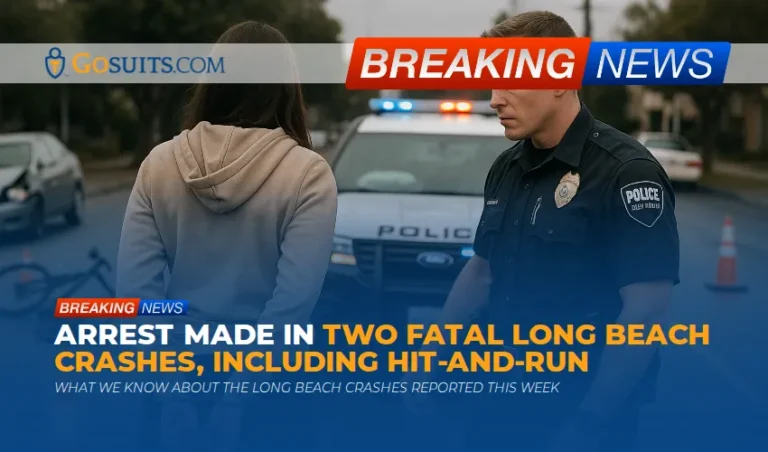
According to information shared by local authorities and widely reported in the media, a 24-year-old driver was arrested in connection with two separate fatal collisions months apart in Long Beach. The first crash reportedly occurred on October 6 and involved a bicyclist who died from injuries. The second, a January 4 collision characterized as a hit-and-run, allegedly resulted in the deaths of two occupants in another vehicle and injuries to additional people. The driver reportedly turned herself in and was booked, with police indicating that video and forensic evidence link her to both events. As of now, public statements have not detailed the precise causes of either crash, and additional criminal charges may be reviewed by prosecutors after the investigation is completed.
Out of respect for the families and given the ongoing investigation, this article does not identify victims by name and focuses on civil rights, safety, and verified process information that can help affected families in the Long Beach and greater Los Angeles community. Where we discuss laws or data, we cite government or academic sources via numbered references.
Timeline and location context in Long Beach
Based on police announcements reported this week, the sequence appears to be:
- October 6: A fatal bicycle-involved crash in Long Beach. Public reporting indicates the driver was subsequently charged with felony vehicular manslaughter related to this incident.
- January 4: A separate fatal collision described as a hit-and-run, causing the deaths of two young adults and injuring others. Investigators reportedly connected the same driver to this crash as well.
- January 8–9: The driver turned herself in to Long Beach Police Department and was booked with bail set while the January case continues to be investigated.
For community members, the mention of two different crashes within city limits is particularly alarming. Long Beach residents know how heavily traveled corridors like Pacific Coast Highway, Anaheim Street, and the approaches to the 710 and 405 can become during peak hours. Riders and drivers navigate city bicycles lanes along corridors near Downtown Long Beach, Alamitos Beach, and campus routes around CSU Long Beach. This mix of high-volume arterials, neighborhood streets, and tourism activity around the Waterfront and Shoreline Village creates complex traffic conditions. In winter months, earlier sunsets and occasional rain add visibility and traction challenges that can increase crash risk.
How civil liability can arise after a fatal crash in California
When fatal crashes occur, there are two distinct tracks: the criminal investigation handled by law enforcement and prosecutors, and the civil process that allows grieving families to pursue accountability through the courts. Families can consider a civil wrongful death claim under California law against any person or entity whose negligence or wrongful act caused the death, regardless of whether criminal charges are also pursued [2]. A separate survival action may also be available in some circumstances.
In the civil context, liability usually turns on negligence: a duty to use reasonable care, a breach of that duty, causation, and damages. Some traffic code violations can support negligence theories. For example, California Vehicle Code 20001 outlines legal responsibilities after a collision involving injury or death and defines the offense of fleeing the scene, commonly called hit-and-run [1]. While the criminal dimension is separate, evidence of a hit-and-run can affect civil liability and damages analysis, especially when insurers evaluate risk exposure and potential bad-faith pitfalls.
If a bicyclist is involved, California’s Three Feet for Safety law requires motorists to provide at least three feet of clearance when passing a bicycle traveling in the same direction when reasonable to do so [9]. Whether that statute applies in a particular crash depends on the facts, but it is part of the broader duty to share the road safely.
Nothing in this article makes conclusions about fault for either crash described. Those determinations depend on the full investigative record. Our goal is to help families understand the civil framework that may apply once facts are developed.
Who may bring a wrongful death claim and potential categories of damages
California’s wrongful death statute identifies who can bring a claim, typically the decedent’s surviving spouse, domestic partner, children, or other dependent relatives in certain circumstances [2]. Damages in a wrongful death case seek to compensate survivors for their losses resulting from the death. Depending on the facts, these may include financial support the decedent would have provided, the loss of gifts or benefits, funeral and burial expenses, and the loss of love, companionship, comfort, care, and guidance. A separate survival action can sometimes seek damages the decedent incurred before death, such as medical bills and conscious pain and suffering, if allowed by law.
It is common for insurers to aggressively minimize exposure in fatal cases. Policies, exclusions, household member issues, and multiple-claimant scenarios can create complex coverage questions. Families often benefit from talking with seasoned car accident lawyers and wrongful death attorneys early, not to promise results but to clarify rights and avoid missteps that insurers might leverage later.
For a plain-language explainer that many find helpful, see what happens if someone is killed in a car accident. It covers typical timelines, documentation, and the difference between wrongful death and survival claims.

Evidence that can matter most in a Long Beach hit-and-run or multi-collision case
Evidence preservation is often decisive. In Long Beach and across Los Angeles County, critical sources include:
- Police traffic collision reports and supplements: Diagrams, scene measurements, officer observations, witness statements, and any citations. These reports may be amended if new facts arise. While not the last word, they are foundational for insurers and courts.
- Video: City traffic cameras, Caltrans cameras along freeway approaches, private business cameras on corridors like Atlantic Avenue, Anaheim Street, and PCH, residential doorbell cameras, and vehicle dashcams. Prompt requests tend to matter because many systems overwrite data within days or weeks.
- Forensic evidence: Vehicle damage patterns, event data recorder (EDR) downloads, paint transfers, roadway gouge marks, and injury biomechanics that can help reconstruct speed, braking, and movement.
- Cell phone and telematics: Location pings from apps, rideshare data if applicable, and vehicle connectivity logs.
- Medical and autopsy records: In fatal cases, the Los Angeles County Medical Examiner-Coroner can provide cause-of-death documentation that may be relevant to causation analysis [6].
UC Berkeley’s Transportation Injury Mapping System (TIMS) provides collision mapping and summary statistics that can also contextualize a corridor’s history and risk profile [4]. While TIMS data does not set fault, it can be a helpful starting point for understanding traffic patterns near Downtown Long Beach, the Broadway corridor, and near freeway ramps.
How families can obtain official records: police reports, autopsy, death certificates, and more
Several agencies hold records that families may need in the days and weeks after a fatal crash in Long Beach. Here are the primary sources and how to approach them.
Police traffic collision report from the Long Beach Police Department
For crashes within the city, the Long Beach Police Department generally maintains the traffic collision report. Families and legal representatives can request copies through the department’s records unit once reports are approved for release. If you are unsure where to start, the city’s police department website provides contact and records information [10]. If a report is not yet available, ask how to be notified when it is released and what documentation is required to obtain a copy.
If a state agency investigated the crash instead, such as the California Highway Patrol on a freeway segment, that agency would hold the primary collision report. The agency listed on the incident number generally indicates where to request records.
Autopsy and cause-of-death documentation
The Los Angeles County Medical Examiner-Coroner handles autopsies and associated records for deaths occurring in the county that meet certain criteria. Families can request records and certified copies of the death certificate through the Medical Examiner’s office [6]. These records can be important for life insurance claims, probate, and civil case causation analysis.

Victim-witness services and support
Los Angeles County offers a Victim-Witness Assistance Program through the District Attorney’s Office. Staff can help explain rights under Marsy’s Law, restitution processes, and available support resources, even while the criminal investigation proceeds [7]. This can be particularly helpful if multiple agencies are involved or if court appearances arise later.
Public records requests in California
If you need supplemental materials beyond standard reports, California’s Public Records Act allows the public to request records from state and local agencies, with certain exemptions. The California Attorney General provides a summary of the Act and how requests work [8]. Be as specific as possible about dates, locations, and the kinds of documents you seek. Many agencies have online portals to submit requests.
Insurance issues after fatal collisions in Los Angeles County
Insurance adds another layer of complexity. Here are recurring issues families encounter in multi-claim tragedies:
- Multiple claimants vs. single policy limits: When several people are injured or killed, a single bodily injury liability limit may need to be divided among claimants. This sometimes pressures early settlement discussions before facts are fully known.
- Coverage denials and reservations of rights: Insurers may send reservation-of-rights letters while investigating coverage defenses, creating uncertainty for families counting on payments. Recognizing what these letters mean helps inform strategy.
- UM and UIM claims: If the at-fault driver is uninsured or underinsured, families may have claims under their own uninsured motorist or underinsured motorist policies. Filing often requires strict notice and proof deadlines.
- Life insurance and accidental death benefits: Policy timelines and proof requirements differ from auto liability claims. Cause-of-death documentation often matters.
There is a reason many people consult fatal crash attorneys shortly after a tragedy. Insurers move quickly and may seek statements. What someone says can be used against them later. Before calling any insurer about the crash, it is prudent to consult an attorney to understand rights and risks. Even a brief consultation can help map a safe path forward without making promises of any particular outcome.
Steps to protect your rights after a fatal crash in Long Beach
Not legal advice, just practical steps many families find useful in the first few weeks:
- Prioritize support and documentation: Keep all paperwork together: incident numbers, officer contact cards, hospital records, mortuary receipts, and any property returns. Note every agency involved and the specific detective or investigator assigned.
- Preserve evidence early: Save any available photos or videos, vehicle data, and potential witness names. If nearby businesses might have camera footage, consider sending a prompt preservation request, as many systems overwrite within days.
- Request official records as they become available: Ask LBPD when the traffic collision report will be released and what you need to obtain it. For autopsy records and certified death certificates, follow the Medical Examiner’s process [6].
- Be mindful with insurers: Before providing any recorded statement to an insurance company, speak with a lawyer. Insurers can and do use statements to reduce or deny claims later.
- Calendar key deadlines: Some notices have short timelines. The DMV requires crash reporting for drivers in certain circumstances within 10 days using an SR-1 form if you were involved and there was injury or death [3]. Civil claims also have statutes of limitation. A quick conversation with counsel can help identify the specific timelines that apply to your situation.
Community safety considerations for Long Beach riders and drivers
Long Beach has invested in bike lanes and traffic calming in areas like Downtown, Alamitos Beach, and Belmont Shore, yet serious crashes persist. California’s Office of Traffic Safety continues to emphasize visibility, speed management, and safe passing for drivers, and predictable lane positioning and lighting for people on bikes [5]. NHTSA’s national data underscores that fatal crash counts remain a major concern and that risky behaviors like speeding and impaired driving are persistent contributors [11].
As a community, we feel these tragedies. Neighbors recognize the intersections by sight, whether it is a long corridor on Anaheim Street at dusk or a side street near Retro Row where traffic builds unexpectedly. The local conversation often turns to practical, near-term safety ideas: better nighttime lighting and reflectivity, consistent enforcement at high-injury intersections, and winter driving reminders when rain slicks the roadway and glare reduces visibility in the late afternoon.
Taking action: what to do now and why timing matters
Below is a general, time-sensitive checklist that helps orient next steps in the days and weeks after a fatal collision. This is not directed to any one person. It explains why early action sometimes changes outcomes.
- Identify the lead investigator and incident number: Clear lines of communication reduce confusion. Ask when a preliminary report will be available and how you can receive updates.
- Send evidence preservation notices promptly: Businesses along likely routes in Long Beach often overwrite surveillance within days. Preserving video from corridors like PCH, Anaheim Street, Atlantic Avenue, and the Downtown grid can materially affect fault analysis.
- Gather policy info and coordinate claims wisely: When multiple families are affected, liability limits can be exhausted quickly. Coordinating claims avoids a rush that undervalues losses. This is where early guidance from car accident lawyers can help frame a thoughtful approach.
- Obtain key records as soon as available: Police reports, certified death certificates, and any supplemental diagrams or scene photos are building blocks for all claims, including life insurance and UM/UIM.
- Document every cost: Funeral expenses, travel for services, grief counseling, and time off work are all part of the real-world impact. Detailed proof shortens disputes later.
- Mind the calendar: Evidence degrades and memories fade. Some notices have short deadlines. Early action preserves options, even if decisions are made later.

Commentary from Gosuits Long Beach, California Personal Injury Attorney
Our hearts are with every family affected by the tragedies reported in Long Beach. Lives were cut short. Loved ones are grieving, and neighbors are shaken. This article is meant for general information and community awareness. It cannot address every fact or serve as guidance for any one case.
From a civil injury perspective, the early narrative raises familiar concerns: two separate fatal events in a compact timeframe, one reportedly involving a bicyclist and another described as a hit-and-run. In our view, incidents like these call for thorough, methodical investigation. That means careful reconstruction, complete video canvassing, vehicle data preservation, and medical documentation that clearly links mechanisms of injury to the outcomes. No speculation. Just facts secured before they disappear.
Insurance companies and large corporations know this terrain well. They move fast, send form letters, and ask for recorded statements that seem harmless. People are grieving and not always ready for adversarial questions. Adjusters may float quick offers in multi-claimant situations where policy limits could be a bottleneck. Without context, families can inadvertently say things or accept terms that restrict future options. These are common pressure points, not a reflection on anyone’s character or strength.
It is important to understand that an initial conversation with a lawyer is typically free and designed to answer the most urgent questions: what to preserve, how to coordinate with investigators, which claims to open and when, and how to navigate statements so that words are not used against you later. Even a short call can lower the temperature and help people focus on what matters most.
References
- California Vehicle Code 20001: Duty to stop at accident involving injury or death – California Legislative Information
- California Code of Civil Procedure 377.60: Wrongful death actions – California Legislative Information
- Accident Reporting Requirements (SR-1) – California DMV
- Transportation Injury Mapping System (TIMS) – UC Berkeley SafeTREC
- Bicycle Safety Program – California Office of Traffic Safety
- Records and Certificates – Los Angeles County Medical Examiner-Coroner
- Victim-Witness Assistance Program – Los Angeles County District Attorney
- California Public Records Act – California Attorney General
- California Vehicle Code 21760: Three Feet for Safety Act – California Legislative Information
- Long Beach Police Department – City of Long Beach
- Traffic Fatalities Estimates – National Highway Traffic Safety Administration
- Personal Injury Basics – California Courts Self-Help