- What happened on I-57 near 119th Street early Wednesday
- Where this occurred and how traffic was managed on the South Side
- What officials have said and what typically happens next after a multi-vehicle fatal crash
- Immediate safety and legal takeaways for those affected
- How to obtain official records and documents
- Preserving evidence after a serious interstate crash
- Insurance and liability in Illinois interstate crashes
- Understanding potential civil claims in Illinois
- Community context: Morgan Park, Roseland, and the I-57 corridor
- Support resources and practical logistics after a fatal crash
- A practical timeline checklist for the weeks ahead
- Next steps and why timing matters
- Commentary from Gosuits Chicago, Illinois Personal Injury Attorney
What happened on I-57 near 119th Street early Wednesday
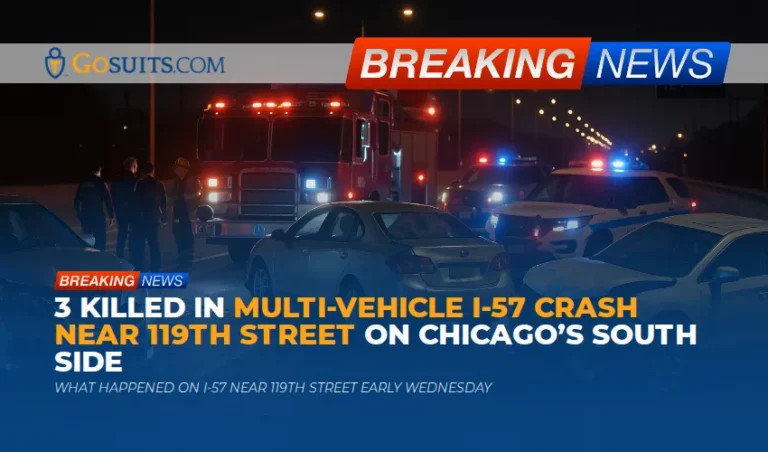
In the early hours of Wednesday, around 12:05 a.m., a serious multi-vehicle crash occurred in the northbound lanes of I-57 near 119th Street on Chicago’s South Side. Illinois State Police reported that at least four vehicles were involved. Three people lost their lives, and at least three others were transported for emergency care to Advocate Christ Medical Center in Oak Lawn. A witness on scene described a sideswipe and subsequent collisions that left multiple people on the roadway. These are difficult facts to read. For many families in the Morgan Park and Roseland communities, I-57 is a lifeline to work, school, church, and home, and an event of this scale affects the entire neighborhood.
As with any fatal expressway crash within the city limits, the primary investigation generally rests with the Illinois State Police, with support from Chicago emergency responders. In multi-vehicle incidents, it’s common for crash reconstruction teams to respond, document the scene, measure skid marks and crush damage, and gather witness statements while the roadway is closed. That kind of careful reconstruction helps clarify how the sequence of impacts unfolded.
Where this occurred and how traffic was managed on the South Side
The crash occurred northbound on I-57 near 119th Street, in the corridor that runs alongside Morgan Park and the Roseland area. Post-incident, northbound lanes were shut down at 127th Street. Motorists were diverted off the interstate there, with re-entry permitted at 111th Street after the scene was secured and investigators completed critical documentation.
In this stretch, I-57 carries a mix of overnight commuter traffic and freight. When closures occur in the midnight to early-morning timeframe, detours can push vehicles onto Halsted, Vincennes, and other local arterials through Morgan Park and West Pullman. That detour burden often lasts several hours so that agencies can safely work and reopen lanes in stages.
What officials have said and what typically happens next after a multi-vehicle fatal crash
Officials confirmed three fatalities and multiple injuries requiring hospital transport. After a crash with fatalities on an interstate, several steps usually follow:
- Scene stabilization and medical care by fire/EMS and law enforcement.
- Primary investigation by Illinois State Police, which can include a crash reconstruction to analyze vehicle rest positions, damage patterns, roadway evidence, and available video.
- Coordination with the county medical examiner for identification and autopsy.
- Notification of next of kin handled by authorities with care and privacy.
- Roadway clearance coordinated with tow operators and the Illinois Department of Transportation to make the interstate safe for reopening.
Families often want to know when a preliminary crash report will be available. The initial report can be generated within days, while a full reconstruction summary and any laboratory results can take longer. Autopsy results and final medical examiner determinations have their own timelines as well. It’s understandable to want answers immediately; some pieces take time, and that can feel frustrating in the moment.
Immediate safety and legal takeaways for those affected
Crashes with multiple vehicles and fatalities can involve complex fault questions. A sideswipe can trigger chain-reaction impacts, secondary collisions, and pedestrian hazards in the roadway. Even when one driver sets the events in motion, investigative findings can examine speeds, following distance, lighting, debris fields, and whether other drivers had a reasonable chance to avoid secondary impacts.
From a civil perspective in Illinois:
- Modified comparative fault applies. If a claimant is more than 50 percent at fault, recovery is barred, and otherwise any recovery is reduced by their percentage of fault. See 735 ILCS 5/2-1116 on the Illinois General Assembly site: Illinois comparative fault statute.
- Wrongful death and survival claims are separate. The Wrongful Death Act allows certain family members to seek damages for their own losses; the Survival Act preserves the decedent’s own claims that existed before passing. See 740 ILCS 180/ (Wrongful Death Act): Wrongful Death Act (Illinois) and 755 ILCS 5/27-6 (Survival): Survival statute (Illinois).
- Timelines matter. Most Illinois personal injury and wrongful death claims have a two-year limitation period, with some exceptions. See 735 ILCS 5/13-202: Statute of limitations for personal injury. Claims against certain public entities can have shorter deadlines. See 745 ILCS 10/8-101: Local Governmental and Governmental Employees Tort Immunity Act timelines.
If insurance adjusters reach out quickly, it’s common for them to request recorded statements. What’s said early can be used later and sometimes out of context. It’s wise to consult with a seasoned attorney first to understand rights, coverage, and the best way to proceed.
How to obtain official records and documents
Families often need several official documents to understand what happened and to handle immediate necessities. Here’s how to approach key records for an interstate crash in Chicago.

Illinois State Police traffic crash report
The lead investigative agency for interstate crashes in Chicago is typically the Illinois State Police. A crash report copy is usually available to involved parties or their representatives after initial processing. Start with the Illinois State Police website for crash report guidance or to identify the appropriate district unit for the Chicago area: Illinois State Police. If a reconstruction unit was involved, supplemental documentation may take additional time to finalize.
If public records beyond the standard crash report are needed (for example, photos, dashcam, or witness statements), requests can be made under the Illinois Freedom of Information Act, 5 ILCS 140/. See the statute here: Illinois FOIA. FOIA timelines and exemptions apply, and some materials may be withheld while investigations remain active.
Cook County Medical Examiner’s Office: autopsy and related records
Cook County uses a Medical Examiner system rather than elected coroners. For deaths within the county, identification, autopsy, and cause/manner determinations are handled by the Cook County Medical Examiner. Families can find procedures for obtaining autopsy reports, toxicology, and confirmation of identification through the county’s official site: Cook County Medical Examiner. Autopsy reports can take several weeks depending on testing.
Death certificates
Certified death certificates in Cook County are issued through the Cook County Clerk. These documents are necessary for estate matters, insurance claims, and certain benefits. For instructions and eligibility, visit the Clerk’s official page: Cook County Government and navigate to the Vital Records section for Death Certificates.
911 audio, CAD logs, and dispatch records (OEMC)
Within Chicago, the Office of Emergency Management and Communications (OEMC) maintains 911 call recordings and dispatch logs. Requesting these materials may be helpful for timelines and response details. Start with the city’s official portal to locate OEMC and FOIA instructions: City of Chicago, then search for OEMC and FOIA. These records often have retention limits, so consider acting promptly.
Traffic camera, roadway maintenance, and lane-closure records (IDOT)
The Illinois Department of Transportation (IDOT) manages I-57. Not all traffic cameras record or store footage, but IDOT may have maintenance logs, lane-closure permits, and incident response records that can be relevant. See IDOT’s main site for contact information and public records requests: Illinois Department of Transportation.
Insurance policy declarations and claim numbers
To open or defend claims, insurance policy declarations pages are essential to identify liability, uninsured/underinsured motorist (UM/UIM), medical payments (MedPay), and other coverages. Before speaking with any adverse insurer, consult an attorney. Early recorded statements can impact the outcome of a claim.

Preserving evidence after a serious interstate crash
Evidence on an interstate can change quickly. Vehicles are moved, debris is cleared, and electronic data can be overwritten. Preservation is key.
- Send preservation letters to potentially responsible parties, tow yards, and insurers, instructing that vehicles and electronic data must be preserved. Event data recorder (EDR) information from vehicles can contain speed, braking, throttle, and seat belt status just seconds before impact.
- Request dashcam and telematics from commercial or ride-for-hire vehicles if involved. Some fleets keep GPS and driver-behavior logs.
- Locate witnesses through the crash report and by canvassing nearby businesses or residents along on/off-ramps, such as near 119th Street or 127th Street. Independent witness accounts often clarify the sequence of impacts in chain-reaction collisions.
- Document injuries and treatment with medical records and consistent follow-up, including records from Advocate Christ Medical Center and any subsequent care providers.
- Track expenses and losses including funeral arrangements, lost income, and property loss. This documentation supports both wrongful death and survival claims.
Insurance and liability in Illinois interstate crashes
Auto insurance in Illinois includes required minimum liability coverage, and many policies also include optional protections like UM/UIM and MedPay. The Illinois Department of Insurance provides consumer information about coverages and complaint processes here: Illinois Department of Insurance.
In a multi-vehicle crash:
- Multiple liability carriers may be involved. It’s common for each insurer to try to minimize their driver’s fault. Statements made to any insurer can be used later. Speak with an attorney first.
- Uninsured/underinsured motorist coverage can apply when the at-fault driver lacks adequate insurance to cover losses.
- Stacking issues and setoffs may affect UM/UIM recovery depending on policy language and Illinois law.
- Cargo and commercial policies can be implicated if a commercial vehicle was involved. Those policies can have high limits but also aggressive adjustment practices.
National and state safety data reflect the risks of high-speed, multi-vehicle incidents. The National Highway Traffic Safety Administration reports ongoing challenges with nighttime visibility, speed, and secondary collisions. For authoritative statistics and safety research, see NHTSA: NHTSA. IDOT’s Illinois Crash Facts and Statistics provide statewide data trends, available via: IDOT.
Understanding potential civil claims in Illinois
Illinois law recognizes several civil claims arising from fatal interstate crashes. While every case is unique, common legal theories include negligence, negligent entrustment (for owners who allow unsafe drivers to use their vehicles), and, in commercial contexts, potential vicarious liability of an employer.
- Wrongful Death Act, 740 ILCS 180/. This statute allows the decedent’s next of kin to seek damages for losses like grief, sorrow, and loss of society. See: Illinois Wrongful Death Act.
- Survival Act, 755 ILCS 5/27-6. This preserves the decedent’s own claim that existed before death, such as conscious pain and suffering and medical expenses. See: Illinois Survival statute.
- Comparative fault, 735 ILCS 5/2-1116. Fault may be allocated among multiple drivers. A claimant more than 50 percent at fault cannot recover; otherwise, recovery is reduced by their fault percentage. Statute: Illinois comparative fault.
- Timelines. As noted, most civil injury and wrongful death actions must be filed within two years, with special, often shorter deadlines if public entities are involved. See 735 ILCS 5/13-202: Limitations period and 745 ILCS 10/8-101: Tort Immunity Act deadlines.
Preserving claims often turns on fast evidence preservation, careful communication with insurers, and a clear understanding of which damages belong in which claim. Because statements to insurance can be used later, consider getting a free consultation before engaging with any adjuster.
Community context: Morgan Park, Roseland, and the I-57 corridor
I-57 threads through the South Side, passing near Morgan Park, West Pullman, and Roseland before connecting north toward the Dan Ryan merge and south toward suburban corridors. The 119th Street exit sits near residential pockets and community institutions like local churches and parks that see a lot of weekend and evening traffic. Nighttime on I-57 can involve fast-moving vehicles, reduced sightlines, and, in colder months, the risk of slick spots and low pavement temperatures. That’s why multi-vehicle collisions at night can be particularly severe when drivers have little time to react to an initial crash or stalled vehicle ahead.
Neighborhoods around 111th and 127th are used to seeing detour traffic during interstate closures. For residents, these incidents are a stark reminder to build extra time into overnight commutes, slow down on approach to trouble, and watch carefully for responders in the roadway. It’s also a reminder that crash scenes are dynamic and dangerous. If you’re ever nearby, move over, dim high beams, and let crews do their work.
Support resources and practical logistics after a fatal crash
After a tragedy like this, families face both grief and logistics. The following government-linked resources can help navigate the days and weeks ahead:
- Cook County Medical Examiner. Autopsy and identification information, decedent release, and bereavement guidance: Cook County Medical Examiner.
- Cook County government portal. Links to the Clerk’s Vital Records for certified death certificates: Cook County.
- Illinois State Police. Crash report access and agency contacts for the Chicago area: Illinois State Police.
- Illinois Department of Transportation. Information on roadway operations and contacts for public records: IDOT.
- City of Chicago OEMC. Locate information about dispatch records and FOIA links via the city’s official site: City of Chicago.
- Illinois Department of Insurance. Consumer assistance regarding auto policies and claim practices: Illinois Department of Insurance.
- NHTSA. Roadway safety research, child seat guidance for families transporting children, and educational materials: NHTSA.
For transportation of a decedent, funeral home selection, and coordination with the Medical Examiner, funeral directors are accustomed to working with county offices and can often pick up certified copies of documents when authorized. Keep copies of any authorization forms and identification on hand to ease the process.
A practical timeline checklist for the weeks ahead
Every situation is different, but this general checklist reflects what many families encounter following a fatal interstate crash.
First 72 hours
- Identify the lead agency and obtain the crash report number from the Illinois State Police.
- Contact the Cook County Medical Examiner regarding identification, autopsy status, and decedent release.
- Select a funeral home to coordinate with county offices and begin arrangements.
- Preserve evidence by sending written preservation notices for involved vehicles and electronic data.
- Avoid recorded statements to any insurance company until after consulting with an attorney.
First two weeks
- Request the traffic crash report once posted and confirm whether a reconstruction is underway.
- Gather insurance documents for all involved policies, including UM/UIM and MedPay coverages.
- Request 911 and dispatch records from the City of Chicago, and inquire with IDOT about any relevant roadway or incident logs.
- Maintain a ledger of expenses: funeral costs, travel, time away from work, and property losses.
First one to three months
- Obtain certified death certificates via the Cook County Clerk once available.
- Collect medical records from Advocate Christ Medical Center and any subsequent providers.
- Evaluate applicable claims under the Wrongful Death Act and Survival Act, considering potential comparative fault issues and insurance coverage layers.
- Monitor deadlines for any public entity notice requirements or shorter statutory periods.

Next steps and why timing matters
Multi-vehicle interstate crashes can generate overlapping claims, multiple insurers, and evidence that doesn’t stay available forever. Acting sooner rather than later has practical benefits:
- Preservation. Electronic vehicle data, dispatch recordings, and surveillance can be overwritten or deleted on routine schedules.
- Accuracy. Witness memories fade quickly, and contact information can become stale. Early outreach improves accuracy.
- Insurance positioning. Insurers start building their file immediately. Unrepresented claimants can be at a disadvantage if they respond to questions without context.
- Roadway records. Maintenance logs and lane-closure permits are easier to track when requested promptly.
- Financial planning. Funeral expenses, income disruption, and medical bills require a plan. Timely documentation helps align available benefits and coverages.
What should be done, specifically?
- Secure the report number and confirm which ISP unit is handling the investigation.
- Send evidence preservation notices to all potentially responsible parties and their carriers.
- Collect and centralize documents including medical records, expense receipts, and insurance declarations.
- Coordinate with county offices for autopsy reports and certified death certificates.
- Consult a qualified attorney before speaking with adverse insurers; recorded statements can be used later and may affect available claims.
Why now? Because deadlines can be unforgiving, and key evidence can disappear even in a matter of days or weeks. Early organization gives families more control over what comes next.
Commentary from Gosuits Chicago, Illinois Personal Injury Attorney
Our hearts are with everyone affected by the I-57 tragedy near 119th Street. Three lives lost is a gutting outcome for any community, and the pain reaches far beyond the scene itself. This article is intended for education and general information. It’s not a substitute for tailored guidance about any individual situation.
Based on what’s been reported so far, a chain of events likely began with a sideswipe and quickly escalated to involve multiple vehicles. That’s consistent with what we often see on fast-moving interstates at night: once an initial loss of control occurs, secondary impacts can happen before other drivers have time to react. In these circumstances, the on-scene measurements, crush analysis, and electronic vehicle data can be crucial for understanding how responsibility is allocated among the involved drivers.
Insurance companies and large corporate carriers know how to use the early hours to their advantage. Adjusters may ask for recorded statements, push quick releases, or suggest partial payments while limiting future recovery. They also rely on people not knowing the difference between wrongful death and survival claims, how comparative fault works, or when UM/UIM coverage applies. Without a clear plan, it’s easy to agree to terms that don’t reflect the full picture of loss.
A free consultation can level the playing field. It helps people understand insurance coverage, evidence needs, and timelines before they say anything that can be used against them. It also provides a roadmap for coordinating with the Illinois State Police, the Cook County Medical Examiner, and the City of Chicago to gather the records that matter. In the wake of a catastrophic crash, that clarity is invaluable.
References
Illinois General Assembly statutes and government resources cited above:
- 735 ILCS 5/2-1116 (Comparative Fault)
- 740 ILCS 180/ (Wrongful Death Act)
- 755 ILCS 5/27-6 (Survival)
- 735 ILCS 5/13-202 (Limitations)
- 745 ILCS 10/8-101 (Tort Immunity Act timelines)
- Illinois FOIA, 5 ILCS 140/
- Illinois State Police
- Illinois Department of Transportation
- Illinois Department of Insurance
- Cook County Medical Examiner
- City of Chicago
- National Highway Traffic Safety Administration