- What happened on 170th Street East in Lancaster
- Where the investigation stands and how CHP reconstructs crashes
- Local roadway and community context in Lancaster’s Eastside
- What families can do in the first days
- How to obtain official reports and records
- Legal rights after a fatal or serious-injury crash in California
- Insurance issues in a three-vehicle collision
- Evidence to preserve and practical steps
- Safety notes raised by this collision
- Helpful county and state resources
- Commentary from Gosuits Lancaster, California Personal Injury Attorney
- Why acting now matters
What happened on 170th Street East in Lancaster
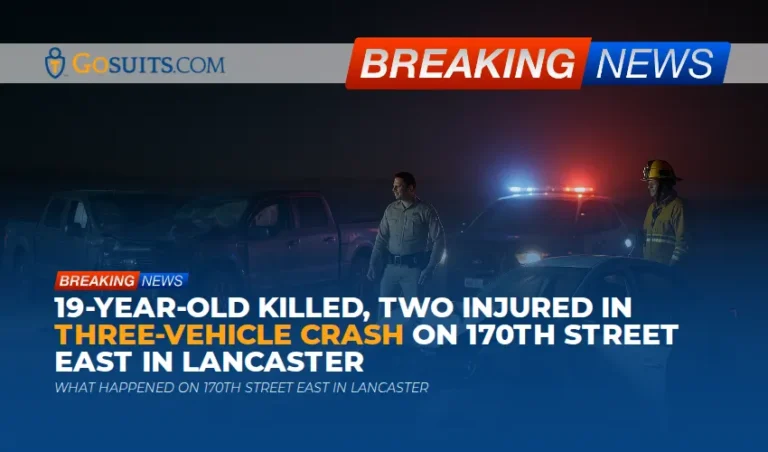
On a December evening in Lancaster, a three-vehicle collision on 170th Street East north of Rawhide Avenue took a young life and seriously injured two others. According to early reports attributed to the California Highway Patrol (CHP), a northbound 2023 Ford drifted into the southbound lanes for reasons not yet known. It struck a 2014 Ford head-on. The force of that impact reportedly ejected the 2014 Ford’s driver. The 2014 Ford then continued out of control and collided with a southbound 2025 Toyota. The driver of the 2014 Ford, a 19-year-old, was pronounced dead at the scene. The drivers of the other vehicles sustained serious injuries and were transported to Antelope Valley Medical Center in Lancaster.
CHP statements indicated that the two surviving motorists were wearing seat belts and that alcohol or drug impairment was not suspected at that time. The person who died had not yet been publicly identified when authorities first released these details. The collision occurred around 6:14 p.m., which in mid-December is fully after dark in the Antelope Valley.
As with any fatal crash, facts can evolve as investigators interview witnesses, document the scene, and analyze the involved vehicles. Families and community members understandably want clarity, and that clarity typically comes from official investigations and the records those agencies produce.
Where the investigation stands and how CHP reconstructs crashes
In Los Angeles County’s unincorporated and rural roadways near Lancaster, fatal crashes are typically led by the CHP. When a collision involves serious injuries or a death, CHP investigators secure the scene, document roadway evidence, and gather physical and electronic data from the vehicles involved. The process can take weeks or months depending on complexity.
What investigators usually examine
- Scene evidence: Skid and yaw marks, gouges, debris fields, final rest positions, and any roadway defects are measured and photographed. Measurements help determine speeds, angles, and timing.
- Vehicle condition: Investigators inspect brakes, tires, lighting, seat belts, airbags, and structural damage patterns. They often download crash data from event data recorders (EDRs), sometimes called “black boxes,” if present.
- Visibility and environment: Darkness at 6 p.m. in December, limited street lighting in rural stretches, potential glare, and weather are documented along with signage and lane markings.
- Witness accounts: Statements from other motorists, nearby residents, and first responders help establish lane position and movements just before impact.
- Driver factors: Though early statements said impairment was not suspected, investigators still examine distraction, fatigue, and potential medical episodes. Cellphone records may be requested in some cases.
Possible follow-up analysis
In certain serious cases, CHP’s Multidisciplinary Accident Investigation Team (MAIT) may assist with advanced reconstruction. Their work can include scene mapping, time-distance analyses, and component failure reviews. Even without MAIT involvement, the primary area office compiles findings into a formal collision report, addenda, and diagrams.
Local roadway and community context in Lancaster’s Eastside
Residents know that 170th Street East is a long, straight corridor with rural characteristics, especially north of Rawhide Avenue. There are stretches with minimal street lighting, wide open desert shoulders, and higher operating speeds. The Antelope Valley’s winter evenings get dark early, and headlight glare against a black horizon can make lane discipline and depth perception more challenging.
Traffic volume fluctuates with commuting patterns between eastern Lancaster neighborhoods and agricultural or residential properties farther out. On weeknights, you’ll see a mix of pickups, SUVs, and compact cars moving between Lake Los Angeles, Sun Village, and the eastern edges of Lancaster. Sudden crossovers into opposing lanes, even for a moment, can be catastrophic when vehicles are traveling at or above posted limits on undivided two-lane roads.
Those who drive this corridor also appreciate how winds can kick up dust in the evening, and how nighttime diminishes the contrast of lane lines on older pavement. None of that explains this particular crash by itself, but it’s part of the conditions investigators consider when they analyze rural roadway collisions in the Antelope Valley.

What families can do in the first days
In the wake of a fatal or serious-injury crash, the first days are overwhelming. There are practical steps that can help protect rights, locate key information, and reduce the risk of avoidable complications.
- Identify the investigating agency: For a crash on 170th Street East north of Rawhide Avenue, the California Highway Patrol’s Antelope Valley Area typically has jurisdiction. The local CHP office directory is available at chp.ca.gov/find-an-office. Ask for the incident date, time, location, and any report or file number.
- Confirm medical treatment locations: The injured motorists in this crash were transported to Antelope Valley Medical Center in Lancaster. Hospitals maintain records that may later be relevant to insurance claims.
- Connect with the Los Angeles County Medical Examiner-Coroner: For deaths occurring in Lancaster, the Los Angeles County Medical Examiner-Coroner manages identification, autopsy, and cause-of-death determinations. Their site explains how next of kin can request information and records: me.lacounty.gov.
- Request certified copies of the death certificate: In Los Angeles County, certified death certificates are issued by the Registrar-Recorder/County Clerk. Information on obtaining vital records is available at lavote.gov.
- Avoid recorded statements to insurers before legal guidance: Insurance adjusters may call quickly. Consider speaking with a seasoned personal injury attorney first, so you understand your rights and the effect your words may have on liability and damages. What’s said early can be used later.
- Preserve personal and vehicle evidence: Save photos, dashcam files, clothing, and personal items from the scene. If the vehicle is at a tow yard, note its location and ask that it not be crushed or altered until inspections and downloads are complete.
How to obtain official reports and records
CHP traffic collision report
The CHP collision report is the backbone of many civil claims. It includes a narrative, diagram, involved parties, insurance data, and preliminary findings. In most fatal or serious injury cases, only authorized requestors can obtain the full report.
- How to request: Contact the CHP Antelope Valley Area office and ask about requesting the report for the incident on 170th Street East. The CHP provides information on obtaining reports and office locations at chp.ca.gov/find-an-office. Request forms and identification may be required.
- Who can request: Typically involved parties, their legal representatives, and certain family members of the decedent may request the report. Toward the end of the investigation, supplemental pages and diagrams can be added, so check back for updates.
Medical Examiner-Coroner records
For the decedent, the Los Angeles County Medical Examiner-Coroner may perform an examination and produce a cause and manner of death. Next of kin can request reports and inquire about timelines using the instructions at me.lacounty.gov. In some cases, toxicology results take additional time. The coroner can also explain the process for personal property release.
Death certificates
Certified death certificates are often required for insurance claims, probate, and other lawful uses. In Los Angeles County, visit the Registrar-Recorder/County Clerk at lavote.gov for procedures, eligibility, and fees.
Public records and dispatch logs
California’s Public Records Act provides a pathway to certain records, though traffic collision reports and some investigative materials have restrictions. Families can inquire with the CHP about what ancillary records may be available, such as 911 audio or CAD logs, and the process to request them through the appropriate channels.
Legal rights after a fatal or serious-injury crash in California
When a driver drifts into oncoming lanes and triggers a chain collision, civil liability often turns on whether a reasonable driver would have remained in their lane under the circumstances. California applies a basic duty of ordinary care to all motorists, and claims typically focus on negligence, causation, and damages.
Wrongful death and survival actions
- Wrongful death: Certain family members may have a civil claim for wrongful death. California’s wrongful death statute identifies who can bring such a claim. See Code of Civil Procedure section 377.60 at leginfo.legislature.ca.gov.
- Survival action: The decedent’s estate may have a separate “survival” claim for losses the person sustained between injury and death. See Code of Civil Procedure section 377.30 at leginfo.legislature.ca.gov.
- Time limits: Many California personal injury and wrongful death claims must be filed within two years of the injury or death. See Code of Civil Procedure section 335.1 at leginfo.legislature.ca.gov. Different and shorter deadlines can apply if a public entity is involved.
Comparative fault
California uses a comparative fault system. If more than one driver contributed to a crash, responsibility can be allocated among them, and recoverable damages may be reduced accordingly. Insurers routinely examine lane position, speed, visibility, restraint use, and reaction times when arguing comparative fault. These issues are fact-intensive and depend on defensible evidence.
Seat belt law
California Vehicle Code section 27315 requires seat belt use for most occupants. The text of the law is at leginfo.legislature.ca.gov. Insurers may argue that any nonuse contributed to injuries, though each case hinges on medical and biomechanical evidence, not assumptions. The fact that CHP noted the two surviving motorists were belted aligns with well-documented safety benefits, but it doesn’t resolve fault questions on its own.
Insurance issues in a three-vehicle collision
Multi-vehicle collisions bring layered insurance questions, especially when one vehicle crosses into opposing lanes and a second collision follows.
- Primary liability coverage: The insurer for the vehicle that crossed the center line will often be the focus of liability claims. But if fault is disputed or multiple factors contributed, responsibility can be shared.
- Stacked claims and policy limits: When several people are hurt, a single policy’s limits can be quickly exhausted. Multiple claimants may need to coordinate, or litigation may become necessary to determine fair allocation.
- Uninsured/underinsured motorist (UM/UIM): If the at-fault coverage is absent or insufficient, your own UM/UIM policy may apply. UM/UIM can be complex in multi-vehicle scenarios; coverage triggers and offsets depend on policy language.
- Med-Pay and health insurance: Medical payments coverage can help with immediate bills regardless of fault. Health insurers may assert liens for benefits they pay that relate to a civil recovery later.
- Recorded statements and authorizations: Before giving a recorded statement or broad medical authorization to any insurer, consider consulting an attorney. Statements can be used to minimize or dispute claims, and overly broad releases can expose unrelated history.
Evidence to preserve and practical steps
Strong cases rely on early evidence. Even if law enforcement responds thoroughly, civil claims benefit from additional preservation and documentation.
- Vehicles and black-box data: Modern vehicles often store pre-crash speed, brake, throttle, and seat belt status. Ask that all involved vehicles be preserved and that no one clears data or authorizes destruction without inspection.
- Scene documentation: Photographs and videos of the area around 170th Street East and Rawhide Avenue, including lighting conditions at the same time of day, can be valuable. Note any faded lane markings, shoulder conditions, and sight lines.
- Witnesses: Identify neighbors, motorists, or first responders who saw events or the immediate aftermath. Get contact information promptly; memories fade, and people move.
- Medical records: Keep discharge summaries, imaging reports, and follow-up care instructions from Antelope Valley Medical Center and any other provider. Consistent treatment records help establish damages.
- Employment and school records: For injury claims, wage loss and educational impacts may require documentation from employers or schools in Lancaster and the broader Antelope Valley.
- Spoliation notices: In significant cases, formal preservation letters to towing companies, insurers, and storage facilities can help prevent evidence loss.
Safety notes raised by this collision
This tragedy underscores two realities of nighttime rural driving: lane discipline is critical, and seat belts matter.
- Seat belts reduce fatal risk: National Highway Traffic Safety Administration data show seat belts significantly reduce the risk of fatal injury for front-seat passenger car occupants. Learn more at nhtsa.gov/risky-driving/seat-belts.
- Centerline crossings on undivided roads: Federal Highway Administration research has documented that centerline rumble strips and other countermeasures can reduce cross-centerline crashes on two-lane rural roads. See FHWA information at safety.fhwa.dot.gov.
- Winter darkness in the Antelope Valley: In December, twilight ends early. Drivers moving along long, flat stretches of 170th Street East may encounter reduced contrast, oncoming headlight glare, and occasional winds that push light dust across the pavement. These aren’t excuses; they’re reminders to adjust speed and increase following distances.
Safety observations like these don’t decide civil liability, but they can inform both personal choices and community infrastructure planning.

Helpful county and state resources
- California Highway Patrol office directory: Locate the Antelope Valley Area office and confirm report-request procedures at chp.ca.gov/find-an-office.
- Los Angeles County Medical Examiner-Coroner: Information for next of kin, case status, records requests, and bereavement guidance at me.lacounty.gov.
- Los Angeles County Registrar-Recorder/County Clerk: Vital records, including death certificates, at lavote.gov.
- California wrongful death and survival statutes: Code of Civil Procedure sections 377.60 and 377.30.
- California two-year filing period: Code of Civil Procedure section 335.1.
- California seat belt law: Vehicle Code section 27315.
- NHTSA seat belt safety: National overview and data at nhtsa.gov/risky-driving/seat-belts.
- FHWA roadway safety: Rural two-lane centerline rumble strip information at safety.fhwa.dot.gov.
Commentary from Gosuits Lancaster, California Personal Injury Attorney
Our hearts go out to the families and everyone involved in this crash north of Rawhide Avenue. Losing a 19-year-old in a matter of seconds is devastating for a community, and we know many in Lancaster and the greater Antelope Valley are grieving. What follows is shared for educational purposes and general information, to help neighbors understand the civil side of what happens after a serious roadway tragedy.
From the facts released so far, this appears to be a cross-centerline collision on an undivided rural road at night, followed by a secondary impact. Those scenarios often point to lane-departure as the primary event, but root causes can range from distraction or fatigue to roadway conditions. That’s why careful crash reconstruction, EDR downloads, and scene measurements matter. Fault determinations should rest on verifiable evidence, not assumptions.
In our experience, insurance companies and corporate claim units move quickly after high-severity crashes. Adjusters may ask for recorded statements, broad medical authorizations, and early settlements before families have full information. They know how to frame questions that seem harmless but later get used to diminish liability or injury causation. They also know that multiple claimants in a three-vehicle crash can create pressure to split limited policy proceeds. These are sophisticated processes, and most people haven’t encountered them before.
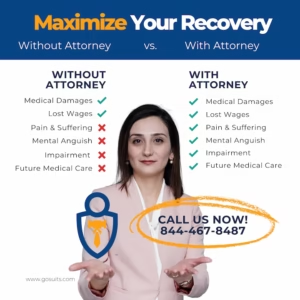
A free consultation with a skilled personal injury attorney can level the playing field. It helps families understand which records to request, how to preserve vehicles and data, what deadlines apply, and how to handle insurer communications. It can also clarify the interplay between wrongful death claims, survival actions, and available insurance coverages like UM/UIM. Even if you decide to handle matters independently, getting grounded advice early can prevent common pitfalls.
Why acting now matters
- Preserve evidence before it disappears: Tow yards, storage facilities, and insurers may move or alter vehicles within days. Request that vehicles not be destroyed or repaired until inspections and downloads are complete. Confirm the storage location and status in writing.
- Request key records promptly: Ask the CHP Antelope Valley Area office for the collision report process and estimated availability. Initiate contact with the Los Angeles County Medical Examiner-Coroner to understand timelines for the examination and how to request final reports. Begin the death certificate request through the Registrar-Recorder/County Clerk.
- Secure witness information: People who saw the crash or stopped to help may not remain easy to find. Document names, phone numbers, and brief recollections while memories are fresh.
- Be cautious with insurance communications: If an adjuster calls, consider consulting an attorney first. What’s said in an early conversation can shape the entire claim. Pending facts and medical findings are seldom complete in the first days.
- Calendar crucial deadlines: California civil claims are governed by statutes of limitation, and special, shorter deadlines can apply in some circumstances. Start a central file with dates, agency contact names, and copies of all correspondence.
- Organize medical and cost documentation: Keep all hospital discharge papers, imaging results, prescriptions, and receipts. These records substantiate the nature and extent of injuries, treatment needs, and out-of-pocket costs.
- Consider a no-cost legal consultation: An early conversation with a seasoned injury attorney can clarify insurance coverage, help avoid missteps, and bring order to a stressful process. It’s a practical step toward informed decision-making.