- What we know about the Highway 111 crash near the Elephant Car Wash sign
- Where it happened and why this corner matters in Rancho Mirage
- Law enforcement response and what an ongoing investigation typically includes
- How to obtain official records: police report, coroner and autopsy information
- Evidence to preserve around Highway 111 and Indian Trail
- Key safety factors often reviewed in single-vehicle fatal crashes
- Legal pathways sometimes relevant in a single-vehicle fatality
- Insurance layers that may apply and common claim pitfalls
- A practical timeline for the next 7 to 14 days
- Why acting promptly matters
- Commentary from Gosuits Rancho Mirage, California Personal Injury Attorney
- References
What we know about the Highway 111 crash near the Elephant Car Wash sign
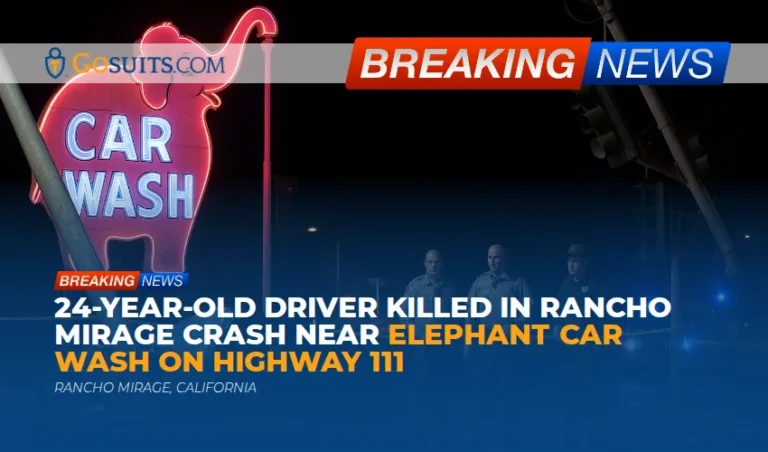
Shortly after 2 a.m. on Thursday, April 28, deputies with the Riverside County Sheriff’s Department responded to a single-vehicle collision at Highway 111 and Indian Trail in Rancho Mirage. According to the sheriff’s news release summarized in local reporting, responding personnel found a car that had struck a light pole, causing damage in the vicinity of the historic pink Elephant Car Wash sign. The driver, a 24-year-old from San Pedro, was the sole occupant and was pronounced deceased at the scene. The Riverside County Coroner’s Bureau later identified him, and a full investigation into the cause of the collision remains ongoing.
Work crews were seen at the intersection repairing the traffic signal infrastructure. At least some cosmetic damage to the sign was noted, although the pole appeared to bear the brunt of the impact. The Elephant Car Wash sign is a beloved local landmark that dates back to 1966, and in 2023 it was designated a historic resource by the City of Rancho Mirage, a status that requires any alterations to undergo heightened review by the city.
Where it happened and why this corner matters in Rancho Mirage
This crash occurred at Highway 111 and Indian Trail, a corridor many Coachella Valley residents know well. Highway 111 threads through Rancho Mirage past The River shopping and dining center and the Eisenhower Health campus, linking Palm Springs to Palm Desert and Indian Wells. Even during the late night and pre-dawn hours, the long, straight stretches can invite faster driving than is safe. Lighting, lane visibility, and traffic signal timing can also change the feel of the road at night compared to daytime. Locals will recognize that the stretch near the Rancho Super Car Wash pink elephant is a visual anchor on the drive through central Rancho Mirage.
Law enforcement response and what an ongoing investigation typically includes
The Riverside County Sheriff’s Department handles primary law enforcement for Rancho Mirage. When a fatal collision occurs, deputies typically secure the scene, assist any surviving occupants or bystanders, and begin preliminary documentation. Collision reconstruction may involve measuring skid or yaw marks, examining the vehicle’s final rest position, reviewing traffic signal phasing and maintenance records, and identifying potential witnesses or nearby cameras. If impairment or medical issues are suspected, toxicology and autopsy work proceeds through the Coroner’s Bureau. A final report can take weeks or months, depending on lab timelines and the complexity of reconstruction.
While Highway 111 is a state route, day-to-day policing within Rancho Mirage falls to the Sheriff’s Department. If state-level resources are needed, California Highway Patrol can provide specialized collision investigation support. In a case like this, the investigation can also extend to traffic-signal data, roadway maintenance logs, and nearby surveillance video that may help clarify speed, path of travel, or sudden evasive actions immediately before impact.
How to obtain official records: police report, coroner and autopsy information
Families seeking answers often need several different records. In Riverside County, these are the main points of contact:
Riverside County Sheriff’s Department incident report
The Sheriff’s Department publishes guidance on requesting incident and collision reports. Eligible requesters typically include involved parties or next of kin. To learn how to request a report, consult the Sheriff’s official “Request an Incident Report” resource [2]. Response times can vary depending on whether the investigation remains open. If a criminal component is suspected or if reconstruction analysis is still underway, some portions may be redacted until the case is closed.

Riverside County Coroner’s Bureau
The Coroner’s Bureau is responsible for identification and determining cause and manner of death. Next of kin can usually request a copy of the autopsy report when it becomes available. The Bureau outlines services, processes, and contact information on its website [1]. Keep in mind that toxicology results can extend timelines. Families may also wish to request the death certificate through the county’s vital records process after the coroner completes the case.
California Highway Patrol collision report, when applicable
If CHP responded or assisted due to the state route location, collision report requests are processed through CHP’s established channels. Information about requesting a CHP collision report is available from CHP [8]. If you are unsure whether CHP or the Sheriff’s Department is the custodian, start by asking the Sheriff’s Records Unit listed in the county resource in [2].
California DMV accident reporting
California law requires parties to report certain collisions to the DMV using the SR-1 form, usually when there is injury, death, or property damage of 1,000 dollars or more. The DMV’s SR-1 resource explains who must file and how [9]. If you are a family member handling affairs for a deceased driver, speak with legal counsel about whether and how this reporting requirement applies to the estate.
Evidence to preserve around Highway 111 and Indian Trail
Even with a single-vehicle crash, crucial evidence can exist beyond what appears at first glance. Early preservation can make later analysis far more reliable:
- Vehicle data and components. Modern vehicles typically store event data recorder information such as speed, braking, and seatbelt status moments before impact. Retrieval can be time-sensitive and may require specialized tools. Retain the vehicle in its post-crash condition if possible until data and component inspections are complete.
- Traffic signal and roadway records. Intersection signal timing sheets, detector logs, maintenance records, and any recent construction or lane-closure logs can be relevant. On a state route such as Highway 111, these records may involve coordination with local agencies and Caltrans.
- Cameras near the scene. Businesses along Highway 111, the car wash area, and nearby plazas sometimes maintain exterior cameras. Traffic cameras or neighboring property surveillance might capture the approach, lane positioning, or an evasive maneuver. Consider prompt requests for preservation. For a focused walk-through on this topic, see Request CCTV footage after a California car accident.
- Witness statements. Early contact with individuals who heard or saw the crash can help clarify timing, sounds associated with acceleration or braking, and whether any other vehicle or object was involved before impact.
- Scene documentation. Photos or video of the resting position, roadway markings, vehicle damage patterns, debris fields, and lighting conditions are all helpful. Changes may occur quickly after crews repair signals or clean debris, so timeliness matters.
If a roadway defect or maintenance issue is suspected, California has strict and short timelines for presenting claims to public entities. The state’s Government Claims Program outlines the administrative process that usually must precede any lawsuit against a state agency [7]. This is a technical area. Document what you can, but consult counsel promptly to avoid missing deadlines.
Key safety factors often reviewed in single-vehicle fatal crashes
It is natural to ask how a well-known intersection could be the site of a deadly crash. Investigations commonly examine several evidence-based risk factors:
- Speeding risk. NHTSA cites speeding as a persistent factor in fatal crashes nationwide, increasing both crash likelihood and injury severity. Speed reduces a driver’s available reaction time and lengthens stopping distance, especially at night when sight distance is limited [4].
- Nighttime conditions. The relationship between low light, visual contrast, and driver perception is a recurring theme in safety literature. National data show elevated fatal crash risk during night hours overall. The 2022 national overview provides context for fatality trends and risk patterns by crash type and timing [3].
- Roadway design and condition. Investigators may assess lighting levels, sign and signal visibility, lane striping reflectivity, and any unexpected surface irregularities. At an intersection with a historic sign and a light pole, line-of-sight and fixed-object placement can be part of the evaluation.
- Driver impairment or fatigue. Toxicology testing is routine in fatal collisions. Fatigue in the early morning hours can mimic impairment in its effect on reaction time and attention.
- Vehicle factors. Tire integrity, brake condition, steering components, and potential electronic system failures are reviewed where appropriate.
Because the Sheriff’s Department has indicated the investigation is ongoing, the precise combination of factors in this case has not been publicly established. The points above reflect the types of issues crash investigators commonly examine across similar incidents.
Legal pathways sometimes relevant in a single-vehicle fatality
A single-vehicle crash does not always mean there are no civil claims to consider. Depending on evidence, one or more of the following scenarios can come into play:
- Product defect claims. If a critical component failed without misuse or improper maintenance, a product-liability theory could be evaluated. This may involve component testing and expert inspection.
- Roadway design or maintenance issues. In rare circumstances, a dangerous condition on public property may contribute to a crash. California’s Government Code and claims procedures impose strict notice and timing rules when alleged negligence involves a public entity. Early legal analysis is important to preserve rights in this setting.
- Phantom vehicle or no-contact scenarios. Sometimes a driver swerves to avoid another vehicle that leaves the scene. Uninsured or underinsured motorist coverage can be relevant if a phantom vehicle contributed to the loss. Independent witness statements or video can be decisive.
- Negligent entrustment or third-party responsibility. If the vehicle was borrowed or if an employer relationship existed at the time of the trip, other liability theories might be reviewed based on the facts.
California recognizes both wrongful death and survival actions. A wrongful death case belongs to certain surviving family members listed by statute and is focused on their losses [5]. A survival action is brought by the decedent’s personal representative or successor in interest and concerns claims the decedent could have brought had they lived, including some categories of economic damages accrued before death [6]. Whether either type of claim applies turns on evidence of another party’s legal responsibility. Nothing in this article should be taken as advice about any individual matter, and families should seek guidance specific to their circumstances.
More broadly, personal injury lawyers can help coordinate evidence preservation, interface with insurers, and guide families through complex decision points without pressuring them. In cases connected to Southern California, including the Coachella Valley, our Los Angeles office resources can help with public-record requests and coordination with regional agencies. If you need a starting point for orientation on firm capabilities, you can review our Los Angeles personal injury team.

Insurance layers that may apply and common claim pitfalls
Even in a single-vehicle crash, it is worth identifying all potential policies and benefits. These may include:
- Auto liability and first-party coverages. The decedent’s own policy can include medical payments coverage or death benefits. If a phantom vehicle contributed, uninsured or underinsured motorist coverage could become relevant. Policy language and notice requirements matter.
- Life and accidental death benefits. Employer-provided or private policies sometimes include accidental death riders with separate claims procedures.
- Property and subrogation aspects. A damaged light pole or sign can trigger property damage subrogation claims. Where a public entity’s property is involved, agency-to-insurer coordination typically follows established procedures.
Be careful about early telephone statements to any insurance company. Adjusters are trained to lock down facts quickly. What is said in the first days after a loss can be used later to narrow or contest a claim. Before contacting any insurer, it is prudent to consult an attorney to understand your rights and obligations. A brief conversation can help you avoid common traps like recorded statements without full information or signing releases prematurely.
A practical timeline for the next 7 to 14 days
Days 1 to 3
- Secure documents and property. Locate the auto insurance policy, registration, and any life or group benefits summaries. Ask the tow yard to preserve the vehicle intact. If a claims number is assigned, note it, but consider pausing substantive conversations until you have counsel.
- Identify custodians of records. Confirm whether the Riverside County Sheriff’s Department or CHP is the primary custodian for the collision report, then note the request steps in [2] and, if applicable, [8].
- Make time-stamped requests for video preservation. Contact nearby businesses along Highway 111 and Indian Trail to request they preserve any footage from the early morning time window of the crash. Many systems overwrite within days.
Days 4 to 7
- Coordinate with the Coroner’s Bureau. If you are next of kin, review the Coroner’s information in [1] for how to request available documents and understand timelines for autopsy and toxicology.
- Begin an evidence log. Maintain a folder that tracks who was contacted, on what date, and what was requested. Save screenshots of any public posts that reference the collision, including weather conditions or traffic light issues observed that night.
- Consult with counsel before claims calls. Prior to speaking with an insurer, get a free consultation to understand which coverages may apply and what to avoid saying. Remember that offhand remarks can be quoted later, even if they were made in shock.
Days 8 to 14
- Evaluate additional records. If roadway condition or maintenance is in question, note that California public-entity claims can have short deadlines. The Government Claims Program details this process in [7]. Keep copies of any claim notices you submit and proof of delivery.
- Track agency updates. Follow up weekly on pending records requests to the Sheriff’s Department or CHP so that nothing stalls. Agencies can be backlogged, and polite persistence helps.
- Consider broader support. Managing notifications to employers, schools, lenders, and utilities can be overwhelming. A checklist and a single point of contact in the family can prevent miscommunications and missed deadlines.
Why acting promptly matters
Several critical elements of a fatal-collision inquiry are time sensitive. Video systems overwrite quickly. Event data recorders can be lost if a vehicle is released to a salvage yard. Traffic-signal logs and detector data may cycle. Public-entity claim deadlines approach sooner than many expect. Taking action now preserves options later, even if you choose not to make any claim. Those steps can include preserving the vehicle, making targeted preservation requests to nearby businesses, and submitting appropriately framed public-records requests.
Another reason to move quickly is clarity. Memory fades and witnesses can be harder to find with each passing day. Early organization allows any future insurance conversation to be grounded in records rather than recollections alone. Lastly, engaging an attorney for an initial consult helps ensure communications with insurance carriers do not unintentionally limit possible recoveries. Anything said to an insurer can be used later in the claim file.
Commentary from Gosuits Rancho Mirage, California Personal Injury Attorney
Our hearts are with everyone who loved the young driver who lost his life near the Elephant Car Wash sign. This article is intended for general information and community awareness. It does not replace a conversation tailored to a family’s specific situation.
From a civil standpoint, single-vehicle fatalities deserve the same careful review as multi-car crashes. Investigators typically examine speed, lighting, roadway elements, signal function, and possible steering or braking issues. On Highway 111, where many of us have driven countless times, it is important to evaluate whether anything unusual on the roadway or at the intersection played a role, alongside human and mechanical factors.
Insurance companies and large corporations know that families in shock may not be familiar with coverage layers, recorded statements, or strict government-claim timelines. Claims handlers often move fast to capture statements and collect authorizations that can later be used to limit or deny parts of a claim. Getting a free consultation before speaking with adjusters can help you understand which questions to answer, which documents to sign, and how to avoid missing short deadlines that can affect rights under California law.
Local legal and practical context for our community
For residents across the Coachella Valley, it is natural to anchor our understanding of safety around familiar landmarks like the pink elephant on Highway 111. But the risk picture shifts in the overnight hours. National data show persistent dangers associated with speed and nighttime driving [3] [4]. Where an intersection includes fixed objects such as poles and historic signage, collision energy can be catastrophic even at speeds that may feel ordinary on a wide, straight corridor.
If you are considering how to approach the days ahead, it is reasonable to focus on a few pillars: documentation, preservation, and informed communication. The combination of car accident lawyers and proven investigators can help families identify and secure evidence early. When a loss is fatal, a wrongful death claim or a survival action may be worth discussing with counsel to understand whether the facts support those routes under California law [5] [6].
The phrase personal injury lawyers appears often online, but for a local event like this, proximity matters. Teams familiar with Riverside County recordkeeping, Coroner processes, and Highway 111’s regional role are positioned to move quickly on preservation requests, while also acknowledging the human toll. For some families in Southern California, Los Angeles car accident lawyers can provide that combination of resources and local focus on a timeline that respects both grief and the need to act.
As the weeks unfold, an attorney can also help triage insurance communications. Before any substantive statements to carriers, consider pausing to understand your rights. What you say can become part of the permanent claim file and may be used against you later.

How this connects to rights and resources in California
California’s legal framework provides avenues for families to seek accountability when evidence shows another party’s responsibility. That can mean examining a wrongful death claim or a survival action under Code of Civil Procedure sections 377.60 and 377.30, as well as exploring product liability or, in rare cases, claims tied to a public entity when a dangerous roadway condition is credibly alleged [5] [6] [7]. Each path carries different standards and deadlines, so it is wise to map out options sooner rather than later.
Finally, be mindful that serious-loss claims involve detailed evidence work. This often includes data retrieval, scene analysis, and video collection. To get oriented about video specifically, the guide linked above on how to Request CCTV footage after a California car accident explains time windows and phrasing that increases the chance of preserving usable footage.
Internal navigation and keyword context
For readers searching broadly about legal help, terms like personal injury lawyers, car accident lawyers, and wrongful death claim are common search phrases. In a Southern California context, people also search for Los Angeles personal injury lawyers, Los Angeles car accident lawyers, and a wrongful death claim in Los Angeles. The purpose of referencing those phrases here is to help community members locate in-depth guides and pages that answer practical questions about investigations, insurance, and civil claims after a serious or fatal crash.
References
- Coroner Bureau Information – Riverside County Sheriff’s Office
- Request an Incident Report – Riverside County Sheriff’s Office
- Traffic Safety Facts 2022 Overview – NHTSA
- Speeding: National Overview and Safety Risks – NHTSA
- California Code of Civil Procedure § 377.60 – Wrongful Death
- California Code of Civil Procedure § 377.30 – Survival Actions
- Government Claims Program – California Department of General Services
- Collision Report Request – California Highway Patrol
- Report of Traffic Accident Occurring in California (SR-1) – California DMV