





































Where do our Dallas car accident lawyers serve across DFW and North Texas?
We help crash victims across Dallas County and the surrounding region. Whether your collision happened on Central Expressway, I‑30 through downtown, or the Dallas North Tollway in Addison, we bring local insight and a responsive approach to every matter. We serve Dallas, Fort Worth, Arlington, Plano, Frisco, McKinney, Irving, Grand Prairie, Richardson, Garland, Mesquite, Denton, Lewisville, Allen, Carrollton, Coppell, Farmers Branch, Grapevine, Southlake, Flower Mound, Mansfield, Rockwall, Rowlett, DeSoto, Lancaster, Cedar Hill, and many more North Texas communities.
What types of Dallas car accident cases do we handle most often?
Every crash is unique, but certain patterns are common on DFW roads. We routinely handle:
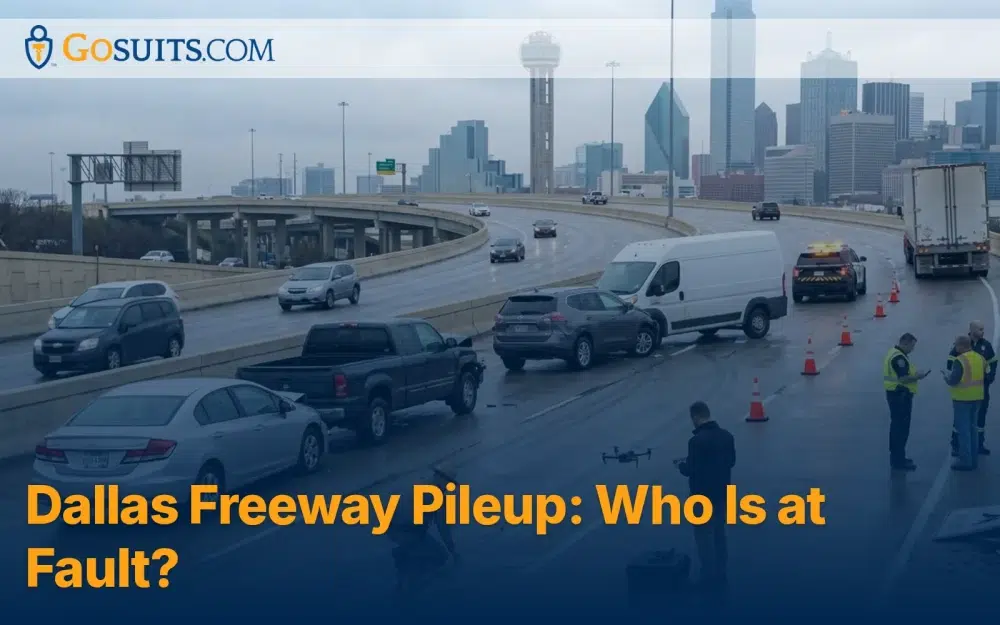
- Rear-end and chain-reaction collisions during rush hour on I‑635 and I‑35E
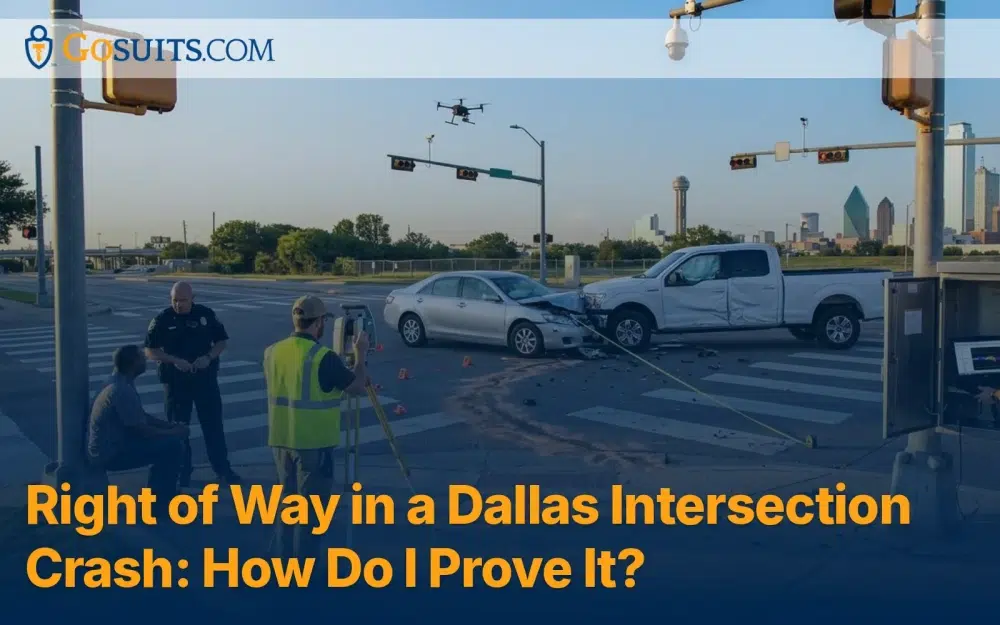
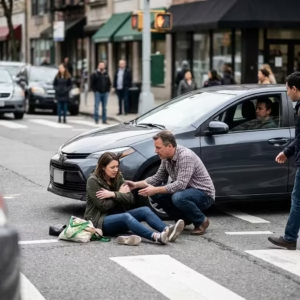
- T-bone and intersection crashes on surface streets like Skillman, Buckner, and Greenville
- Lane-change and sideswipe wrecks on US‑75 and the President George Bush Turnpike
- Head-on and wrong-way incidents on divided highways
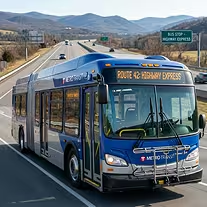
- Crashes involving commercial trucks, delivery vans, and buses
- Rideshare incidents involving Uber and Lyft
- Uninsured and underinsured motorist claims
- Hit-and-run accidents and phantom-vehicle claims
- Serious injury pedestrian and bicycle collisions involving motor vehicles
We coordinate medical records, engage appropriate experts, and focus on total losses that matter to you, including medical care, lost income, and quality-of-life impacts.
What do recent Texas crash statistics tell us about risk in Dallas?
Traffic volumes and complex interchanges create elevated risk across the Metroplex. Statewide data confirm the stakes:
- In 2025, 3,769 people were killed in Texas traffic crashes, one death every 2 hours and 19 minutes (Source: Texas Department of Transportation, 2025 Crash Facts).
- There was one reportable crash every 59 seconds and one person injured every 2 minutes and 9 seconds in 2025 (Source: Texas Department of Transportation, 2025 Crash Facts).
In 2025, Dallas County recorded 43,946 reportable traffic crashes, in which 274 people were killed and 1,664 people suffered suspected serious injuries, according to Texas Department of Transportation (TxDOT) crash report data as of April 7, 2026. Dallas County consistently reports a high number of collisions due to commuter patterns on I‑35E, I‑30, I‑20, US‑75, Loop 12, and the High Five interchange. These figures underscore why timely legal guidance and evidence preservation matter after any Dallas crash.
How does Texas comparative fault affect your Dallas car accident claim?
Texas uses proportionate responsibility, which can reduce your recovery if you are partly at fault. You cannot recover damages if you are more than 50 percent responsible for the crash (Tex. Civ. Prac. & Rem. Code § 33.001). If you are 20 percent at fault, your award is reduced by 20 percent. This makes early evidence gathering essential, including scene photos, dashcam footage, and witness statements that help fairly assign fault.
What deadlines apply to Dallas car accident lawsuits and insurance claims?
Most Texas personal injury claims arising from motor vehicle accidents must be filed within two years of the date of the crash (Tex. Civ. Prac. & Rem. Code § 16.003). Claims involving a governmental unit, such as a city vehicle or a condition of a public roadway, carry strict notice requirements that may be as short as six months under the Texas Tort Claims Act, with some local charters imposing even shorter deadlines (Tex. Civ. Prac. & Rem. Code § 101.101). Act promptly to protect your rights.
What damages are available in a Dallas car accident case under Texas law?
Your claim may include economic damages for medical bills, lost income, diminished earning capacity, rehabilitative care, and property loss, as well as noneconomic damages for pain, mental anguish, and loss of enjoyment of life. While Texas generally has no cap on noneconomic damages for standard auto injury claims, exemplary damages are limited by statute in most cases (Tex. Civ. Prac. & Rem. Code § 41.008). Claims against governmental units have statutory caps (Tex. Civ. Prac. & Rem. Code § 101.023).
What insurance rules matter most for Dallas drivers after a crash?
Texas is an at-fault state. Drivers must carry minimum liability coverage of 30,000 per person for bodily injury, 60,000 per accident for bodily injury, and 25,000 for property damage, commonly referred to as 30/60/25 (Tex. Transp. Code § 601.072). Many claims also involve uninsured or underinsured motorist coverage, personal injury protection, or medical payments. Rideshare incidents trigger specialized policies when the app is on or a trip is in progress under Texas law governing transportation network companies.
How do truck, commercial vehicle, and rideshare crashes differ in Dallas?
Truck and commercial vehicle cases often involve federal safety rules, driver qualifications, hours-of-service logs, maintenance records, and electronic control module data. Evidence can be time sensitive, so we send preservation notices and coordinate expert review of black box data. Rideshare claims may involve multiple insurers and coverage periods that depend on app status. Our approach is to map all potential coverage, identify responsible parties, and move quickly to secure records needed to build a strong civil claim.
What should you do immediately after a Dallas car crash?
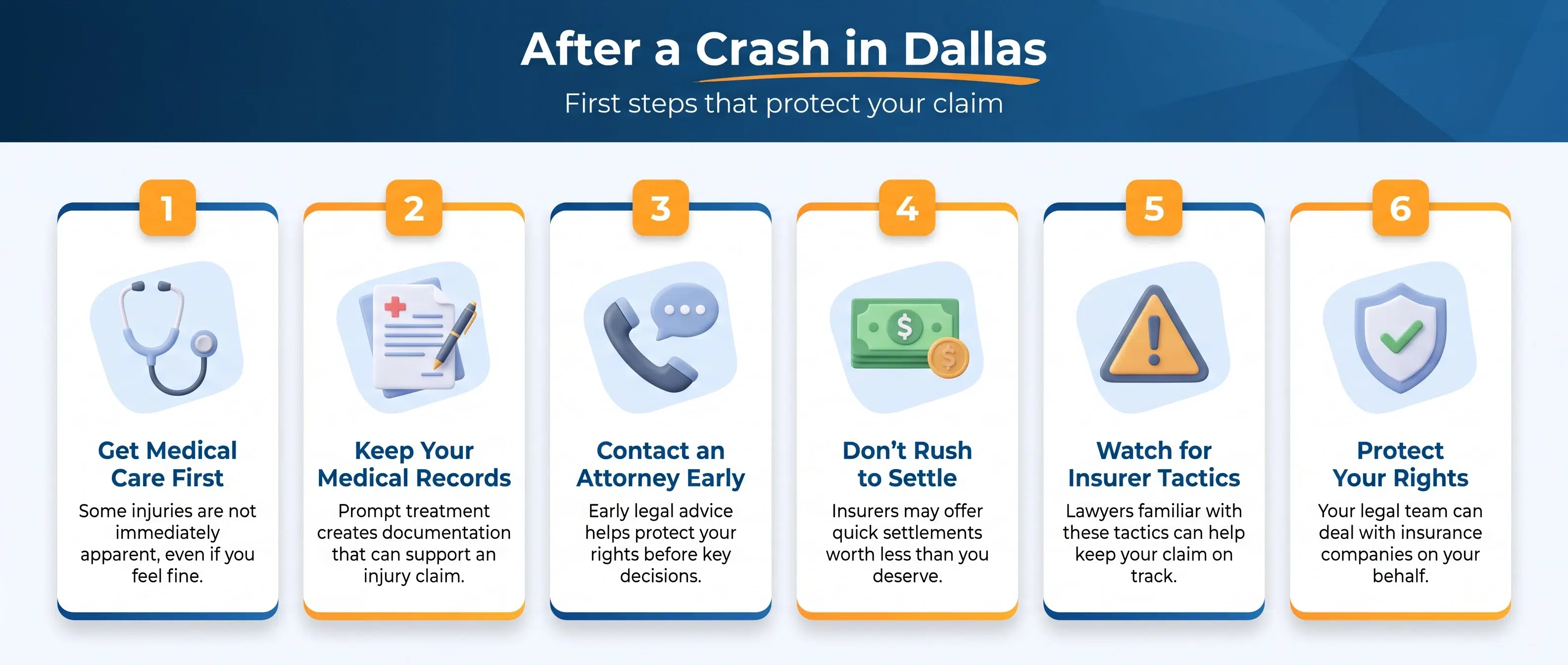
Your health and safety come first. Move to a safe location if possible and call 911 to request medical assistance and police response. Exchange information, take photos or video, and look for cameras at nearby businesses or homes. Seek medical evaluation even if injuries seem minor. Avoid detailed discussions with any insurance adjuster before you have legal guidance. Keep receipts, repair estimates, and medical bills organized. These steps help protect your claim from the outset.
How is evidence gathered and preserved for a Dallas injury claim?
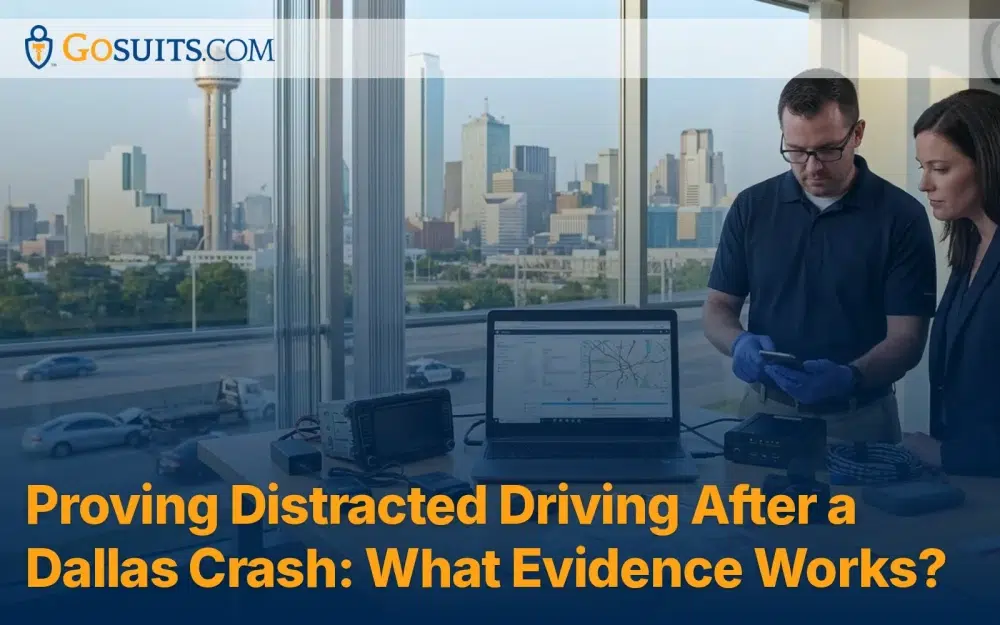
We start with police crash reports, scene photos, vehicle damage assessments, and medical records. We contact witnesses, retrieve 911 audio, and request traffic or business camera footage when available. In serious collisions, we may retain accident reconstruction and human factors experts, review phone records where relevant, and obtain vehicle EDR data. For trucking matters, we pursue driver logs, dispatch data, maintenance files, and compliance materials. The goal is to develop a clear and documented record of what happened and why.
How do medical documentation and treatment impact your case value?
Consistent medical care provides a trustworthy record of your injuries and recovery. We coordinate with treating providers to collect imaging, specialist evaluations, therapy notes, and recommendations for future care. This documentation supports damages for current treatment and projected needs, including surgery, injections, assistive devices, and vocational impacts. We also assess how your injuries affect your day-to-day life, which informs noneconomic damages for pain and limitations.
How are lost wages and long-term earning capacity evaluated?
Lost income includes time missed from work, reduced hours, or the need to transition to lighter duty. For long-term consequences, we work with vocational and economic professionals to analyze your job duties, transferable skills, and the labor market. We then quantify diminished earning capacity based on age, education, and medical limitations. This detailed assessment helps insurers and, if necessary, a jury understand the true financial consequences of the crash.
How do settlement negotiations typically unfold in a Dallas auto claim?
Once your injuries are stable or a reliable treatment plan is in place, we prepare a settlement demand that details liability, injuries, medical costs, lost income, and other harms. We include evidence summaries and expert opinions where appropriate. Adjusters often test low offers first. We respond with facts, law, and a clear accounting of damages. If talks stall, we discuss filing suit in Dallas County or the appropriate North Texas venue to leverage formal discovery and deadlines.
When is filing a lawsuit necessary for a Dallas car accident?
We consider suit when an insurer disputes liability, undervalues injuries, or delays unreasonably. Filing in Dallas County, Collin County, Tarrant County, Denton County, or another proper venue opens tools such as interrogatories, requests for production, depositions, and expert discovery. Litigation can also position the case for mediation or trial. Throughout, we keep you informed and involved in key strategic decisions.
What courtroom path might a Dallas car accident case take?
Litigation often proceeds through discovery, motion practice, mediation, and trial if needed. At trial, we present evidence through your testimony, treating providers, and experts in areas such as crash reconstruction and life care planning. We use visuals and timelines to explain complex issues clearly. Juries in Dallas County and across North Texas evaluate credibility and documentation carefully, which is why thorough preparation matters.
How GoSuits Dallas Car Accident Lawyers Can Help You
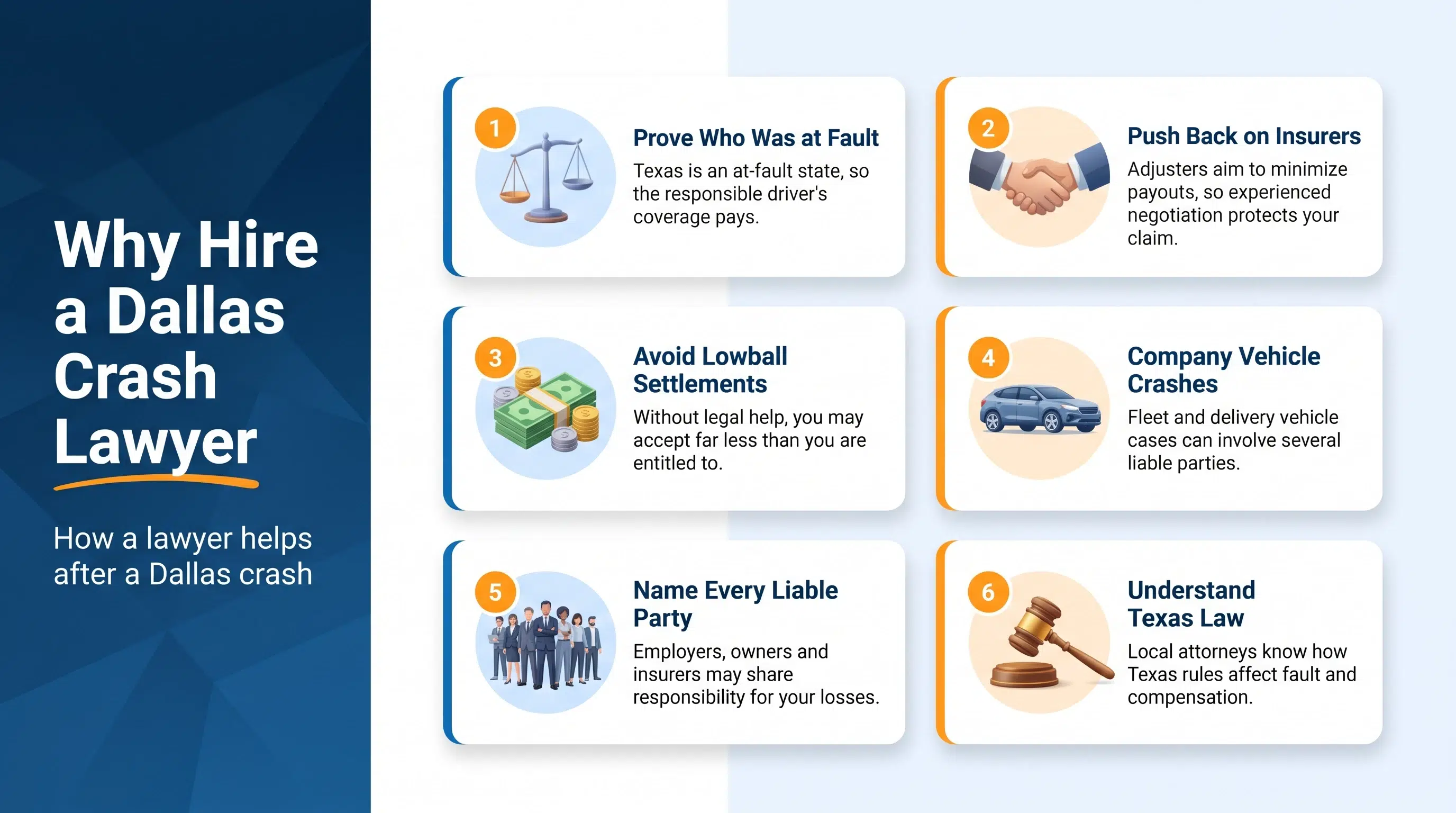
From your first call, we work to stabilize the situation and protect your rights. We gather evidence, manage communications with insurers, and help coordinate care so nothing important is missed. Our team draws on 30+ years of combined experience and more than 1,000 litigated cases to anticipate obstacles and keep your claim on track. Recognitions from organizations such as TopVerdict, National Trial Lawyers, Super Lawyers, and Best Lawyers reflect our ongoing commitment to professional excellence.
We use proprietary legal case software to streamline tasks, track deadlines, and give you visibility into your file. You receive regular updates and direct access to your attorney. We work on a contingency fee, and you owe no attorney’s fee unless we win. There are no hidden fees. We are available 24/7, with Spanish and Farsi support, because accidents do not follow a schedule. Our goal is to combine compassionate client service with meticulous case preparation for every Dallas crash victim we represent.
What local roads and conditions often factor into Dallas car crashes?
Collisions frequently occur at high-volume interchanges and corridors such as the High Five at US‑75 and I‑635, the Mixmaster downtown, and stretches of I‑35E, I‑30, I‑20, and Loop 12. Weather events, lane shifts due to construction, short merge zones, and heavy truck traffic can contribute to risk. We account for road design, signage, and traffic control devices, as well as maintenance and visibility, when evaluating how a crash occurred and who may be responsible.
What special issues arise in drunk, distracted, and hit-and-run crashes?
Impaired and distracted driving cases may involve punitive damages where the facts warrant and the law permits. We pursue evidence such as toxicology, cell phone usage, bar receipts, and surveillance. In hit-and-run or phantom-vehicle incidents, uninsured motorist coverage may be critical. Prompt reporting and thorough documentation help preserve those claims. For all cases, we identify every available source of recovery to make your claim as comprehensive as possible.
How do claims against government entities work in Texas motor vehicle cases?
Claims involving governmental units, such as city vehicles or certain roadway conditions, are governed by the Texas Tort Claims Act. Notice must be given within a statutory window, sometimes shorter under local rules, and damages are capped by law (Tex. Civ. Prac. & Rem. Code §§ 101.101, 101.023). We move fast to evaluate potential immunity issues, submit timely notice, and preserve evidence while complying with statutory procedures.
How can you prepare for a free consultation after a Dallas crash?
Bring or send any police report information, photos, medical records, health insurance details, auto policy declarations, repair estimates, and a list of doctors. Write down a timeline of the crash, symptoms, and missed work. Share names of witnesses and any claim numbers. We review these materials with you, answer your questions, and outline next steps tailored to your goals, whether settlement or suit.
Why does choosing focused representation matter for Dallas car crashes?
Car accident cases often turn on nuanced liability questions, insurance interactions, and expert analysis. Ask any prospective lawyer how often they litigate auto claims, their approach to comparative fault, and how they will communicate progress. Ask how they calculate future care and earning losses and how they prepare for mediation or trial. Choosing counsel with a strong auto injury background and transparent communication can help you move forward with confidence.
What community values guide our Dallas practice?
We are active members of professional and local organizations, support nonprofits that serve injured people and families, and take part in events that promote safer streets across North Texas. We believe in practical education, responsive service, and steady advocacy. When you partner with us after a Dallas crash, you receive clear explanations, compassionate counsel, and diligent representation from start to finish.