- What we know about the Highway 99 fatal crash in Fresno
- Where it happened and local context along Highway 99
- How investigators build the record after a fatal freeway crash
- Key California rules about pedestrians and freeways
- Civil liability questions that can arise after a pedestrian death
- Evidence families and witnesses should try to preserve
- How to obtain official records and documents
- Support and practical next steps for families
- Insurance considerations and common pitfalls
- Why timing matters under California law
- Community safety takeaways for Fresno drivers and pedestrians
- Call to Action: Steps the public can take now to protect their rights
- Commentary from Gosuits Fresno, California Personal Injury Attorney
What we know about the Highway 99 fatal crash in Fresno
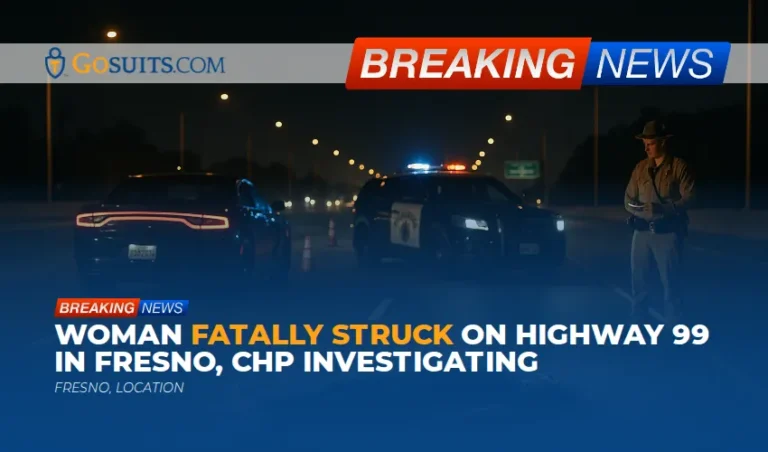
According to initial reports, a woman was struck and killed on southbound Highway 99 in Fresno on Friday night at around 10 p.m. California Highway Patrol officers responded and found the victim in the roadway. Despite life-saving efforts on scene, she was pronounced deceased. Investigators learned that a Dodge Charger was traveling in the far-left lane when the woman entered the roadway and was hit. The driver reportedly cooperated with CHP. It was not known at the time whether alcohol or drugs played any role. Details such as the exact on-ramp or cross street along Highway 99 were not released in the early updates.
When a fatal collision happens on a high-speed corridor like 99, it is common for the scene to be closed or partially closed while officers map the roadway, collect debris, and interview witnesses. Those steps often continue into the night to capture lighting and traffic conditions comparable to the time of the crash.
Where it happened and local context along Highway 99
Highway 99 slices through the heart of Fresno, running close to landmarks many locals know well, including Roeding Park and the Fresno Chaffee Zoo near Belmont Avenue, and passing major interchanges like Jensen Avenue, Ventura Street, and Herndon Avenue. Caltrans District 6 oversees this corridor through Fresno and Tulare Counties. The freeway’s posted speeds and heavy freight traffic mean even brief pedestrian exposure in a travel lane can be life-threatening. Caltrans publishes district information and corridor updates that help the public understand traffic patterns and maintenance activity in this region [5].
For those who travel 99 regularly, the mix of local commuters, intercity drivers, and long-haul trucks can create rapid changes in speed. At night, visibility and glare from oncoming and adjacent lanes complicate driver reaction times, particularly in the far-left lane where there is typically no shoulder to the median.
How investigators build the record after a fatal freeway crash
CHP leads the on-scene investigation for collisions on state freeways, including Highway 99. Officers typically document:
- Roadway evidence such as skid or yaw marks, gouges, debris fields, fluid stains, and final rest positions of involved parties and vehicles.
- Environmental factors including lighting, lane markings, signage, weather, and any nearby obstructions.
- Vehicle inspections for damage profiles and possible mechanical issues. In some cases, officers or later experts download electronic data from the vehicle’s event data recorder if available.
- Witness statements to capture driver, passenger, and bystander accounts while memories are fresh.
Following a fatality, the county coroner or medical examiner will take jurisdiction of the decedent to determine cause and manner of death, perform identification, and coordinate next-of-kin notification consistent with California law [3].
Families can later ask CHP for the official collision report using the standard CHP 190 request form, which is how CHP processes releases of traffic collision records to authorized requesters [1]. The Fresno Area CHP Office page also has location and contact information for in-person or mailed requests [10].
Key California rules about pedestrians and freeways
California law draws a clear line about pedestrians on controlled-access highways. The California Vehicle Code authorizes state and local authorities to restrict or prohibit pedestrians on freeways for safety reasons, and this is the common rule in most freeway segments, including those through urban cores like Fresno [7]. The California Driver Handbook reinforces that pedestrians should not walk or hitchhike on freeways because of the extreme danger presented by high-speed traffic and limited stopping distance [6].
Even with those prohibitions, drivers still have a general duty to use due care, keep a proper lookout, and travel at a speed that is reasonable for conditions. At freeway speeds, however, available time and distance to avoid a person who suddenly appears in the lane can be severely limited. That is a central reason these incidents are so often catastrophic. National data show pedestrian fatalities have remained a serious roadway safety concern in recent years [8].
Civil liability questions that can arise after a pedestrian death
Each case turns on facts, and early headlines rarely tell the full story. In a freeway pedestrian fatality, civil fault analysis may consider:
- Where and how the pedestrian entered the roadway, including whether there was a disabled vehicle, a prior collision, or another emergency that prompted entry into traffic lanes.
- Driver conduct including speed relative to posted limits and conditions, lookout, lane position, reaction time, and impairment.
- Roadway conditions like lighting, sign placement, shoulder width, and any construction-related factors. Maintenance or lighting records can be relevant where visibility is at issue.
- Comparative fault under California’s fault rules, which can allocate percentages of responsibility among multiple parties based on conduct that contributed to the event.
Families sometimes consult fatal accident lawyers to understand how California’s wrongful death and survival laws work in practical terms, what evidence matters most, and what insurance coverages may apply. That conversation typically includes a candid look at comparative fault questions, which often arise in freeway pedestrian cases, and a plan to secure time-sensitive evidence before it is lost.
Evidence families and witnesses should try to preserve
Key proof often disappears quickly after a freeway fatality. Preserving it can make later decisions better informed. Consider the following:
- Dashcam or home/business video. Vehicles traveling through the area may have captured useful footage. Nearby businesses or residences near on-ramps and overpasses sometimes retain short video loops unless specifically preserved. California public agencies may also have traffic cameras for operational use, although release procedures vary.
- 911 audio and dispatch logs. These can help establish timelines and contemporaneous observations.
- Vehicle data and mobile phone records. Event data recorders may contain information about speed and braking. With proper requests, some of this material can be preserved.
- Roadway maintenance and lighting records. Caltrans retains a range of documents that may be requested through the Public Records Act process [9].
For a step-by-step overview that many find clarifying during the first weeks, see what happens if someone is killed in a car accident. While every situation is different, understanding the building blocks of a civil case can help families decide what to do next and when.
How to obtain official records and documents
In the Central Valley, families often need multiple records to understand what happened and to address practical needs like insurance, funeral arrangements, and estate matters. Here are common sources and how to request them:
1. CHP Traffic Collision Report
Authorized requesters can apply for the collision report from the California Highway Patrol using the CHP 190 Application for Release of Information. The form outlines acceptable proof of identity and submission options. This is the standard method to obtain a copy of a CHP collision report statewide [1]. The Fresno Area CHP Office page provides local office information for questions about the process [10].
2. Coroner and autopsy-related documents
In Fresno County, the Sheriff-Coroner has jurisdiction over deaths resulting from external causes such as traffic collisions. The coroner’s work includes identification, cause and manner of death determinations, and retention of related records under California Government Code provisions [3]. Families may contact the county regarding what can be released, when, and to whom.

3. Certified death certificates
To handle estate and benefits matters, certified copies of the death certificate are usually required. In California, certified copies may be requested through county vital records offices or the California Department of Public Health Vital Records program [2].
4. Roadway and work-zone information
Where lighting, signage, or temporary traffic control may be relevant, Caltrans District 6 can be a source of maintenance logs or permit records. Public records requests to Caltrans are processed under the California Public Records Act and can be submitted through the department’s PRA portal [9]. District-level information about the Fresno area corridor is also available [5].
5. Collision data tools
For historical context and mapping, the UC Berkeley SafeTREC Transportation Injury Mapping System provides access to statewide crash data derived from police reports, which can be filtered for local areas including Fresno. This can be helpful for community-level safety understanding and trend analysis [4].
Support and practical next steps for families
Beyond the legal and procedural details are very real human needs. In Fresno, friends and neighbors often step in quickly with meals and childcare. There are also formal supports that can lessen immediate burdens. The California Victim Compensation Board may help eligible families with certain crime-related expenses, including funeral and burial costs under defined criteria. It is worth checking the program details to see if eligibility applies in a specific situation [11].
Funeral homes along the 99 corridor in Fresno often know the timing for when certificates and coroner releases arrive, which can help plan services. Keeping a small notebook or phone note with dates, contacts, and copies of forms can prevent repeated calls and reduce stress.
Insurance considerations and common pitfalls
Even when fault is disputed, there may be overlapping coverages to consider, including the driver’s liability policy, potential uninsured or underinsured motorist coverage in certain scenarios, and limited benefits through other policies. Auto insurance claims in California have consumer protections and guidelines published by the state Department of Insurance that can serve as a neutral reference point for what insurers should do and when [12].
Before speaking with any insurance company about the facts of the incident, it is prudent to consult with an attorney. Statements given early can be recorded and later parsed in ways that affect liability determinations or damage evaluations. Many families speak with fatal accident lawyers to understand their rights and the best order of steps before opening claims or giving statements.
Some families also choose to consult Los Angeles fatal accident lawyers because of resource networks that can reach across counties when expert reconstruction, visibility studies, or broader records work is needed. In any consultation, ask about preservation letters, how to secure dashcam or CCTV footage, and how to obtain official records efficiently.
Why timing matters under California law
California has time limits for civil actions. For many wrongful death claims, the general statute of limitations is two years from the date of death under Code of Civil Procedure section 335.1 [13]. Families considering a claim should be aware of this window.
If a potential claim may involve a public entity, different rules can apply. California’s Government Claims Program sets short administrative claim deadlines, commonly six months for many claims, before a lawsuit can be filed. This is a specialized process with specific forms and delivery requirements, and it can apply in situations where a public entity’s conduct or property is alleged to have contributed to the incident [14]. Because these timelines run quickly, it is important to clarify early whether any public entity is implicated.
Community safety takeaways for Fresno drivers and pedestrians
Highway 99 is not designed for pedestrian travel. Still, emergencies do happen. Fresno-area drivers and residents can consider the following reminders drawn from state guidance and long-standing safety practices:
- Do not walk on freeways except when absolutely unavoidable due to an emergency, and even then, stay as far from live lanes as possible. The California Driver Handbook reinforces that freeways are not a place for pedestrian travel [6].
- If your vehicle becomes disabled, turn on hazard flashers, pull completely to the right shoulder if possible, and call for assistance. Exiting to the passenger side, staying behind a guardrail if present, and keeping lights on can improve conspicuity.
- Drivers in the left lane should remember that sightlines can be shorter in curves and near median barriers at night. Scanning ahead and leaving space can provide precious reaction time.
- If you witness a person in the lanes on 99, call 911. Early notification can allow CHP to slow or divert traffic.
Everyone who uses the corridor between Herndon, Jensen, and the downtown interchanges knows how quickly conditions change at night. A brief moment of distraction or a split-second decision to step into a lane can have irreversible consequences.
Call to Action: Steps the public can take now to protect their rights
Here is what should be done when a fatal freeway crash affects a household or workplace community. These steps help protect dignity, truth, and legal rights:
- Secure official records early. Start the request for the CHP collision report and ask the county about coroner documents and certified death certificates. These items take time to process, and most downstream tasks require them.
- Preserve time-sensitive evidence. Save phone photos, locate possible dashcam footage from known vehicles, and make written requests for nearby business or traffic camera footage. Short retention cycles mean delays can close doors.
- Organize a single point of contact. Choose one trusted person to keep a timeline, file copies, and a call log. This reduces duplication and prevents missed deadlines.
- Consult an attorney before any insurance statement. A confidential consultation clarifies rights and the best sequence for opening claims. What is said to an insurer may later be used to limit or deny recovery.
- Calendar key dates. Note the two-year civil statute reference point and consider whether any public entity notice deadlines could apply. This avoids last-minute rushes that risk incomplete filings.
Acting promptly brings clarity. It also increases the chances that critical evidence and records remain available for a thorough examination of what happened and why.

Commentary from Gosuits Fresno, California Personal Injury Attorney
Our hearts go out to the family and friends of the woman who lost her life on Highway 99. This write-up is meant to provide general information and community context during a difficult moment. It is not a substitute for guidance on any particular case.
Freeway pedestrian fatalities raise hard questions. On a corridor like 99, speeds are high, shoulders are narrow in places, and nighttime visibility is often limited. Investigations look closely at how and why a person came to be in the lane, whether drivers had any meaningful time to react, and whether environmental or roadway factors played a role. Each of those questions matters for both public safety and any civil claim a family may consider.
Insurance companies and large corporations tend to work from playbooks that assume the public does not know the rules of coverage, preservation, or proof. Adjusters may move quickly to take recorded statements, frame events in narrow ways, or push early releases before the full picture is known. That is why it is sensible to understand rights, timelines, and evidentiary needs before speaking on the record.
A free consultation can help people understand what evidence to secure, which agencies to contact first, and how to avoid common missteps that can affect a claim later on. It is a simple step that can level the playing field while the facts are still being gathered and the family is focusing on immediate needs.
References
- CHP 190 Application for Release of Information – California Highway Patrol
- Vital Records – California Department of Public Health
- Government Code § 27491 Coroner’s Duties – California Legislative Information
- Transportation Injury Mapping System (TIMS) – UC Berkeley SafeTREC
- Caltrans District 6 Information – California Department of Transportation
- California Driver Handbook: Pedestrians – California DMV
- Vehicle Code § 21960 Freeways and Expressways Pedestrian Prohibition – California Legislative Information
- Pedestrian Safety Overview – National Highway Traffic Safety Administration
- Public Records Act Requests – California Department of Transportation
- Fresno Area Office – California Highway Patrol
- California Victim Compensation Board – State of California
- Consumer Auto Insurance Guides – California Department of Insurance
- Code of Civil Procedure § 335.1 Two-Year Limitation – California Legislative Information
- Government Claims Program – California Department of General Services