- What we know so far about the Pasadena 210 Freeway tragedy
- Location details and traffic context near Madre Street
- How freeway fatality investigations typically proceed
- How to obtain official records: police report, coroner file, and death certificate
- California pedestrian and freeway rules that may factor into liability
- Civil liability and insurance issues in pedestrian freeway crashes
- What families can do in the first days after a sudden loss
- Preserving evidence unique to freeway incidents
- Community safety reflections for Pasadena and the 210 corridor
- Deadlines that matter, including claims against public entities
- What to say and not say to insurers
- Why timely action matters and practical steps the community can take
- References
- Commentary from Gosuits Pasadena, California Personal Injury Attorney
What we know so far about the Pasadena 210 Freeway tragedy
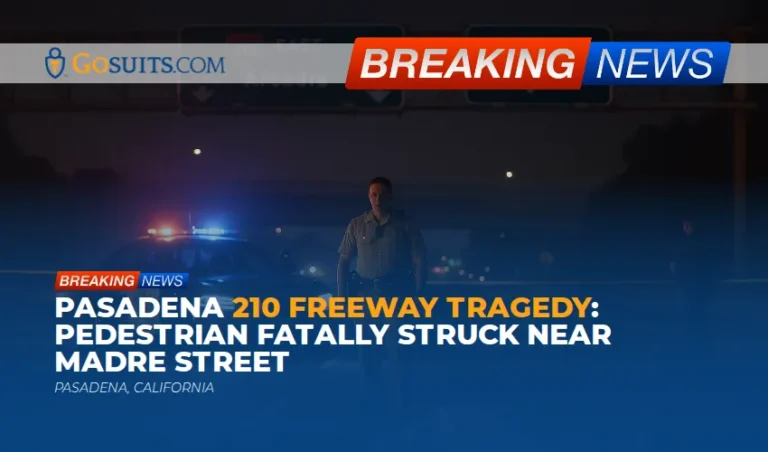
Late Sunday night, California Highway Patrol reported a deadly crash on the eastbound 210 Freeway in the Pasadena area near Madre Street. Witnesses reported seeing a person running across the lanes shortly before being struck by a vehicle around 9:30 p.m. CHP officers investigated on scene, and all eastbound lanes were temporarily closed overnight before reopening a few hours later. These are the core facts publicly reported. The individual has not been identified here. CHP is continuing to examine the circumstances to determine how and why this happened.
Location details and traffic context near Madre Street
The 210 Freeway runs along Pasadena’s northern edge and through East Pasadena, with the Madre Street area abutting neighborhoods like Hastings Ranch and proximity to the Sierra Madre Villa transit hub to the east. Anyone who commutes that stretch knows it can be fast-moving at night with intermittent lighting and limited shoulder space. From about 9 to 10 p.m. on a Sunday, traffic can still be steady, especially with folks heading home from the San Gabriel Valley or returning from weekend events near Old Pasadena or the Rose Bowl area. Even short closures here can back up to locations like Allen Avenue and Sierra Madre Boulevard, as aerial traffic coverage often shows during major incidents.
How freeway fatality investigations typically proceed
In Los Angeles County freeway fatalities, the California Highway Patrol usually takes the investigative lead. Officers secure the scene to protect evidence, document roadway markings, inspect the involved vehicle or vehicles, and collect witness statements when possible. They may also request incident video from responding agencies or survey any nearby traffic management cameras if available. Depending on conditions, they assess factors such as speed, visibility, roadway lighting, signage, driver actions, pedestrian behavior, potential impairment, and whether any secondary impacts occurred.
CHP compiles these findings into an official Traffic Collision Report. That report later becomes a critical document for insurance claims and any civil case review. Families and involved drivers often seek it to understand sequence and causation decisions by the investigating officers. The timeline to finalize a report can vary by case complexity and whether a fatality review or reconstruction analysis is required [1].
Some families also consult with outside reconstruction professionals to interpret skid marks, vehicle damage profiles, lighting diagrams, and time-distance analyses. In tragic freeway pedestrian cases, pinpointing last clear chance and lines of sight can be central to any civil responsibility assessment. When questions remain, many families look to fatal accident lawyers to help interpret the collision evidence and navigate requests for supplemental records and scene data.
How to obtain official records: police report, coroner file, and death certificate
CHP Traffic Collision Report
CHP uses a standardized process to release collision reports to authorized requestors. Typically, a family member, involved driver, vehicle owner, or their authorized representative may submit a request. The CHP website outlines how to request the report and related documentation, often using form CHP 190 and providing the date, location, and report number if known. Processing times may vary, and there may be a nominal fee for copies [1].
Los Angeles County Medical Examiner records
For fatal incidents in Los Angeles County, the Department of Medical Examiner maintains the decedent’s case file. Families can request autopsy findings, cause and manner of death once available, and certain investigative documents as permitted by law. These records often take time, especially when toxicology or additional studies are pending. The Medical Examiner provides instructions for next of kin to request case records or certified documents [2]. If you do not know the case number, the office provides guidance to help locate it using the date and location details [3].
Death certificate
Certified death certificates for deaths occurring in Los Angeles County are typically requested through the Los Angeles County Registrar-Recorder/County Clerk. Families can order certified copies once the death record is registered, and the County provides instructions for in-person, online, and mail-in requests [4].
California pedestrian and freeway rules that may factor into liability
Understanding the legal backdrop can help families make sense of the investigative lens. California’s Vehicle Code includes rules governing both driver and pedestrian conduct. Two provisions that often arise in freeway-pedestrian collisions include:
- Freeway pedestrian prohibitions: California law authorizes the state and local authorities to prohibit pedestrians on freeways and expressways, and these prohibitions are widely posted. Violations can shape fault analysis, though they do not automatically negate the possibility of civil claims where driver negligence or other contributing factors exist [5].
- Pedestrians outside crosswalks: When a pedestrian crosses outside a crosswalk, they must yield the right of way to vehicles that are close enough to be an immediate hazard, while drivers still must exercise due care to avoid a collision where reasonably possible [6].
Even with these statutes, California follows comparative fault principles, which means responsibility can be allocated among multiple parties. A person’s presence on a freeway at night can be a significant factor, but investigators and courts also examine what a reasonably careful driver should have perceived and done under the conditions present.
Civil liability and insurance issues in pedestrian freeway crashes
From a civil standpoint, tragic freeway collisions may involve overlapping issues of pedestrian conduct, driver vigilance, roadway design, visibility, and even emergency circumstances that led a person onto the roadway. California’s comparative fault framework allows a factfinder to assign percentages of responsibility to each party whose conduct contributed to the harm. California Civil Jury Instructions articulate how a plaintiff’s own negligence, if any, reduces recoverable damages but does not bar a claim outright [7].
Insurance coverage can also be multi-layered. A driver’s liability policy is often the first place insurers look. If the involved driver was uninsured or underinsured, some families may be surprised to learn that the decedent’s own automobile policy, if any, might include uninsured or underinsured motorist benefits that apply while the person was a pedestrian. The California Department of Insurance provides consumer guidance on these coverages and their potential application [10].
In certain situations, families might also explore whether roadway conditions, signage, or lighting plausibly contributed to the crash. Any claim against a public entity, such as Caltrans, has strict notice deadlines and procedural rules under California law. Before thinking about that path, it helps to understand Caltrans’ role in freeway operations in District 7, which covers Los Angeles County, and how claims against government agencies are different from typical insurance claims [8] [9].
For a practical, step-by-step overview of documents and tasks families commonly handle in the weeks following a fatal crash in the Los Angeles area, this guide can help: Los Angeles wrongful death paperwork checklist for families.
When insurance adjusters begin calling, families may feel pressured to give recorded statements or accept early offers without a full understanding of liability or long-term financial impact. That is one reason many families speak with Los Angeles fatal accident lawyers about how to pace the process and safeguard their rights during the early phase of an investigation.
What families can do in the first days after a sudden loss
No checklist eases the pain, but practical steps can prevent critical information from slipping away and help keep decisions manageable:
- Note key details as soon as possible. Write down the date and time, exact location near the 210 and Madre Street, weather and lighting conditions you recall, and any communications with law enforcement.
- Identify responding agencies. For a freeway incident in Pasadena, CHP is typically the lead investigative agency. Record the officer’s name or badge number if you have it and the incident or DR number if provided [1].
- Request official records in sequence. Start with the CHP Traffic Collision Report once available, then request the Medical Examiner records, and obtain certified death certificates for estate and insurance matters [1] [2] [4].
- Collect insurance paperwork. Gather the decedent’s auto policy declarations, health insurance information, and any life insurance policy documents. UM/UIM coverage can sometimes apply to pedestrian incidents [10].
- Preserve personal devices and data. Save the decedent’s phone, smartwatch, or fitness tracker without deleting anything. Location or activity records can sometimes inform timelines.
- Keep a simple timeline journal. Record who you spoke with at CHP or the Medical Examiner’s Office, when you requested reports, and what each agency told you about timing.
It is understandable to feel overwhelmed. Taking these steps one at a time can help structure the first days.
Preserving evidence unique to freeway incidents
Freeway scenes change quickly. Debris is cleared, vehicles are moved, and dynamic traffic cameras are not always stored for long periods. While CHP will document the scene, families who anticipate a civil claim often focus on additional preservation steps:
- Identify potential dashcam sources. If you learn of witnesses who were stopped nearby when lanes closed, politely ask if their vehicles have dashcams and whether they are willing to preserve that footage.
- Save vehicle data promptly. If the involved vehicle is accessible and owned by a family member, preserving event data recorder information can be time-sensitive. A careful chain-of-custody approach is important for admissibility.
- Track roadway lighting conditions. Note the status of nearby street or overhead lighting. Even a simple description such as “dark between exits” can guide later follow-up with maintenance logs.
- Document memorials and changing conditions. If a roadside memorial appears or lane markings change after the crash, take date-stamped photos from a safe location.
If a civil review is contemplated, coordinating evidence preservation requests early can reduce the risk of losing helpful data. In disputes about timing, distance, or visibility, small pieces of corroborating information can matter a great deal.
Community safety reflections for Pasadena and the 210 corridor
Neighbors in East Pasadena and Hastings Ranch frequently mention how quickly traffic moves where the 210 arcs east toward Sierra Madre and Monrovia. At night, sightlines can feel compressed by curves, and glare from oncoming traffic or overhead signs may add stress during lane changes. While we do not know every factor in this particular tragedy, community members often ask how to reduce risks in general:
- If your vehicle becomes disabled on the 210, many safety agencies recommend moving to the right shoulder when possible, exiting the vehicle only when safe, and calling for roadside assistance. Remaining on foot in live lanes is extremely dangerous.
- When approaching lane closures at night, slow early and avoid abrupt lane changes. Give yourself room to react to unexpected stops or people on foot who may be seeking help.
- For pedestrians, freeways are off-limits in most circumstances, and crossings are not designed for foot traffic. If someone ends up on a freeway due to an emergency, calling 911 and remaining out of live lanes, if feasible, can be life-saving [5].
California and national road safety data consistently show that pedestrian fatalities remain a grave concern. Nighttime risk is higher, and speed magnifies harm. These general trends underscore why both driver vigilance and strict avoidance of freeway foot travel are emphasized by safety agencies [11].
Deadlines that matter, including claims against public entities
Most civil claims in California have deadlines known as statutes of limitations. In cases involving a potential claim against a public agency related to roadway conditions or operations, families should be aware of the California Government Claims Act. It generally requires a written claim be filed with the government entity within a short time period, often six months for claims related to personal injury or wrongful death, before a lawsuit can be filed. California Courts’ Self-Help provides plain-language guidance on how these claims work, who they apply to, and why they must be filed promptly [9].
Because of these time constraints, taking early steps to gather records and understand potential claim paths can be vital even while investigations are pending.
What to say and not say to insurers
It is common for insurance adjusters to reach out quickly after a fatal crash. They may ask to record your statement or offer condolences along with forms to sign. Before engaging in detailed discussions, consider the following:
- Speak with a qualified attorney first. Conversations with insurers can be used later to shape liability arguments or damages positions. An initial consultation can help you understand what to share and when.
- Do not guess or speculate. If you do speak to an insurer, keep it factual and brief. Avoid opinions about speed, distance, or visibility unless you are certain.
- Be cautious with quick settlements. Early offers sometimes arrive before all evidence or the Medical Examiner’s findings are available. Settling too soon can close the door on important benefits or responsible parties.
Insurance law can be technical, particularly with layered coverages. Having an advocate to coordinate communications often reduces stress and helps prevent missteps during an already painful time.
Many families find it helpful to consult with fatal accident lawyers familiar with Los Angeles County freeway investigations. They can help pace insurer communications so that critical records and facts are in place before key decisions are made.
Why timely action matters and practical steps the community can take
When a fatal crash occurs on a major corridor like the 210, the path from shock to answers can feel long. Taking structured steps can provide clarity and keep options open. Here is a focused plan that community members often follow in the days and weeks after an incident:
- Request core records early. Submit the CHP report request and note expected timelines. Ask the Medical Examiner about the availability of preliminary findings and how to be notified when records are complete [1] [2] [3].
- Preserve every potential data source. Save phones, apps, watches, and vehicle modules that could contain movement or impact data.
- Document out-of-pocket costs. Keep receipts for funeral arrangements and related expenses. Organized records can be important for insurance submissions later.
- Map the insurance picture. Collect all relevant policies, including the decedent’s auto policy. Confirm whether uninsured or underinsured motorist coverage exists and what it may provide in pedestrian scenarios [10].
- Understand special deadlines. If there is any question about roadway conditions or a public entity’s role, learn the Government Claims Act timing and notice rules as soon as possible [9].
- Coordinate communications carefully. Consider obtaining guidance before speaking at length with insurers. What is said early can be cited later, sometimes out of context.
Why act now:
- Evidence is perishable. Dashcam files overwrite. Memories fade. Temporary lane markings and debris fields disappear quickly on the 210.
- Records take time. CHP and Medical Examiner processing can span weeks or months. Early requests start the clock.
- Deadlines can foreclose options. Missing a government claim deadline can bar certain claims entirely under California law [9].
References
- Collision Report Request – California Highway Patrol
- Request Records – Los Angeles County Department of Medical Examiner
- Case Records – Los Angeles County Department of Medical Examiner
- Death Records – Los Angeles County Registrar-Recorder/County Clerk
- California Vehicle Code § 21960 – Leginfo
- California Vehicle Code § 21954 – Leginfo
- California Civil Jury Instructions (CACI) – Judicial Branch of California
- Caltrans District 7 – California Department of Transportation
- Claims Against the Government – California Courts Self-Help
- Automobile Insurance 101 – California Department of Insurance
- Pedestrian Safety – National Highway Traffic Safety Administration
Commentary from Gosuits Pasadena, California Personal Injury Attorney
Our hearts go out to the family and friends affected by this loss near the 210 and Madre Street. This note is meant to provide general information and context, not a substitute for personal guidance about any individual situation. A crash like this is devastating, and the early hours and days are often the hardest.
From a civil perspective, freeway pedestrian fatalities raise difficult questions about conduct on both sides, lighting and visibility, and how quickly events unfolded. California’s comparative fault rules recognize that multiple factors can contribute to a tragedy. Thorough investigation, careful review of the CHP report and Medical Examiner findings, and timely evidence preservation are essential steps to reach fair, fact-based conclusions.
Insurance companies and large entities often move quickly after an incident. They know most people are unfamiliar with the process and the nuances of coverage, recorded statements, and release forms. Without context, it is easy to say something that later gets used to narrow fault or minimize damages. That dynamic is why many families choose to speak with a seasoned lawyer early, to understand the landscape before engaging with adjusters.
A free consultation can be an important early step. It gives space to ask questions, understand deadlines, and discuss a plan for obtaining the CHP report, Medical Examiner records, and any additional evidence. Having a clear path forward helps protect rights while honoring the need for time and care during grief.