- What we know about the Industry freeway transition fatal motorcycle crash
- Local context around the 60 to 605 north connector
- Why single vehicle motorcycle crashes happen on freeway connectors
- Steps families can take right away
- Understanding rights and potential civil claims after a fatal motorcycle crash
- How investigations typically proceed after a fatal freeway crash
- Safety data snapshot for motorcycles in California and at night
- What to say, and not say, to insurance companies
- Practical local help and where to request official records
- Why taking timely steps matters in the next 7 to 14 days
- Commentary from Gosuits Industry, California Personal Injury Attorney
What we know about the Industry freeway transition fatal motorcycle crash
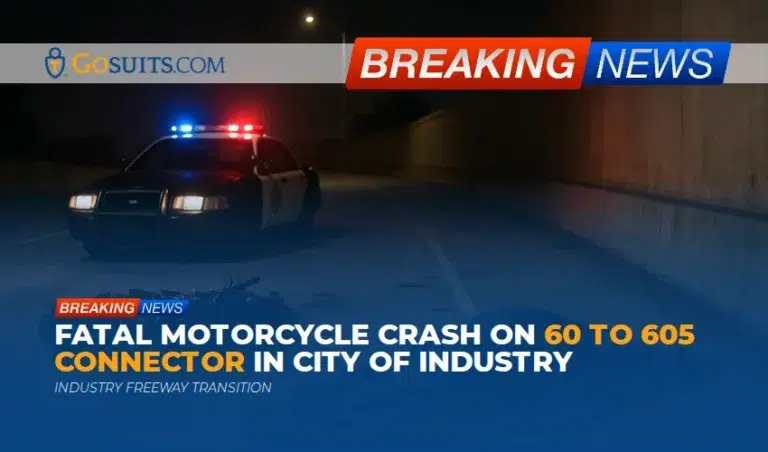
In the early morning hours of Saturday, April 18, California Highway Patrol officers responded to a single vehicle motorcycle crash on the transition road from the eastbound Pomona 60 Freeway to the northbound San Gabriel River 605 Freeway in Industry. The call came in at approximately 2:23 a.m., according to CHP Officer Elizabeth Kravig, speaking with City News Service. Los Angeles County Fire Department paramedics pronounced the rider deceased at the scene. The victim’s identity, including name, age, and gender, had not been released at the time of the report, pending notification of family. A SigAlert closed the connector at 2:46 a.m. and was lifted at 6:01 a.m., before the morning rush.
These transition roads are well known to San Gabriel Valley commuters. The 60 and 605 interchange serves drivers moving between Industry, Hacienda Heights, Whittier, South El Monte, and beyond. That connector includes a long, curving ramp that often posts an advisory speed. In the darkness before dawn, reduced visibility and cooler pavement can challenge any rider. Even so, it is important not to speculate about fault or causes until the investigating agency completes its work.
Local context around the 60 to 605 north connector
People in the San Gabriel Valley know the 60 to 605 north transition as a busy link for late night truck traffic and early morning commuters headed toward the I‑210, Irwindale, and the foothill communities. On weekends, the traffic pattern shifts, but speeds on the 60 can remain high through City of Industry, especially east of the Puente Hills and around the crossing near the San Gabriel River channel. The connector’s curve requires riders to set up early, manage speed, and keep a consistent line. Surface debris, seams, or small fluids that barely faze a car can unsettle a motorcycle.
At 2:23 a.m., roadway lighting and headlamps become the primary visibility tools. Even a clean, well maintained ramp can be unforgiving if another motorist makes an erratic move, if a rider encounters debris, or if a mechanical issue occurs. Again, those are general realities of riding in our region, not findings about this crash. CHP’s report will drive the facts for this specific incident.
Why single vehicle motorcycle crashes happen on freeway connectors
Single vehicle does not always mean a rider simply “lost control.” In many investigations, a single vehicle classification can still involve outside factors. A thorough review typically considers:
- Roadway geometry and surface condition including ramp curvature, banking, joints, pavement patches, storm drains, and any recent construction activity. Agencies sometimes evaluate whether warning signs, reflectors, or advisory speed signs are in place and visible [6].
- Lighting and visibility headlight performance, reflective markings, and the effect of ambient lighting in the interchange area.
- Debris and fluids spilled diesel, oil, or gravel can be extremely hazardous to motorcycles at lean. Caltrans encourages the public to report hazards, and maintenance teams often respond to spills reported through their customer service portal [7].
- Phantom or no contact vehicles another driver’s sudden lane change or cut off can trigger a rider’s evasive move that leads to a crash without collision contact. These events may be proven through witnesses, dash cams, or roadway evidence.
- Mechanical issues tire failure, brake problems, or other defects may contribute.
- Human factors fatigue at night, speed relative to curve advisory speeds, or impaired driving by others nearby. National safety agencies underscore the elevated risk environment for motorcycles due to visibility and stability dynamics [8].
This is why investigators will look beyond the initial label. When families or representatives conduct parallel reviews, they often pursue video, witnesses, and roadway maintenance records to understand whether an outside factor played a role.
Steps families can take right away
Get the CHP traffic collision report
The CHP collision report drives most civil evaluations, insurance decisions, and legal analyses. The report number typically appears on the incident card provided to on scene responders or is available later from the CHP Area Office that handled the crash. To obtain it:
- Identify the correct Area Office The 60 and 605 are within the Los Angeles region. Use the CHP’s Find an Office tool to confirm the Area Office that will release the report and to learn report request procedures [1].
- Submit a written request CHP accepts requests by mail or in person. Use the department’s standard report request form if available from the office, and include your relationship to the involved person, the date, time, and precise location of the crash, and any report or incident number you have. CHP’s public guidance on obtaining collision reports explains privacy rules and who may receive copies [2].
- Ask about supplemental materials If a Multidisciplinary Accident Investigation Team was involved, or if there are supplemental diagrams, photographs, or revisions, ask the custodian how to request those items as well.
Request autopsy and coroner records
For freeway fatalities in Los Angeles County, the Los Angeles County Department of Medical Examiner is responsible for examination and records. Families can:
- Search the case portal The Department offers a public case search to confirm case status and case number [3].
- Request reports Next of kin can request autopsy, examination, and toxicology reports, subject to statutory timelines and privacy rules. Start with the Department’s Records page for instructions, forms, and any applicable fees [4].
- Obtain death certificates Certified copies are issued by the Los Angeles County Registrar Recorder County Clerk. Their Vital Records page explains eligibility, in person and mail options, and identification requirements [5].
Preserve evidence proactively
Time is critical for roadway and video evidence. On freeways, third party dash cam footage from nearby motorists, commercial fleet cameras, or adjacent businesses sometimes capture the lead up to a crash. Caltrans traffic cameras are generally used for live traffic management rather than long term storage. Consider circulating a courteous witness request to local community groups and riders who frequent that interchange, and document what you learn in a simple timeline.
If you need a practical, step by step reminder of evidence items common to motorcycle claims in our area, see our Los Angeles motorcycle crash checklist.
Coordinate support for loved ones
Families often balance immediate tasks with grief. It can help to appoint one point of contact for agencies, one for funeral arrangements, and one for collecting documents. Keep copies of any personal effects receipt from the scene, first responder cards, and any photographs of the motorcycle before it is moved from storage.
Understanding rights and potential civil claims after a fatal motorcycle crash
From a civil perspective, several avenues may be evaluated after a fatal motorcycle crash on a California freeway connector. The specifics depend on the evidence in the CHP report and any independent findings.
Wrongful death and survival claims overview
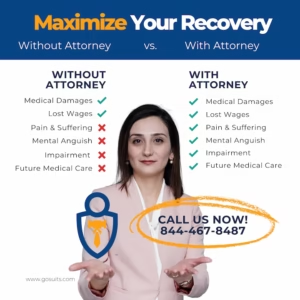
California law allows eligible family members to bring a wrongful death case to recover certain losses related to a death caused by another’s wrongful act or neglect. The decedent’s estate may, in some scenarios, bring a related survival claim to recover specific damages the person suffered before death. The details are fact dependent and informed by the collision report, witness statements, and expert analysis.
No contact scenarios and uninsured motorist coverage
In what is sometimes called a phantom vehicle scenario, a driver may cause a crash without making contact, for example by cutting off a motorcyclist on a connector and leaving the scene. Depending on the policy, uninsured or underinsured motorist coverage on the rider’s own policy, or a household policy, can provide benefits even without contact. The California Department of Insurance explains how UM and UIM coverage works in general and why it matters in crashes where the at fault motorist is unknown or lacks adequate insurance [9].
Comparative negligence and insurance implications
California follows comparative negligence principles in civil cases. Insurers sometimes argue that a rider’s speed or line selection on a ramp contributed to a loss. It is important to anchor any liability analysis in roadway evidence, skid or yaw marks if present, vehicle data when available, and the physical realities of motorcycle dynamics. Experienced adjusters and defense teams frequently challenge fault, so thorough documentation makes a real difference.
Families evaluating their options often speak with motorcycle accident lawyers to understand rights before any insurer contacts them. Choosing to discuss the matter first with a qualified attorney helps ensure that statements to insurers are accurate and complete, and that important issues like UM or med pay are handled carefully.
How investigations typically proceed after a fatal freeway crash
CHP generally conducts the primary investigation for freeway incidents in Los Angeles County. The process often includes scene measurements, photographs, examination of roadway evidence, and interviews. In severe or complex crashes, specialized investigators may be involved to reconstruct vehicle paths and speeds. While each case is different, several steps are common:
- Evidence preservation Scene diagrams, photographs of the ramp’s condition, and documentation of any fluids or debris. Caltrans District 7 maintains the freeway infrastructure in Los Angeles County and may have maintenance logs that become relevant later [6].
- Vehicle inspection The motorcycle’s tires, brakes, steering, and lights can be evaluated for mechanical factors.
- Witness canvass CHP may ask for witnesses through dispatch notes or public releases. Independent canvassing by families or representatives can help identify drivers who passed through the connector around that time.
- Toxicology and medical findings The Los Angeles County Department of Medical Examiner’s results often inform timelines and mechanism of injury [4].
Once the report is complete, request a full copy and any supplements. If the family plans to pursue a civil case, that report becomes a foundational document for any further analysis by reconstruction professionals.
Safety data snapshot for motorcycles in California and at night
National and state traffic safety agencies routinely highlight the elevated risk profile for motorcyclists. On freeways and their connectors, small changes in traction or speed can have outsized consequences. NHTSA’s motorcycle safety guidance explains that riders are more vulnerable due to exposure and that visibility at night can compound risk [8]. California’s Office of Traffic Safety provides statewide traffic safety fact sheets that track year over year trends for motorcyclist injuries and fatalities, including by time of day and roadway type [10].
Ramps and connectors deserve special care. Federal roadway safety materials discuss how drivers and riders must adjust to the sharper curvature and potentially changing friction conditions on ramp surfaces, especially where heavy trucks pass frequently or where water can pond near gore areas [6].
What to say, and not say, to insurance companies
In fatal and serious injury cases, multiple insurance policies can be in play. There may be the rider’s policy, household policies, and potentially policies connected to another motorist if evidence shows outside involvement. Before contacting any insurer, it is wise to discuss the situation with a qualified attorney. What someone says to an insurance company can be used against them later, and early recorded statements may omit details that surface after reports are released.
Insurance adjusters are trained communicators. Some may push for quick answers about speed, whether protective gear was worn, and whether any evasive action occurred. Those questions are designed to lock down a narrative. Many families choose to have communications handled by Los Angeles motorcycle accident lawyers or another trusted advocate who can organize the facts, bring in the official report when available, and make sure coverage like UM or med pay is opened correctly.
When the time comes to open a claim, do it methodically: keep a written log of calls, note claim numbers and adjuster names, and preserve all correspondence. If a liability adjuster asks for authorizations or broad medical releases, consider whether they are necessary at that stage. Narrow, targeted record requests are usually more appropriate once the crash facts are clear.
In general consumer guidance, motorcycle accident lawyers can help families interpret policy language, identify additional policies that might apply, and avoid common pitfalls that reduce available benefits.
Practical local help and where to request official records
Here is a quick guide to agencies and offices connected to a fatal freeway motorcycle crash in the Industry area:
- California Highway Patrol Use the CHP Area Office locator to find the office that handled the 60 to 605 connector crash and request the collision report. Ask about any supplements or diagrams, and whether the report is still “pending” or has been approved for release [1][2].
- Los Angeles County Department of Medical Examiner Check the case status and request autopsy and toxicology records through the Department’s records portal. Confirm expected timelines and fees, and ask about next of kin verification requirements [3][4].
- Death certificates Obtain certified copies from the Los Angeles County Registrar Recorder County Clerk. Confirm whether you need an informational or certified copy for specific tasks such as insurance claims or estate issues [5].
- Caltrans District 7 If roadway condition is a concern, request maintenance activity logs or report roadway hazards for prompt attention. Use the District 7 page to understand who maintains that connector and the customer service portal to report current hazards [6][7].
- Traffic safety context For a broader view of motorcycle risk factors and California trends, review NHTSA’s motorcycle safety materials and the California Office of Traffic Safety’s traffic safety fact sheets [8][10].
Why taking timely steps matters in the next 7 to 14 days
In the first two weeks after a freeway fatality, key evidence can be lost. Here is what helps most, and why timing matters:
- Preserve the motorcycle If possible, keep the motorcycle in its post crash condition until an inspection can be arranged. Moving or repairing it too early can erase mechanical clues or contact marks that clarify what happened.
- Locate witnesses and video Many motorists now use dash cams. A polite, time stamped request through local community channels or to businesses with views of the 60 to 605 connector may surface helpful leads. The longer the delay, the more likely older footage is overwritten.
- Request official records CHP and the Medical Examiner follow specific procedures and timelines. Starting those requests early puts you in the queue, and having report numbers makes later insurance communications more precise [2][4].
- Organize insurance coverage information Gather any auto policies for the rider and household members. Confirm whether UM or med pay exist, and note policy limits pages. Before opening any claim, speak with a qualified attorney to understand the order of communications and which coverages to invoke first, since early statements can shape an adjuster’s view of the case.
The exact action that tends to make the most difference is to coordinate an early legal consultation focused on preserving evidence and policy benefits, then proceed in a deliberate, documented way with agencies and insurers. The benefit of acting now is clarity. Records move sooner, evidence is protected, and insurance issues are organized before calls arrive.
Commentary from Gosuits Industry, California Personal Injury Attorney
Our hearts are with the family and friends affected by this tragedy on the 60 to 605 connector. This summary is intended for community awareness and general information during a difficult time. We recognize how hard it is to piece together what happened while also navigating immediate responsibilities.
From a civil injury perspective, a “single vehicle” label does not end the analysis. On curved freeway connectors at night, external factors like debris, fluids, or the sudden movement of another driver can trigger a crash even without contact. The CHP report and Medical Examiner records will be central, but independent steps to preserve the motorcycle, canvass for witnesses, and request maintenance information can matter just as much.
Insurance companies and large entities often move quickly to shape the narrative. Adjusters may ask broad questions, request recorded statements, or send medical releases before the official report is available. That can disadvantage families who do not yet have the full picture. It is common for corporate or insurer representatives to rely on gaps in information, which is why organization and measured communications are so important.
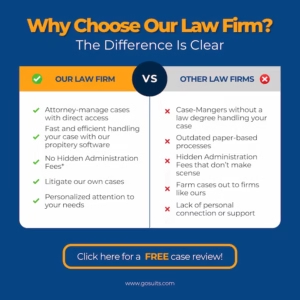
Before contacting any insurer about this incident, it is wise to speak with a seasoned injury attorney in a free consultation. That first conversation can clarify coverage options like UM or med pay, outline what to request from CHP or the Medical Examiner, and set a plan for preserving evidence. A careful approach now helps protect rights and keeps the focus on facts as they develop.
References
- Find an Office – California Highway Patrol
- How to Obtain a Collision Report – California Highway Patrol
- Case Records Search – Los Angeles County Department of Medical Examiner
- Records Requests – Los Angeles County Department of Medical Examiner
- Death Records – Los Angeles County Registrar-Recorder/County Clerk
- Interchange and Ramp Safety – Federal Highway Administration
- Caltrans Customer Service Request Portal – California Department of Transportation
- Motorcycle Safety – National Highway Traffic Safety Administration
- Uninsured Motorist Coverage Guide – California Department of Insurance
- Traffic Safety Facts – California Office of Traffic Safety