
































What is a wrongful death claim under Illinois law?
A wrongful death claim is a civil lawsuit brought by the surviving family members of a person who died because of another party’s negligent, reckless, or intentional conduct. In Illinois, this cause of action is governed by the Wrongful Death Act, codified at 740 ILCS 180, which was first enacted in 1853 and has been refined significantly over time. The Act allows a personal representative of the deceased’s estate to file suit on behalf of the surviving spouse, children, and other close relatives who suffered a pecuniary loss as a result of the death.
Illinois also recognizes a related cause of action under the Survival Act, 755 ILCS 5/27-6, which allows the estate to recover damages the deceased person could have pursued had they survived, including pain and suffering experienced between the injury and the time of death, as well as medical expenses and lost earnings up to the date of death. The two statutes work together, and in many Chicago wrongful death cases both claims are filed simultaneously to capture the full scope of losses the family and the estate have suffered.
The statute of limitations for wrongful death claims in Illinois is two years from the date of death, as set out in 735 ILCS 5/13-202. Missing this deadline typically bars the family from recovering any compensation, regardless of how strong the evidence is. Because gathering evidence, identifying all liable parties, and building a complete damages picture takes time, it’s important to speak with a Chicago wrongful death attorney as early as possible after the loss.
Who can file a wrongful death claim in Cook County?
Under 740 ILCS 180, the action must be brought by the personal representative of the deceased’s estate, though the damages recovered are distributed to the surviving spouse and next of kin, not retained by the estate itself. If no personal representative has been appointed, the court can appoint one for purposes of the lawsuit.
The people who may recover as beneficiaries under Illinois’s Wrongful Death Act include the surviving spouse, children (including legally adopted children), parents, siblings, and other relatives who can demonstrate they suffered a financial or relational loss from the death. Illinois courts have interpreted “pecuniary injury” broadly to include not only lost financial support but also the loss of companionship, guidance, society, and care that the deceased provided to family members. The Illinois Supreme Court confirmed in Bullard v. Barnes, 102 Ill. 2d 505 (1984), that loss of society and companionship is a recognized element of wrongful death damages in this state, distinguishing Illinois law from the narrower approaches taken in some other jurisdictions.
What damages can a Chicago family recover in a wrongful death case?

Illinois wrongful death damages fall into three broad categories: economic losses, noneconomic losses, and survival-action damages. Understanding each category is important because your attorney needs to identify and document every applicable loss to build the strongest possible claim.
Economic damages
Economic damages cover the measurable financial contributions the deceased would have made to the family over their remaining lifetime. These include lost wages and future earning capacity, the value of household services the deceased provided (such as childcare, home maintenance, and financial management), lost Social Security and pension benefits, and any medical expenses incurred between the injury and death. Working with economists and financial professionals, your attorney can project these losses forward over the deceased’s expected work life, accounting for career progression, inflation, and the specific circumstances of the family.
Noneconomic damages
Noneconomic damages in Illinois wrongful death cases compensate surviving family members for losses that don’t carry a dollar figure on a pay stub or tax return. These include loss of society, companionship, guidance, and emotional support. Illinois does not cap noneconomic damages in wrongful death cases involving private defendants (the Illinois Supreme Court struck down a prior damages cap as unconstitutional in Lebron v. Gottlieb Memorial Hospital, 237 Ill. 2d 217 (2010)). Juries in Cook County have historically taken these losses seriously, particularly in cases involving the death of a parent with minor children or the death of a spouse in a long marriage.
Survival action damages
Under the Survival Act, 755 ILCS 5/27-6, the estate may separately recover for the conscious pain and suffering the deceased experienced between the moment of injury and the time of death, as well as medical bills generated by the injury before death. These claims are filed alongside the wrongful death action and are distinct from it: wrongful death compensates the survivors, while the survival action compensates the estate for what the deceased personally experienced and lost. When the gap between injury and death is significant, such as a loved one who survived a crash on the Dan Ryan Expressway (I-94) for several days before passing, the survival damages can be substantial.
Common causes of fatal accidents in Chicago, IL

Chicago’s geography, traffic patterns, and industrial concentration create specific, recurring fact patterns in wrongful death cases. Knowing the common causes helps families understand whether they have a viable claim.
Fatal traffic crashes on Chicago expressways and streets
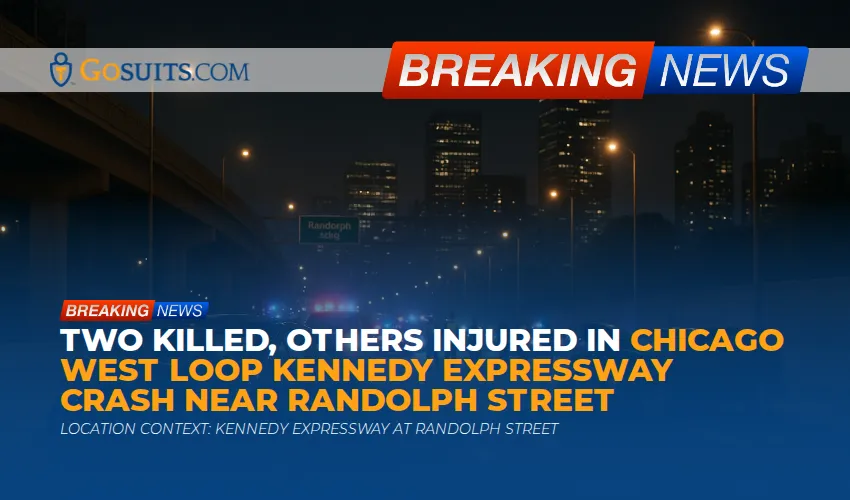
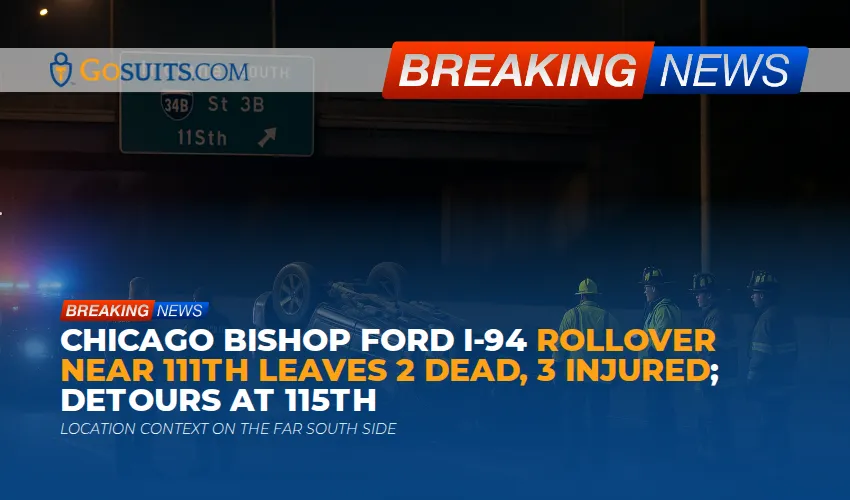
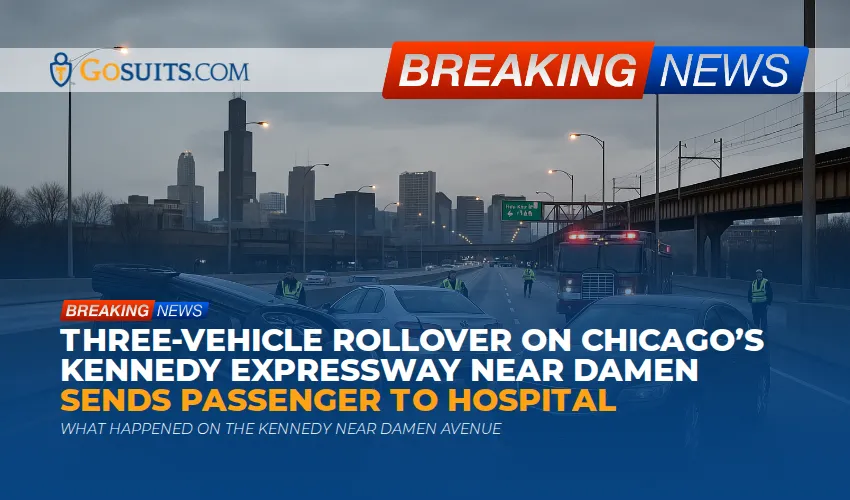
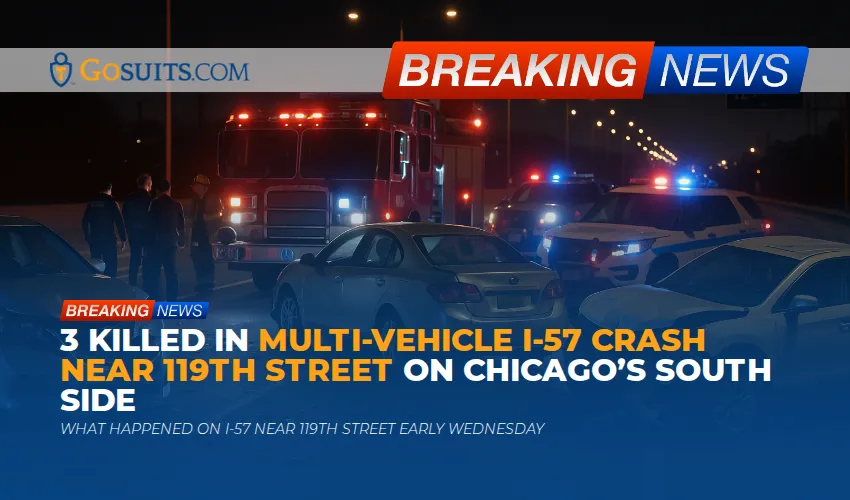
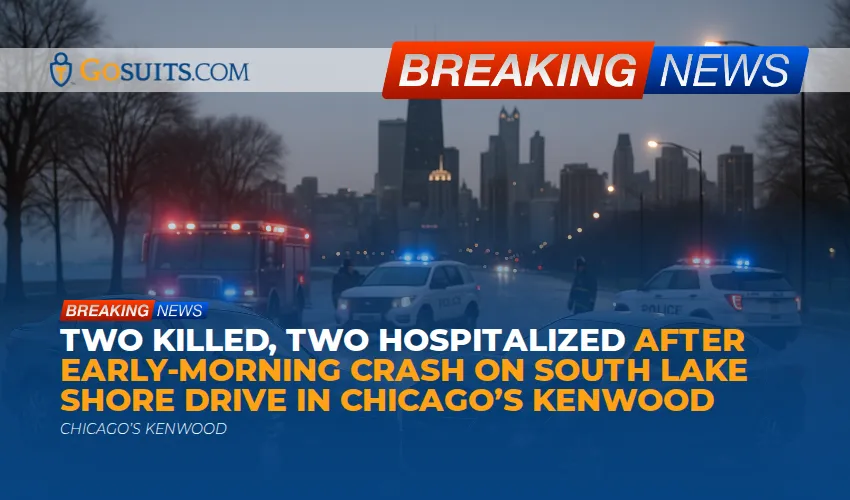
The Illinois Department of Transportation’s crash data consistently shows that Cook County records a disproportionate share of Illinois’s fatal traffic crashes. The Kennedy Expressway (I-90), the Dan Ryan Expressway (I-94), Lake Shore Drive, and the Eisenhower Expressway (I-290) are among the corridors where fatal crashes occur with troubling frequency. Causes include speeding, distracted driving, drunk driving, lane-change errors by commercial vehicles, and dangerous road conditions. When a crash on one of these corridors kills a family member, the responsible parties may include a negligent driver, a commercial carrier, a vehicle manufacturer (if a defect contributed), or a government entity responsible for road maintenance.
Fatal truck and commercial vehicle accidents
Chicago is one of the largest freight hubs in the United States, and the volume of commercial trucks on Cook County roads reflects that. The Federal Motor Carrier Safety Administration (FMCSA) mandates under 49 CFR Part 395 that commercial drivers observe strict hours-of-service limits: no more than 11 hours of driving after 10 consecutive hours off duty. When a carrier ignores those rules or a driver falsifies logbooks, the resulting fatigue can cause catastrophic, fatal collisions. Our Chicago truck accident attorneys handle fatal commercial vehicle cases by immediately issuing preservation letters for electronic logging device data, black-box records, and maintenance files before carriers have an opportunity to destroy or overwrite them.
Workplace and construction fatalities
Illinois OSHA and its federal counterpart investigate fatal workplace accidents across Cook County, from construction sites in the West Loop and River North to industrial facilities in the South Side. According to the Bureau of Labor Statistics’ Census of Fatal Occupational Injuries, Illinois recorded 177 fatal work injuries in 2022. When a worker is killed due to a third party’s negligence (not the employer’s alone), the family may pursue both a workers’ compensation death claim and a separate civil wrongful death lawsuit against the responsible third party. This dual track is particularly valuable in construction fatality cases, where subcontractors, general contractors, property owners, and equipment manufacturers may each carry partial liability. Our Chicago construction accident lawyers handle these layered liability situations regularly.
Pedestrian and bicycle fatalities
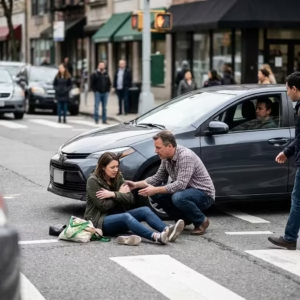
Chicago neighborhoods including Pilsen, Hyde Park, the North Side, and Wicker Park see significant pedestrian and cyclist activity. The Chicago Department of Transportation’s traffic safety data shows that pedestrian fatalities remain a persistent concern on Chicago’s busier arterial streets. When a driver fails to yield, runs a red light, or operates a vehicle while impaired and strikes and kills a pedestrian or cyclist, the family of the deceased has a wrongful death claim against the at-fault driver and potentially against other liable parties. These cases often involve disputes about crosswalk timing, visibility conditions, and the driver’s speed, all of which our team investigates promptly.
Defective products causing fatal injuries
Some wrongful death cases stem from a product failure rather than a human driving error. Defective vehicle components, malfunctioning industrial machinery, and unsafe consumer products have each contributed to fatalities in Cook County. When a product defect is the cause or a contributing cause of death, the family may have a product liability wrongful death claim against the manufacturer, distributor, or retailer. These cases require early preservation of the product itself and collaboration with engineering and safety professionals who can identify the design or manufacturing failure.
Illinois’s modified comparative fault rule and wrongful death
Illinois follows a modified comparative fault standard under 735 ILCS 5/2-1116. If the deceased is found to have been partially at fault for the incident that caused their death, the damages recoverable by the family are reduced proportionally. However, if the deceased is found to have been more than 50% at fault, the family is completely barred from recovery under Illinois’s 51% bar rule. This differs from California’s pure comparative negligence framework, under which a plaintiff can recover even if 99% at fault (though their recovery is reduced accordingly). In Illinois, the threshold matters enormously. Defense attorneys and insurance carriers often work hard to assign as much fault as possible to the deceased, which is why thorough evidence preservation and early investigation are so important.
Understanding where Illinois law sets this threshold helps families frame realistic expectations. Our team works to establish the clearest possible fault picture through police reports, Chicago Police Department records, surveillance footage, witness statements, and, where necessary, accident reconstruction analysis.
How GoSuits Chicago wrongful death lawyers can help you
From the moment you call us, we begin working to protect your family’s legal rights and financial future. The first thing we do is issue preservation demands to all parties who may hold relevant evidence: the at-fault driver’s carrier, any corporate employer, the city or county if a government entity is involved, and any third party whose actions may have contributed to the death. Evidence disappears quickly, especially electronic data like dashcam footage, vehicle black-box records, and surveillance video from commercial properties. Acting fast on preservation is one of the most important things a wrongful death attorney can do in the first days after a fatal accident.
Once evidence is secured, we work with your family to identify every potential source of compensation: the at-fault party’s liability insurance, any commercial umbrella policies, uninsured and underinsured motorist coverage, and third-party liability policies if multiple parties share responsibility. We bring in economists to project the full value of your loved one’s lifetime earnings, and we work with grief professionals and life-care planners to document the family’s noneconomic losses in terms that resonate with Cook County juries.
We handle all communication with insurance adjusters, defense counsel, and opposing parties. You will never be pressured to accept a low settlement before the full picture of your damages is clear. If the responsible insurer refuses to offer a fair amount, our trial team takes cases to verdict in Cook County Circuit Court. Members of our team are recognized by TopVerdict, National Trial Lawyers, Super Lawyers, and Best Lawyers, and our attorneys have tried wrongful death cases to verdict in Cook County Circuit Court, earning results that reflect the true magnitude of each family’s loss.
Beyond the legal claim itself, we also help coordinate practical needs: lien negotiation with hospitals and medical providers who treated your loved one before their death, correspondence with life insurance carriers, and referrals to community grief support resources across Chicago. From the day you first contact us through the day your case resolves, we manage the legal and logistical complexity so your family can focus on healing and on remembering the person you lost.
If your family is ready to take the next step, schedule a free consultation with our team. We’re available 24/7, and there is no attorney fee unless we recover. Case costs and medical bills may still be owed.
Families dealing with injuries in other types of accidents can also find dedicated help through our Chicago car accident legal team. For any questions about how our practice approaches complex Chicago claims, reach out to our Chicago personal injury team directly.
Choosing the right wrongful death attorney in Chicago
Not every personal injury lawyer has the background, resources, or commitment to handle a wrongful death case well. These cases involve multiple legal theories (Wrongful Death Act + Survival Act), significant damages projections, expert witnesses from medicine, economics, and accident reconstruction, and often adversarial carriers who have years of experience minimizing payouts. When choosing representation for your family, look for an attorney who focuses on serious injury and wrongful death claims, who has trial experience in Cook County courts, and who can point to recognition from credible legal organizations.
Ask how the firm handles evidence preservation in the first 48 hours, whether they use financial professionals to project lifetime losses, and how they communicate with families during what can be a year-long process. A firm that answers those questions specifically and honestly is one you can trust. At GoSuits, we encourage every family to come to their consultation with those exact questions. We will walk you through our process in plain language, with no pressure and no jargon.
Areas we commonly serve in Cook County and the greater Chicago area
- Central Chicago: West Loop, Loop, River North, South Loop, Streeterville
- North Side: Lincoln Park, Lakeview, Uptown, Rogers Park, Wicker Park
- South Side: Hyde Park, Pilsen, Bridgeport, Bronzeville, Chatham
- West Side: Humboldt Park, Austin, Little Village, Logan Square
- Suburbs and surrounding communities: Naperville, Elgin, Waukegan, Cicero, Joliet
No matter where in the Chicago area your loss occurred, our team is ready to help.