

























Where do car accidents happen in Irvine, and what does that mean for your claim?
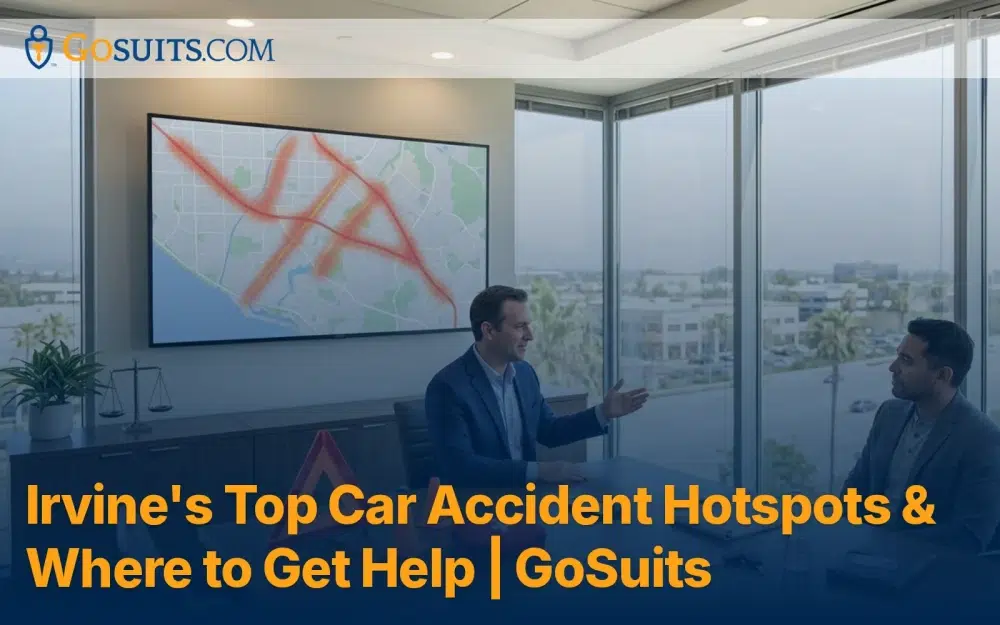
Irvine’s road network is a mix of master-planned surface streets and some of California’s busiest freeways. The I-405 corridor is the backbone of the city’s commuter traffic, and the stretch between the SR-73 interchange and the I-5 junction backs up significantly during peak hours. Rear-end collisions there are not random. They happen because drivers follow too closely in stop-and-go conditions, and when traffic stops abruptly, someone does not stop in time.
The SR-55 feeds into the I-405 from the north, and that interchange sees its share of merge conflicts and high-speed lane changes. The SR-133, the Laguna Freeway, cuts through the southeastern edge of the city, connecting Irvine to the toll roads and carrying a mix of local and through traffic.
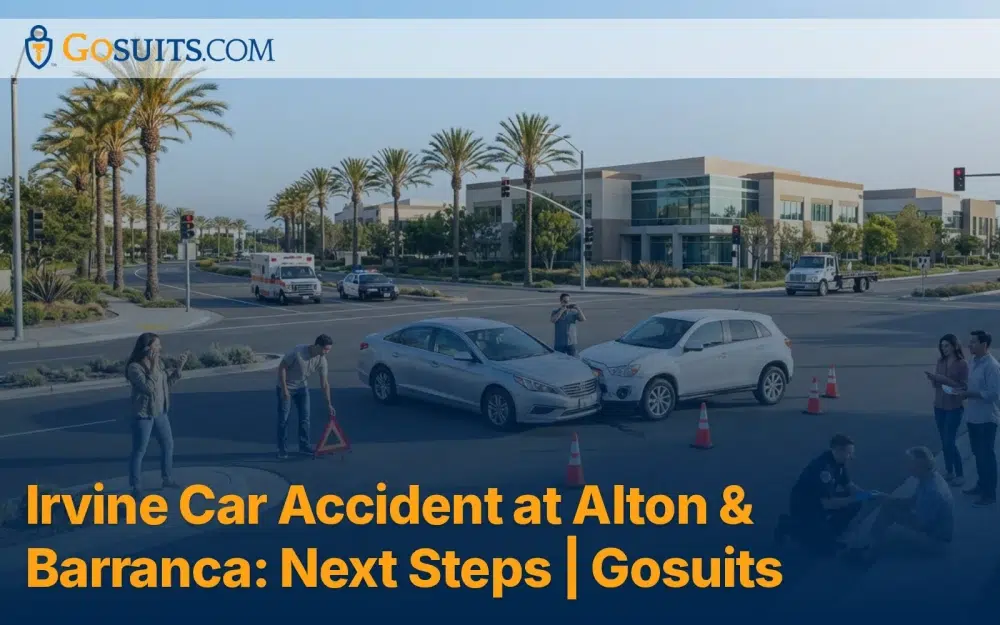
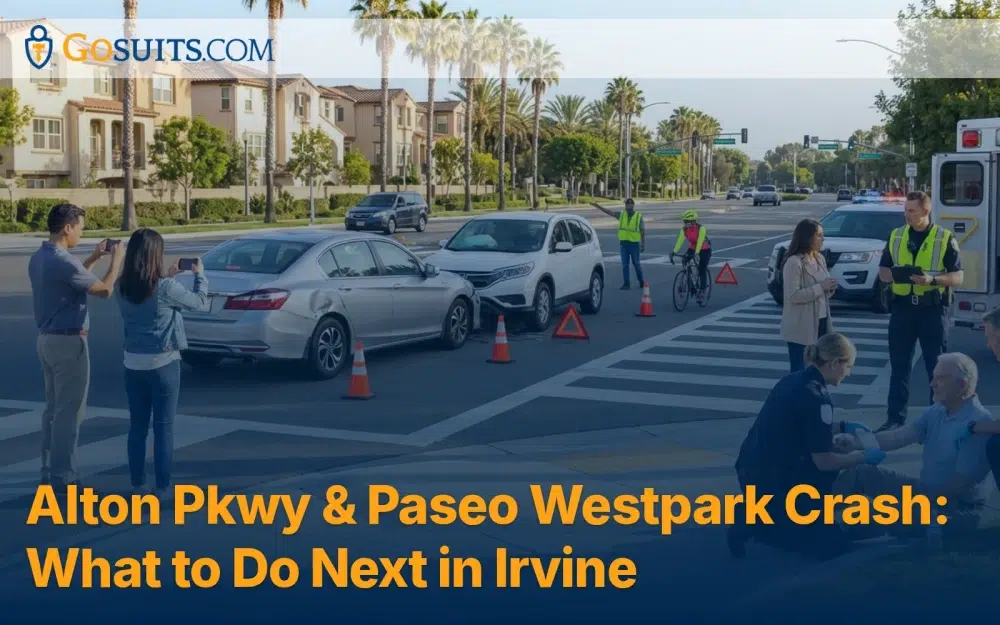
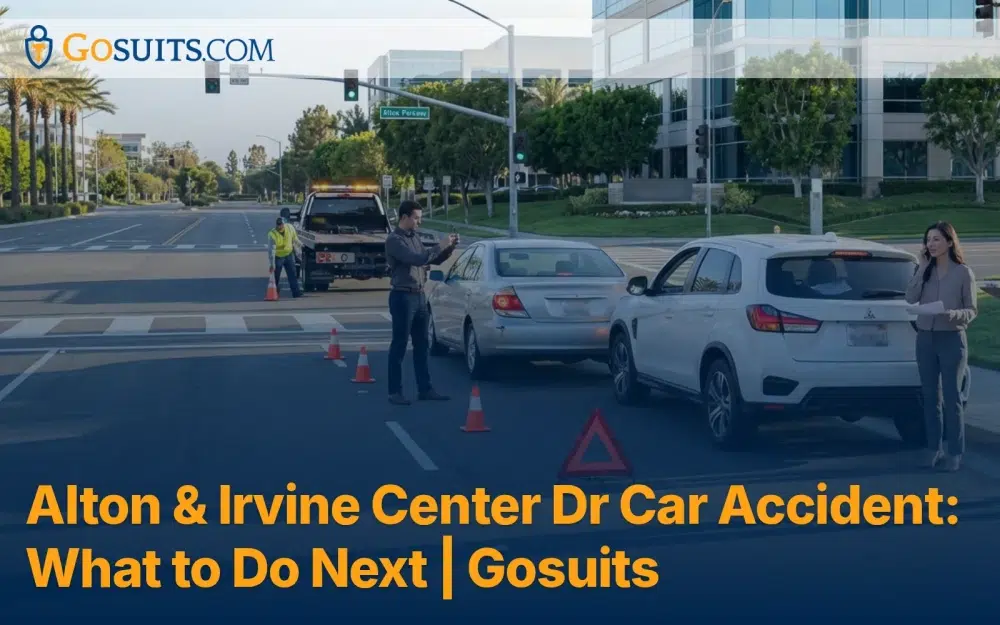
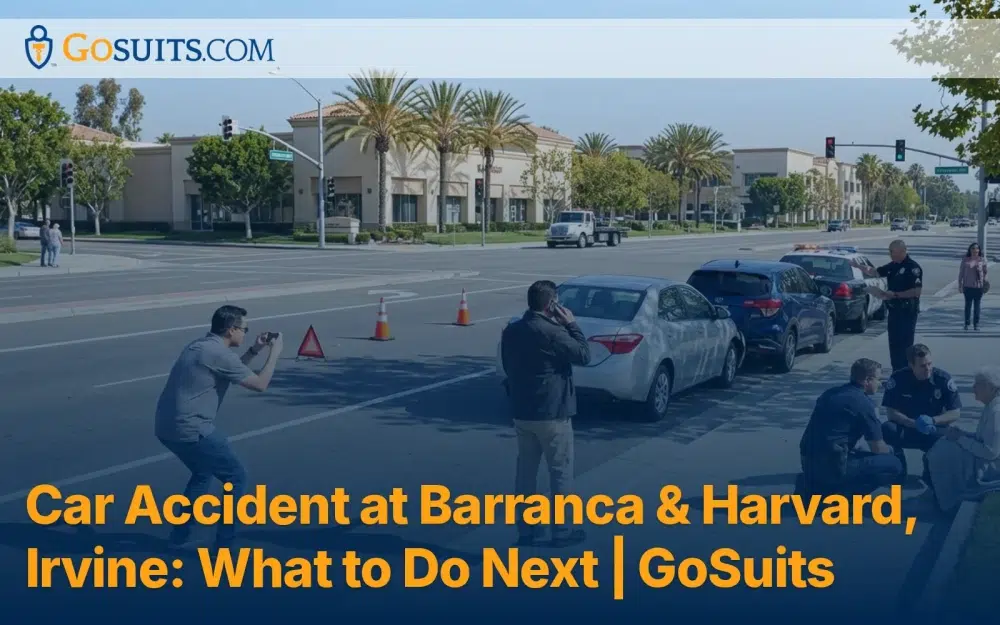
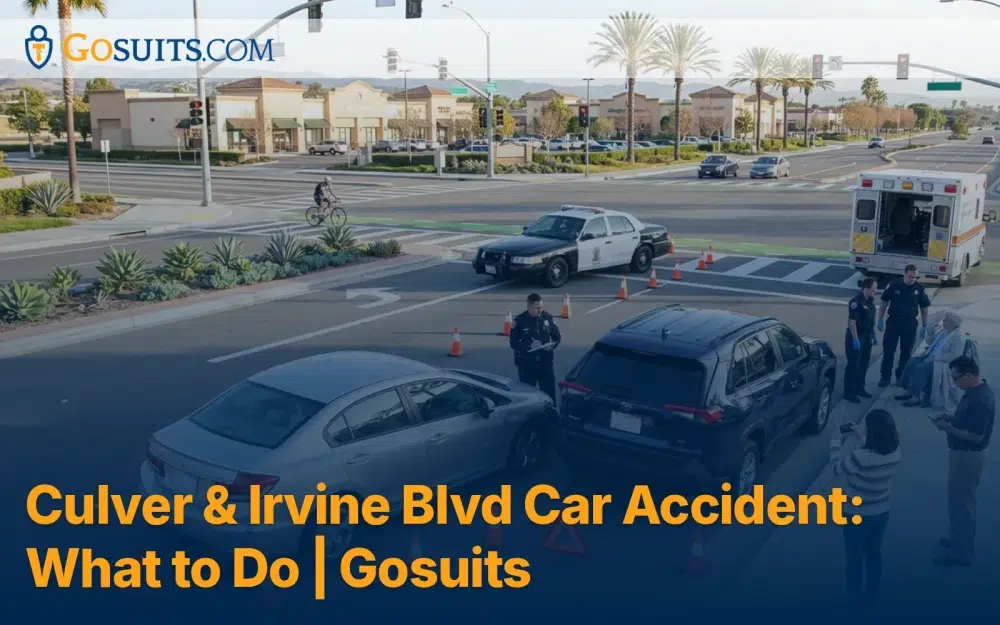
On the surface street level, the intersections at Jamboree and Barranca, at Culver and Irvine Boulevard, and along Alton Parkway all see consistent turning conflicts. Red-light violations are common at signalized intersections near the Irvine Spectrum Center and along MacArthur Boulevard. Sand Canyon and Jeffrey Road carry significant residential-to-freeway commute traffic, and early-morning and late-afternoon crashes there are common.
Why does location matter to your claim? Because the type of intersection, the posted speed limit, signal timing, and traffic conditions at the time of the crash all shape the evidence you need. A crash on the I-405 calls for EDR data and CHP reports. A crash at a commercial intersection calls for business camera footage and signal timing records. We build the case from the actual scene, not a generic template.
What evidence makes or breaks a car accident claim in Orange County?
The answer depends on how the crash happened, but certain categories of evidence matter in almost every case.
The CHP or Irvine Police Department report is the foundation. It identifies the parties, notes vehicle positions, records any citations, and sometimes includes a diagram. But it is not the whole picture, and it is sometimes wrong. We review it carefully and gather independent evidence to fill in or correct what the report leaves out.
Photos from the scene, taken the same day, are worth more than photos taken weeks later. Tire marks fade. Debris gets cleaned. Road damage gets repaired. If you can safely photograph your vehicle, the other vehicle, the lane markings, and the surrounding area before leaving the scene, do it. If you cannot, we can often return to the scene, but time-sensitive evidence like skid marks may already be gone.
Event Data Recorder downloads can show the vehicle’s speed, brake application, and steering input in the seconds before impact. Not every vehicle has an EDR, and not every EDR stores pre-crash data in the same way, but for crashes involving airbag deployment or significant impact, this data is often available and can be decisive on disputed liability.
Video is increasingly available. Dashcam footage from your vehicle or nearby vehicles, traffic cameras managed by the City of Irvine or Caltrans, and cameras at nearby businesses along Jamboree, Alton, or the Spectrum Center area may have captured the crash or the moments leading to it. Storage periods vary, often between seven and thirty days. We send preservation demands promptly to prevent that footage from being overwritten. For more on documenting your Irvine crash, our knowledge base covers the full checklist.
Medical records connect your injuries to the crash. A gap between the crash and your first medical visit gives insurers an argument that the injury was not serious or was not caused by the collision. Getting evaluated promptly, following up consistently, and attending all recommended appointments creates the record that anchors your claim.
After a crash on Jamboree or the 405, what should you actually do?
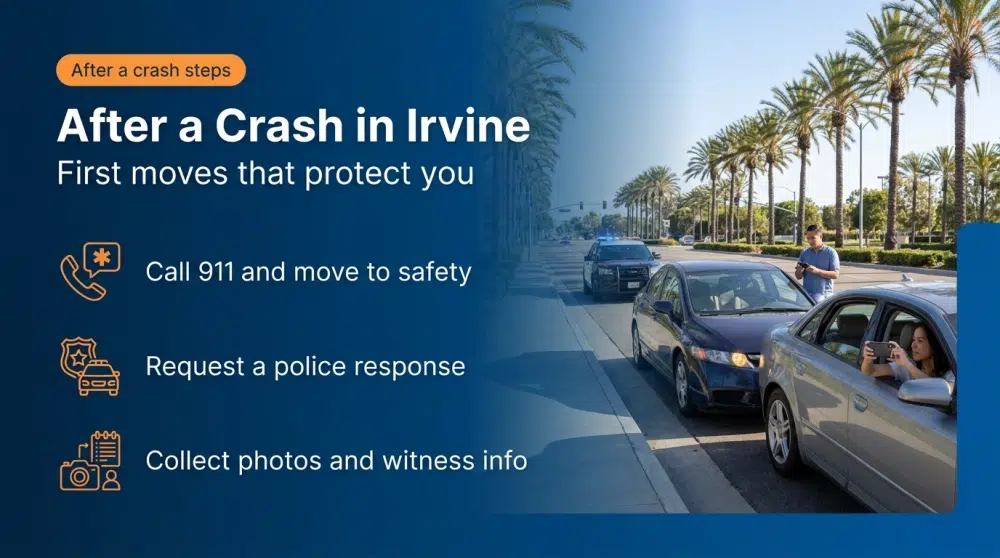
Call 911 if anyone is injured. Move to safety if the vehicles are drivable and you can do so without risking further harm. Exchange insurance and license information with the other driver, and request a police response so there is an official report. If bystanders saw the crash, ask for their names and contact information before they leave.
Do not discuss fault at the scene. “I’m sorry” and “it was my fault” are statements that can follow you through the claim. Stick to exchanging information and talking to the officer.
See a doctor the same day or the next morning, even if you feel fine. Whiplash and disc injuries often do not produce full symptoms for 24 to 72 hours. An early examination creates a record of your condition tied to the date of the crash.
Under CVC section 20008, crashes involving injury or death must be reported to law enforcement within 24 hours. You must also file an SR-1 with the DMV within 10 days if anyone was injured or if property damage exceeds one thousand dollars, regardless of fault. Missing the SR-1 can create coverage complications with your own insurer.
Do not give a recorded statement to the at-fault driver’s insurer before speaking with an attorney. Adjusters are trained to ask questions in ways that minimize the claim. You are not required to provide one, and giving it before your injuries are fully understood can lock you into statements that undervalue what you actually suffered.
Who can be held responsible after an Irvine car crash?
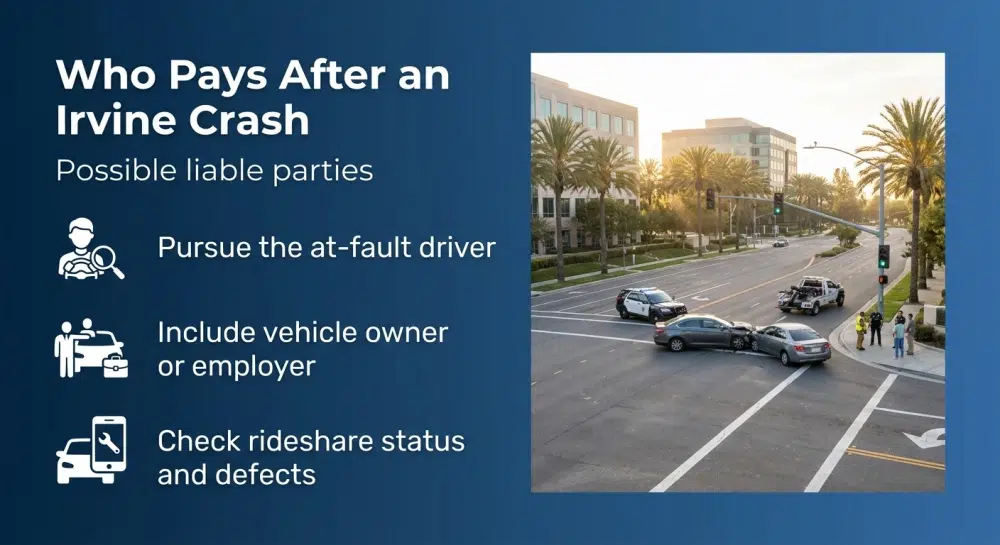
The most common answer is the at-fault driver. But car accidents in Irvine regularly involve more than one responsible party, and identifying all of them determines how much insurance is actually available and who we pursue the claim against.
If the at-fault driver was operating a vehicle owned by someone else, the owner’s insurance may also apply under California’s permissive use doctrine. If the driver was working at the time of the crash, an employer can be liable under respondeat superior principles. Delivery drivers, commercial vehicle operators, and drivers using their personal vehicle for gig work all fall into this analysis.
If the at-fault driver was operating a vehicle owned by someone else, the owner’s insurance may also apply under California’s permissive use doctrine. If the driver was working at the time of the crash, an employer can be liable under respondeat superior principles. Delivery drivers, commercial vehicle operators, and drivers using their personal vehicle for gig work all fall into this analysis.
For rideshare crashes involving Uber, Lyft, or Waymo vehicles in Irvine, coverage depends on the driver’s app status at the time. Period 1, when the app is on but no ride is accepted, carries lower limits than Periods 2 and 3. We request trip records and app data to confirm status and identify which policy layer applies.
When a government-maintained road defect contributed to the crash, a claim against a public entity may be possible. These claims have shorter windows: a government claim under California Government Code section 911.2 must be filed within six months of the incident, before any lawsuit can proceed. We flag these situations early and act fast.
Vehicle defects that contributed to the crash, failed brakes, defective tires, or faulty airbag deployment, can create product liability claims against manufacturers or distributors. These run parallel to the negligence claim against the driver and can significantly expand available compensation.
How does California’s fault and coverage system work after a car crash?
California is a fault-based state. The party whose negligence caused the crash is responsible for the resulting losses. That person’s liability insurance pays first, up to their policy limits. If their limits are insufficient, your own underinsured motorist coverage can apply. If they are uninsured or fled the scene, your uninsured motorist coverage may be your primary recovery source.
California follows pure comparative negligence. If you are found partly at fault, your recovery is reduced by your percentage of responsibility, but not eliminated. Under Cal. Civ. Proc. Code section 335.1, most personal injury claims must be filed within two years of the crash date. Property damage claims generally have a three-year window under section 338.
As of 2025, California’s minimum liability limits are thirty thousand dollars per person, sixty thousand dollars per occurrence, and fifteen thousand dollars for property damage, under CVC section 16056. Many drivers carry only minimum limits, which means UM/UIM coverage on your own policy is one of the most important protections you have. We review all available coverages early, including MedPay, so nothing is overlooked.
Net recovery matters too. The gross settlement is not what you take home. We work with your medical providers and lien holders at the close of a case to reduce outstanding balances where possible, so that more of the recovery reaches you rather than going back out to pay bills at their full amounts.
What kinds of injuries are most common after Irvine collisions, and how do they affect the claim?
Rear-end crashes at lower speeds commonly produce whiplash-associated disorders. These injuries involve the soft tissues of the cervical spine and can cause headaches, neck stiffness, radiating arm pain, and sleep disruption. They are real injuries. But insurers often dispute them because they do not always show on standard imaging. Consistent treatment records and, where appropriate, MRI confirmation of soft tissue changes make these claims much more defensible.
Higher-speed impacts along the I-405 or I-5 produce more severe injuries: herniated discs in the lumbar or cervical spine, shoulder and knee trauma from bracing against the impact, and traumatic brain injuries ranging from concussion to more serious damage. Disc injuries confirmed on MRI, surgical records, and specialist treatment notes are the backbone of these larger claims. We coordinate with your treating providers to document the connection between the crash mechanics and your diagnosis.
Fractures, rib injuries from seat belt loading, and chest trauma are common in direct impacts and T-bone collisions. Psychological injuries, including anxiety, PTSD, and sleep disorders, frequently follow serious crashes and are compensable as noneconomic damages when supported by a treating clinician’s records.
The injuries sustained affect the value of a claim in direct ways: severity and permanence, whether surgery is required, how long treatment continues, and how much the injury disrupts work and daily activities all factor into the calculation. We track every element from the beginning.
How is a car accident claim valued in California?
Damages fall into two broad categories. Economic damages cover measurable financial losses: medical bills already incurred, estimated future medical care, wage loss during recovery, and reduced earning capacity if the injury affects your ability to work long-term. Noneconomic damages cover pain and suffering, emotional distress, loss of enjoyment of activities you could do before the crash, and similar harms.
NHTSA reported 42,514 traffic fatalities nationwide in 2022 and a preliminary estimate of 40,990 in 2023, a decline of roughly 3.6 percent. California consistently accounts for a large portion of the national total. These data points inform how insurers and courts understand the severity of road crash harm, and they provide context for the medical literature we use to support claims for serious injuries.
Punitive damages under Cal. Civ. Code section 3294 are available only in cases where the defendant acted with malice, oppression, or fraud. DUI crashes can sometimes meet this threshold, but the showing is demanding and fact-specific. We evaluate it case by case.
The value also depends on what insurance is available. A claim worth one hundred fifty thousand dollars in actual damages does not produce that amount if the at-fault driver carries thirty thousand dollars in liability coverage and the claimant carries no UIM protection. We map every available coverage layer before making settlement decisions.
How do insurers approach car accident claims, and what tactics should you know about?
Adjusters are not neutral. Their job is to settle claims for as little as the file will support. That does not make them adversaries in a dramatic sense, but it does mean their interests and yours are not the same.
Common early tactics include requesting a recorded statement before your injuries are fully evaluated, offering a quick low settlement before you know your diagnosis, and sending a broad medical authorization that would give the carrier access to your entire medical history rather than records relevant to the crash. Signing a broad release or giving a recorded statement before talking with an attorney can limit your recovery in ways that are hard to undo.
Insurers also use the time-limited demand process strategically. If a clear-liability case involves serious injuries and the at-fault driver’s policy limits are insufficient, a properly documented demand for the policy limits, with a defined acceptance deadline, can create bad faith exposure for the carrier if they fail to accept. Understanding when and how to use this tool is part of what competent car accident representation involves in California.
We handle all communications with the adverse carrier from the point we are retained. You focus on treatment and recovery; we manage the claim side and flag anything that needs your input.
How GoSuits Irvine car accident lawyers can help you
We open a case fast. On the day you contact us, we start pulling the police report, sending preservation demands for camera footage and EDR data, and coordinating with your medical providers. Our proprietary case software keeps every document, deadline, and communication organized so nothing falls through the cracks, and you have access to your file status without having to call to ask what is happening.
With 30-plus years of combined experience and over a thousand litigated cases, we know how Orange County Superior Court handles these matters, and we build every case with the assumption that trial is possible. The threat of trial is part of what produces fair settlements. We do not accept low offers to close a file; we accept them when they genuinely reflect the value of what you lost.
Our team has been recognized by TopVerdict, National Trial Lawyers, Super Lawyers, and Best Lawyers. Recognition matters only insofar as it reflects real work. We hold ourselves to the same standard regardless of what an award says.
If you are ready to talk through what happened, contact our team for a free consultation. There is no obligation, and you pay nothing unless we recover compensation for you. For broader personal injury questions beyond car accidents, our Irvine personal injury team handles the full range of cases.