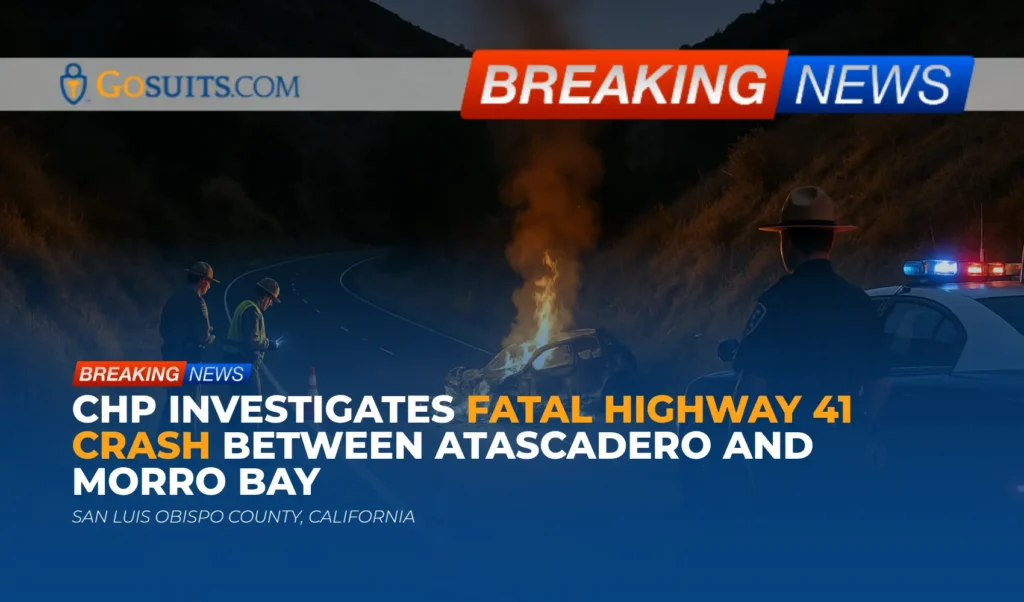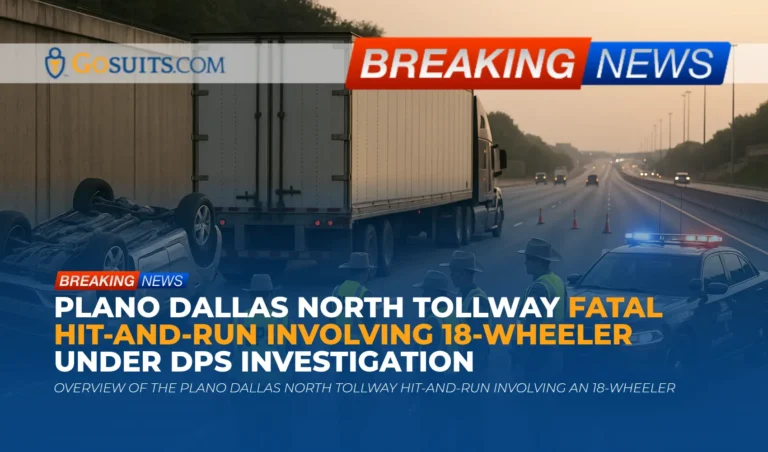
- Overview of the Plano Dallas North Tollway hit-and-run involving an 18-wheeler
- What happened, where, and when
- What authorities have said so far
- What is still unknown
- Safety and legal implications of unsafe lane changes and fleeing the scene
- Texas laws that apply to hit-and-run and unsafe lane changes
- Possible civil claims and insurance pathways after a fatal truck hit-and-run
- How investigators identify a fleeing 18-wheeler
- Where to obtain official records and practical help in Collin County and statewide
- Preserving evidence and protecting rights in the days ahead
- Data and context on large-truck crashes and hit-and-run incidents
- Common pitfalls when dealing with insurers after a deadly crash
- Commentary from Gosuits Plano, Texas Personal Injury Attorney
- Important next steps and timing considerations
Overview of the Plano Dallas North Tollway hit-and-run involving an 18-wheeler
A fatal hit-and-run crash occurred during the Tuesday morning commute on the Dallas North Tollway in Plano. According to information publicly released by the Texas Department of Public Safety, investigators believe the driver of an 18-wheeler made an unsafe lane change and struck a Honda Civic, forcing it into a concrete wall and causing it to overturn. Two other vehicles then collided with the Civic. The Civic’s driver, a 47-year-old Dallas resident, tragically died at the scene. The drivers of the other two vehicles were not reported injured. The 18-wheeler continued driving and did not stop.
This summary is shared with compassion and respect for the family and community impacted. The focus below is to explain what is known, what typically happens next in these investigations, how families can access official records, and what civil rights and insurance issues commonly arise after a deadly commercial vehicle collision on a Texas tollway.
What happened, where, and when
Based on the public account from state authorities, the crash occurred around 6:30 a.m. in the northbound lanes of the Dallas North Tollway near Spring Creek Parkway in Plano. Morning traffic conditions can be heavy in this corridor, and lane changes by large vehicles in close quarters can create sudden hazards for smaller passenger cars.
Investigators believe an 18-wheeler moved unsafely into the Honda Civic’s lane and made contact, forcing the Civic into a concrete barrier where it overturned. In the moments after the rollover, two other vehicles then struck the overturned Civic. The Civic’s driver passed away at the scene. The truck driver did not stop.
What authorities have said so far
State troopers are handling the investigation and have indicated they are treating the matter as a hit-and-run. The reported sequence involves:
- Unsafe lane change by an 18-wheeler with contact to the Civic.
- Secondary impacts from two additional vehicles into the overturned Civic.
- Fatality at the scene of the Civic’s driver.
- Fleeing driver of the 18-wheeler not yet identified.
The Texas Department of Public Safety typically leads crash reconstruction on controlled-access highways and coordinates with tollway authorities and local agencies for roadway closures, scene documentation, and evidence collection.
What is still unknown
At this time, publicly available information does not include:
- The identity of the 18-wheeler driver or the motor carrier responsible for the tractor-trailer.
- Video or witness corroboration specifying markings, color, trailer type, or license plate of the truck.
- Any telematics or electronic logging device data that might confirm the truck’s location or movements.
- Results of full crash reconstruction including speed, pre-impact position of vehicles, or any mechanical factors.
As with many serious tollway crashes, investigators often canvass for roadway cameras, commercial dash-cams, business surveillance facing the corridor, and data that can help locate the truck and its carrier.
Safety and legal implications of unsafe lane changes and fleeing the scene
Unsafe lane changes by heavy trucks can create a rapid chain reaction, especially when smaller vehicles are boxed in by concrete barriers and have limited escape paths. From a civil perspective, an unsafe lane change that causes a collision can be evidence of negligence. Fleeing the scene after involvement in a collision with injury or death further compounds harms for the victim and blocks immediate aid that may save lives.
In the civil claims process, investigators and attorneys look at whether the truck driver exercised reasonable care, whether the motor carrier’s training and supervision were adequate, and whether company policies or schedules created pressures that contributed to unsafe maneuvers. If the driver was in the course and scope of employment, the carrier is commonly responsible for the driver’s negligence under Texas agency principles.
Texas laws that apply to hit-and-run and unsafe lane changes
Several Texas statutes are relevant to the scenarios described by investigators:
- Duty to stop and render aid after a crash involving injury or death: Texas Transportation Code requires drivers involved in crashes that result in injury or death to stop, remain at the scene, and render aid within their ability. See Transportation Code § 550.021. In civil cases, violation of this statute can support a theory of negligence and may be considered by a jury when assessing responsibility and damages.
- Safe lane usage and signaling: Texas law requires safe lane usage and appropriate signaling when moving between lanes. See Transportation Code § 545.060 and Transportation Code § 545.104. An unsafe lane change is a common factor in sideswipe and forced-into-barrier collisions.
Note that these statutes also inform civil responsibility. While criminal enforcement is separate, the same facts can be relevant in a wrongful death lawsuit or survival claim.

Possible civil claims and insurance pathways after a fatal truck hit-and-run
Texas law provides avenues for family members to seek civil remedies after a wrongful death. When a commercial truck is involved, several layers of insurance and responsibility may be in play. Families often face confusing, overlapping questions during a painful time. The following is general information to help frame what typically must be evaluated.
Wrongful death and survival actions
Texas recognizes two closely related civil actions:
- Wrongful death claims allow certain family members to seek damages for losses they experienced due to a loved one’s death. See Texas Civil Practice and Remedies Code Chapter 71.
- Survival claims allow the decedent’s estate to pursue claims the decedent could have brought if they had lived, including conscious pain and suffering before death and certain economic losses. See CPRC § 71.021.
Time limits apply. In many cases, the general limitations period for wrongful death is two years from the date of death, though specific facts can affect timing. See CPRC § 16.003.
Motor carrier responsibility and insurance
If the truck driver was operating in the course and scope of employment, the motor carrier is typically responsible for the driver’s negligence under respondeat superior principles in Texas. Commercial motor carriers generally carry significant liability coverage. Investigations focus on carrier safety policies, driver qualification files, training, dispatch logs, and electronic logging device records to determine if any systemic issues contributed to the crash.
Uninsured/underinsured motorist coverage and hit-and-run
When an at-fault driver flees and cannot be identified, a household’s own auto policy may provide protection through uninsured motorist coverage if that coverage was purchased. In Texas, uninsured motorist coverage can apply to hit-and-run scenarios when there is physical contact and other policy conditions are met. The Texas Department of Insurance publishes general guidance on auto coverages and consumer protections at tdi.texas.gov.
Personal Injury Protection coverage, if purchased, can offer no-fault benefits for certain medical and lost income expenses, regardless of who was at fault. These coverages are optional in Texas, but insurers must make a meaningful offer of UM/UIM and PIP to policyholders; decisions about submitting claims should be made cautiously. Speaking to an insurer without first understanding the legal implications can affect coverage outcomes later.
Exemplary damages
In limited cases, if the evidence shows gross negligence, a court may allow exemplary damages to punish and deter particularly egregious conduct. See CPRC Chapter 41. The propriety of exemplary damages depends on the developed facts and should be assessed carefully.
How investigators identify a fleeing 18-wheeler
Even when a truck leaves the scene, modern investigative tools can help identify vehicles and carriers:
- Roadway and tollway cameras: Tollways often have cameras and automated systems. Investigators may cross-reference timestamps, lane locations, and traffic flows to narrow potential vehicles.
- Private and commercial video: Nearby businesses, commuter dash-cams, and rideshare vehicles frequently capture roadway footage. Time-sensitive canvassing can preserve this evidence before it is overwritten.
- Debris and paint transfer: Side-swipe and lane-change collisions often leave distinctive paint transfers, mirror fragments, or marker light shards that can indicate make, model, or trailer type.
- Telematics and ELD data: Motor carriers use electronic logging devices and telematics that record GPS pings, duty status, speed, and lane position. Subpoenas or preservation letters are used to prevent data deletion.
- Carrier identifiers: Federal USDOT and MC numbers, often displayed on cabs, can be traced when captured on video or by witnesses.
- Weigh station and sensor data: In some corridors, weigh stations and roadway sensors record heavy vehicle movements that may assist in placing a truck at a location and time.
Timing is critical. Many systems overwrite data within days or weeks. Preservation letters directed to known or suspected carriers seek to hold relevant data while identities are confirmed.
Where to obtain official records and practical help in Collin County and statewide
Securing the right records early can give clarity and help with necessary logistics. The following agencies and resources are commonly involved after a deadly crash on the Dallas North Tollway in Collin County. Links below go to government sites for authoritative information. Availability of records, timing, and eligibility rules vary.

Department of Public Safety (DPS) and crash investigation materials
DPS troopers typically document tollway fatalities and coordinate with local responders. DPS provides general information on agency functions at dps.texas.gov. Formal crash reports in Texas are maintained by the Texas Department of Transportation’s Crash Records Information System.
Texas Department of Transportation (TxDOT) crash reports
Texas crash reports can be purchased by eligible parties through TxDOT. Guidance is available on TxDOT’s site at txdot.gov. When requesting, have the date, location, and involved parties. Supplemental materials like diagrams, photos, and reconstruction notes may be requested if available through the investigating agency.
City of Plano Police Department
While DPS leads on the Dallas North Tollway, City of Plano Police often coordinate at scenes within city limits and may have incident or assistance records. City information and contacts are available at plano.gov. The Records Division can advise on any city-held documents and how to request them.
Collin County Medical Examiner
In fatal incidents in Collin County, the Medical Examiner determines cause and manner of death and may produce autopsy reports when appropriate under law. The Collin County Medical Examiner provides information about services and record requests at collincountytx.gov. Some details may be protected; staff can explain eligibility and process.
Texas Department of State Health Services: Death certificates
Death certificates are maintained by the Texas Department of State Health Services Vital Statistics Section. Instructions for ordering certified copies are provided at dshs.texas.gov. Funeral homes often assist families with initial filings, but certified copies are frequently needed for insurance and estate administration.
Texas DPS Crime Victims’ Compensation Program
Eligible families may seek limited financial assistance for certain out-of-pocket costs related to a violent crime, which can include some hit-and-run situations. Program details, eligibility, and application information are available at dps.texas.gov. This program does not replace civil remedies but can help with urgent expenses in qualifying cases.
General consumer guidance on auto insurance from the Texas Department of Insurance (TDI)
TDI provides consumer-facing explanations of auto insurance coverages and how to navigate claims at tdi.texas.gov. This can be useful when reviewing policy declarations for uninsured motorist, underinsured motorist, and Personal Injury Protection coverage.
Preserving evidence and protecting rights in the days ahead
In trucking cases, hours and days matter. Carriers may rotate vehicles into service, repair damage, or overwrite electronic data. Certain steps, performed promptly and thoughtfully, can protect the integrity of the record.
- Preservation letters: A written notice to the suspected carrier instructing them to preserve relevant evidence such as dash-cam video, ELD logs, telematics, driver qualification files, dispatch records, and vehicle inspection and maintenance data.
- Third-party video canvass: Request that nearby businesses, commuters, or rideshares preserve any morning footage facing the Dallas North Tollway near Spring Creek Parkway during the time window around 6:30 a.m.
- Vehicle inspection: If the family’s vehicle is available, preserve it in its post-crash state until documentation, measurements, and downloads of any onboard data modules can occur.
- Crash report and supplemental records: Request the TxDOT crash report when available and ask the investigating agency about any supplemental diagrams, photographs, or witness statements.
- Avoid recorded statements to insurers without guidance: Anything said to insurers can be used to minimize or deny claims later. If a claim may be filed, it is safer to consult with a seasoned attorney before engaging with insurers.
Families managing grief should not be expected to shoulder investigative burdens. The key is to ensure that crucial records are not lost while allowing space for mourning and support.
Data and context on large-truck crashes and hit-and-run incidents
Understanding broader trends can help place an event in context. National data show that crashes involving large trucks are a persistent source of severe injury and death, particularly on high-speed corridors and during weekday traffic. The National Highway Traffic Safety Administration provides an overview of large-truck safety considerations at nhtsa.gov. Federal Motor Carrier Safety Administration summaries indicate that a substantial share of fatal large-truck crashes occur on weekdays and during daylight hours, which is consistent with commuter patterns on major roadways. See general resources at fmcsa.dot.gov.
In Texas, the size of the highway system and volume of commercial traffic mean that correctly executed lane changes, adequate following distance, and vigilant situational awareness are essential. While statistics cannot capture the full human toll, they remind us why prompt, thorough investigations and accountability matter.
Common pitfalls when dealing with insurers after a deadly crash
Insurance interactions after a fatal crash are high stakes. The words used in early calls, emails, and forms can shape claim outcomes. Consider these recurring pitfalls:
- Recorded statements without preparation: Adjusters may request recorded statements quickly. These can be used later to dispute liability or damages. Consult an attorney before any recorded or detailed statement.
- Premature releases: Signing medical or broad information releases without limits can open unrelated records and complicate claims.
- Underestimating UM/UIM and PIP: Families sometimes overlook their own policies as potential sources of benefits in hit-and-run cases. Review policy declarations carefully.
- Misunderstanding fault allocation: Texas comparative responsibility rules can reduce recoveries if fault is shifted onto the decedent. Clear, early evidence gathering helps counter improper blame-shifting.
- Letting evidence go stale: Video systems overwrite. Trucks are repaired. Witness memories fade. Delay can harm the ability to prove what truly happened.
In every contact with an insurer, assume the information can be evaluated against the claim later. A brief consultation with an attorney before speaking to any insurer can prevent avoidable missteps.

Commentary from Gosuits Plano, Texas Personal Injury Attorney
Our hearts are with the family and friends grieving this loss. A deadly crash on a familiar morning commute is devastating. This article is intended for educational purposes and general information, to help the community understand the civil landscape that often follows tragedies like this.
Based on what has been shared by state authorities, the sequence described points to an unsafe lane change by a tractor-trailer, contact with a smaller car, a violent rollover into a concrete barrier, and then secondary impacts. That pattern is consistent with how sudden lateral forces from a large truck can trap a compact car with nowhere to go on a walled tollway. The reported decision to keep driving magnifies the harm for everyone involved. When a driver flees, it delays aid and complicates the truth-finding that families deserve.
In our experience, insurance companies and large corporations are ready with teams and playbooks the moment a serious crash is reported. They understand the complexities of coverage, the systems that store electronic data, and the timelines when evidence can quietly disappear. People affected by a sudden loss are navigating shock and grief, and that gap in knowledge is where insurers often press for early statements, broad releases, or fast, incomplete closures. Without guidance, it is easy to say or sign something that narrows the path to full accountability.
A free consultation with a skilled attorney offers a chance to understand the process, identify urgent preservation needs, and map the available insurance coverages before any insurer conversation takes place. Even a short conversation can help avoid common pitfalls and ensure that the right records are protected while the family focuses on immediate needs.
Important next steps and timing considerations
The following actions can create clarity and preserve rights in any serious roadway fatality, particularly where a heavy truck is involved:
- Secure the official crash report: Request the TxDOT crash report when available. Confirm whether supplemental materials such as diagrams, photographs, or witness statements exist and how they may be requested from the investigating agency.
- Preserve third-party video: Ask nearby businesses and commuters to retain footage from the relevant time window on the Dallas North Tollway near Spring Creek Parkway. Many systems overwrite within days or weeks.
- Protect the vehicle and its data: If the passenger vehicle is available, store it safely and avoid repairs or dismantling until a qualified inspection and documentation occur. Crash data modules may contain helpful information.
- Review household insurance: Identify all policies in the household that might include UM/UIM and Personal Injury Protection. Confirm coverage before any insurer discussion, and avoid recorded statements until after obtaining legal guidance.
- Request vital records as needed: Obtain certified death certificates through Texas DSHS Vital Statistics, and, when eligible, inquire with the Collin County Medical Examiner about autopsy-related records.
- Consider a preservation letter: Promptly notify any known or suspected motor carrier to preserve ELD logs, telematics, dash-cam video, driver qualification files, dispatch communications, and maintenance records.
- Track time limits: Calendar expected availability of reports and note the general two-year civil filing deadline that applies in many Texas wrongful death scenarios. Specific facts can affect timing.
Why timing matters:
- Evidence is perishable: Electronic logs cycle. Camera footage overwrites. Vehicles are repaired or returned to service. Without prompt action, crucial proof can vanish.
- Insurers move quickly: Adjusters may seek to shape the narrative early. Being prepared before any conversation helps maintain accuracy and fairness.
- Administrative needs cannot wait: Death certificates, funeral arrangements, and notifications to employers or lenders require documentation that takes time to obtain.
Acting on these steps sooner rather than later helps ensure that the factual record is preserved and that decisions are informed.
Government resources cited
- Texas Transportation Code § 550.021 Duty to stop and render aid
- Texas Transportation Code § 545.060 Driving on roadway laned for traffic
- Texas Transportation Code § 545.104 Turning and signaling required
- Texas Civil Practice and Remedies Code Chapter 71 Wrongful death and survival statutes
- Texas CPRC § 71.021 Survival action
- Texas CPRC § 16.003 Limitations for personal injury and wrongful death
- Texas CPRC Chapter 41 Exemplary damages
- Texas Department of Transportation Crash records information
- Texas Department of Public Safety Agency information and victim resources
- City of Plano Police and records information
- Collin County Medical Examiner Records and services
- Texas DSHS Vital Statistics Death records
- DPS Crime Victims’ Compensation Program
- Texas Department of Insurance Auto insurance consumer guidance
- Federal Motor Carrier Safety Administration Commercial motor vehicle safety
- NHTSA Road Safety Large trucks